
Why Invest In Regulated Crypto: Security, Compliance, Value

Regulatory uncertainty continues to challenge institutional investors as digital assets become fundamental to global finance. Balancing innovation with robust compliance frameworks has become essential, especially as many countries employ a patchwork of cryptocurrency regulations that range from strict oversight to complete bans. This guide clarifies what sets regulated crypto assets apart, providing insights for investors who prioritize security, asset backing, and transparency when diversifying portfolios across international markets.
Table of Contents
- Regulated Crypto Assets Explained
- Types Of Regulated Tokens And Variations
- Legal Compliance And Investor Protections
- Transparency, Proof Of Reserves, And Governance
- Risks, Costs, And Comparison With Alternatives
Key Takeaways
| Point | Details |
|---|---|
| Regulated Frameworks Enhance Credibility | Regulated crypto assets undergo compliance checks and are recognized by governmental bodies, making them more appealing to institutional investors. |
| Investor Protections Are Critical | Comprehensive regulatory frameworks focus on transparency, investor safeguards, and anti-money laundering measures to enhance safety in crypto investments. |
| Distinct Token Categories Exist | Regulated crypto assets include Asset-Referenced Tokens, Electronic Money Tokens, and Utility Tokens, each carrying unique regulatory obligations and investment profiles. |
| Thorough Due Diligence Is Essential | Investors should conduct meticulous background checks and analyze the regulatory status and compliance mechanisms of digital assets before investing. |
Regulated crypto assets explained
In the rapidly evolving world of digital finance, regulated crypto assets represent a critical bridge between traditional financial systems and innovative blockchain technology. Understanding these assets requires examining how governments and financial authorities are creating frameworks to manage digital currencies while protecting investor interests.
Cryptocurrency regulation varies significantly across global jurisdictions. Cryptocurrency regulations demonstrate complex policy landscapes that reflect each nation’s unique approach to digital asset management. These regulatory environments typically focus on several core principles:
- Preventing financial fraud
- Protecting consumer investments
- Establishing transparent transaction tracking
- Ensuring anti-money laundering compliance
- Creating standardized reporting mechanisms
Regulated crypto assets differ fundamentally from unregulated cryptocurrencies by providing enhanced security, legal recognition, and institutional credibility. Unlike traditional cryptocurrencies that operate in legal gray areas, these assets undergo rigorous compliance checks, asset verification, and ongoing governmental oversight.
The key distinctions of regulated crypto assets include:
- Verified asset backing
- Transparent ownership records
- Compliance with securities laws
- Regular financial audits
- Standardized reporting requirements
Institutional investors increasingly view regulated crypto assets as a legitimate investment vehicle, recognizing their potential for providing portfolio diversification with reduced risk. These assets offer a more structured approach to digital asset investment, bridging traditional finance with technological innovation.
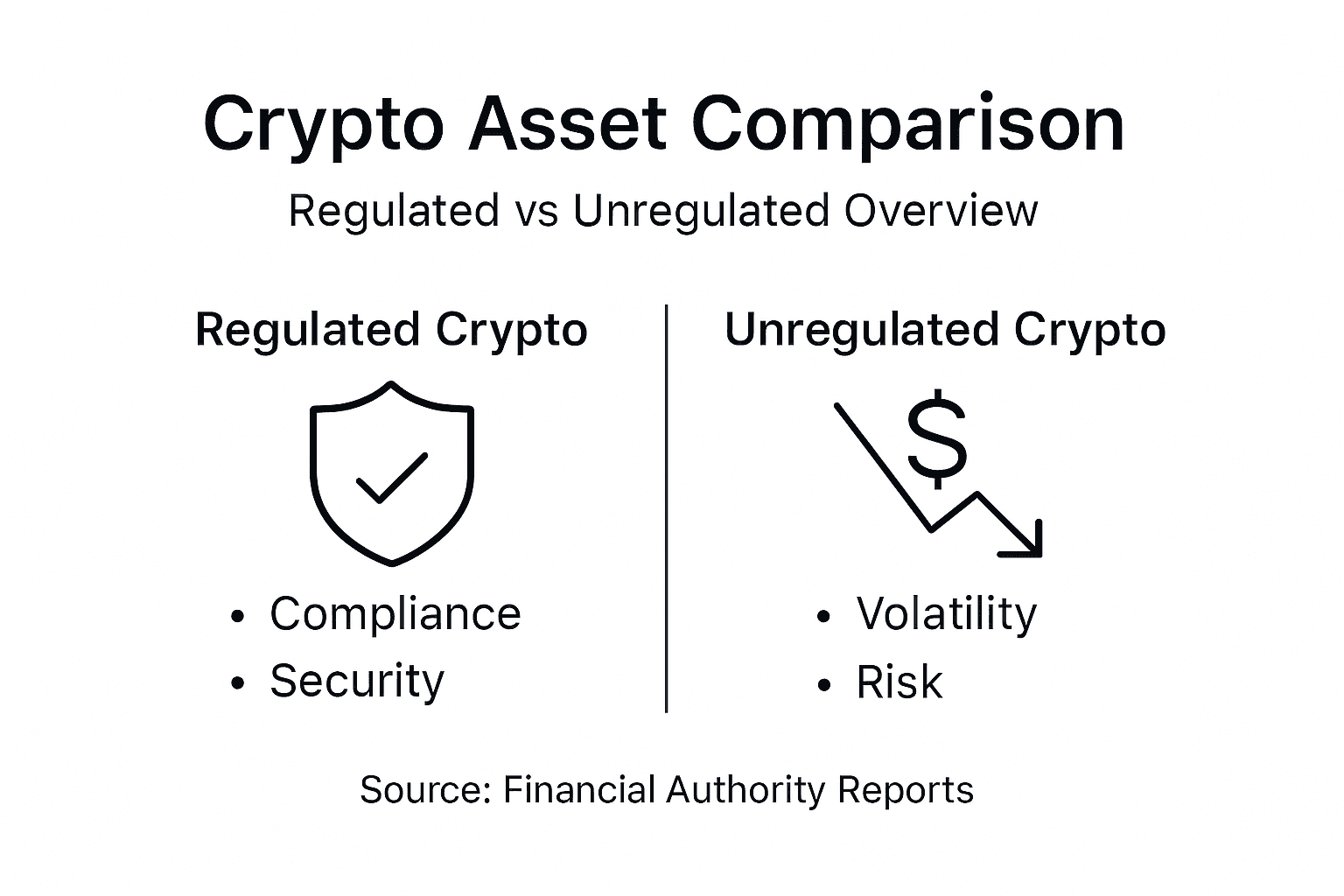
Here’s a clear comparison of regulated vs. unregulated crypto assets for investors:
| Characteristic | Regulated Crypto Assets | Unregulated Cryptocurrencies |
|---|---|---|
| Legal Recognition | Recognized by governmental bodies | Often lack formal legal status |
| Institutional Appeal | Favored by institutional investors | Generally avoided by institutions |
| Oversight Level | Subject to ongoing compliance checks | Operate with limited oversight |
| Portfolio Use | Suitable for diversified investments | Used mainly for speculative trading |
Pro tip: Always verify the regulatory status and compliance framework of any crypto asset before making an investment decision.
Types of regulated tokens and variations
The world of regulated crypto assets is far more complex than traditional cryptocurrencies, with multiple distinct token types designed to meet specific financial and regulatory requirements. Crypto-asset categories under MiCA regulations demonstrate the nuanced approach to digital asset classification and management.
Three primary categories of regulated tokens emerge in the current financial landscape:
- Asset-Referenced Tokens (ARTs): Tokens backed by a basket of assets like currencies, commodities, or other cryptocurrencies
- Electronic Money Tokens (EMTs): Digital representations of fiat currency with stable value
- Utility Tokens: Tokens providing specific access to digital platforms or services
Each token type undergoes rigorous regulatory assessment to ensure investor protection and financial system stability. The European Banking Authority has established comprehensive frameworks for evaluating these digital assets, focusing on their underlying characteristics, potential systemic risks, and economic implications.
The regulatory classification process involves multiple layers of scrutiny:
- Evaluating token’s economic purpose
- Assessing potential financial stability risks
- Determining consumer protection requirements
- Analyzing technological infrastructure
- Reviewing governance and compliance mechanisms
Institutional investors must understand these distinctions, as each token type carries unique regulatory obligations and investment profiles. The level of oversight and compliance requirements can significantly impact the token’s market viability and investment attractiveness.
Here is a summary of regulated token types and their primary investment considerations:
| Token Type | Typical Backing | Example Use Case | Regulatory Complexity |
|---|---|---|---|
| Asset-Referenced Tokens | Basket of assets | Hedging against volatility | High |
| Electronic Money Tokens | Fiat currency | Payments and transfers | Medium |
| Utility Tokens | Platform access rights | Service subscriptions | Varies |
Regulatory frameworks are designed to transform crypto assets from speculative instruments into legitimate, transparent financial products.
Pro tip: Always conduct thorough due diligence on the specific regulatory status and compliance framework of any token before making an investment decision.
Legal compliance and investor protections
The landscape of crypto asset regulation has dramatically transformed, with comprehensive regulatory frameworks emerging globally to address critical investor protection challenges. These evolving legal mechanisms aim to mitigate risks inherent in digital asset markets while fostering responsible innovation.
Key investor protection strategies include:
- Mandatory transparency requirements
- Rigorous anti-money laundering (AML) checks
- Enhanced disclosure of token economic models
- Mandatory risk assessments for crypto platforms
- Regular financial audits and reporting
Regulatory bodies are increasingly focusing on creating robust frameworks that balance innovation with investor safety. Institutional investors now demand comprehensive legal protections that mirror traditional financial instrument regulations, driving significant changes in how crypto assets are developed, marketed, and traded.
The compliance landscape involves multiple critical components:
- Conducting thorough background checks on token issuers
- Implementing sophisticated transaction monitoring systems
- Establishing clear investor recourse mechanisms
- Creating standardized reporting protocols
- Developing comprehensive risk management strategies
Effective legal compliance transforms cryptocurrency from a speculative instrument to a legitimate, transparent financial product with measurable investor protections.
Prudential regulations remain inconsistent across jurisdictions, with some regions offering minimal oversight while others develop comprehensive frameworks. This regulatory diversity underscores the importance of thorough due diligence for any crypto asset investment.
Pro tip: Always verify the specific regulatory status and investor protection mechanisms of any crypto platform before committing your investment.
Transparency, proof of reserves, and governance
In the evolving digital asset landscape, proof of reserves mechanisms emerge as critical transparency tools for institutional investors seeking reliable cryptocurrency investments. These sophisticated verification processes provide crucial insights into the financial health and operational integrity of digital asset platforms.
Key transparency mechanisms include:
- Real-time blockchain asset tracking
- Independent third-party financial audits
- Comprehensive reserve verification reports
- Detailed token economic model disclosures
- Continuous governance reporting
Institutional investors demand robust governance frameworks that go beyond traditional proof of reserves approaches. These frameworks must provide comprehensive visibility into asset management, risk mitigation, and operational standards.
The governance landscape encompasses multiple critical components:
- Establishing clear operational accountability
- Implementing rigorous internal control systems
- Creating transparent reporting mechanisms
- Developing comprehensive risk management protocols
- Ensuring consistent regulatory compliance
Effective governance transforms cryptocurrency from a speculative instrument into a legitimate, accountable financial product with measurable institutional standards.
Regulatory bodies are progressively developing frameworks that mandate enhanced transparency. The European Union’s Markets in Crypto-Assets Regulation represents a significant step toward creating standardized governance requirements that protect investor interests and promote market integrity.

Pro tip: Request and thoroughly review a platform’s most recent proof of reserves documentation before committing any institutional investments.
Risks, costs, and comparison with alternatives
Navigating the complex landscape of crypto investments requires a comprehensive understanding of comparative risks across financial instruments. Regulated crypto assets present a nuanced investment profile that differs significantly from traditional financial products, requiring sophisticated risk assessment strategies.
Key risk considerations for institutional investors include:
- Market volatility potential
- Regulatory compliance complexities
- Technological infrastructure vulnerabilities
- Liquidity constraints
- Cybersecurity exposure
Institutional investors must conduct thorough comparative analyses between regulated crypto assets and traditional investment vehicles. The risk profile encompasses multiple dimensions beyond simple financial metrics, including technological, legal, and operational considerations.
Critical comparative factors involve:
- Transaction cost structures
- Regulatory compliance expenses
- Potential return on investment
- Technological infrastructure requirements
- Long-term asset stability
Regulated crypto assets represent a sophisticated investment category that bridges traditional financial instruments with innovative blockchain technologies.
The regulatory landscape continues to evolve, with different jurisdictions implementing varied approaches to managing crypto asset risks. Some markets adopt prescriptive regulatory frameworks, while others maintain more principles-based oversight mechanisms.
Pro tip: Develop a comprehensive risk assessment matrix that compares regulated crypto assets against multiple traditional investment benchmarks before making allocation decisions.
Secure Your Future with Regulated, Asset-Backed Crypto Investments
Navigating the complexities of regulated crypto assets requires trust, transparency, and unwavering compliance. This article highlights the challenges investors face such as regulatory compliance, proof of reserves, and the need for transparent governance. At UK Financial Ltd, we address these critical pain points by offering gold-backed digital tokens secured by verified precious metal reserves. Our platform ensures real-time blockchain asset tracking, comprehensive proof of reserve reports, and strict adherence to SEC compliance standards to provide you with peace of mind.
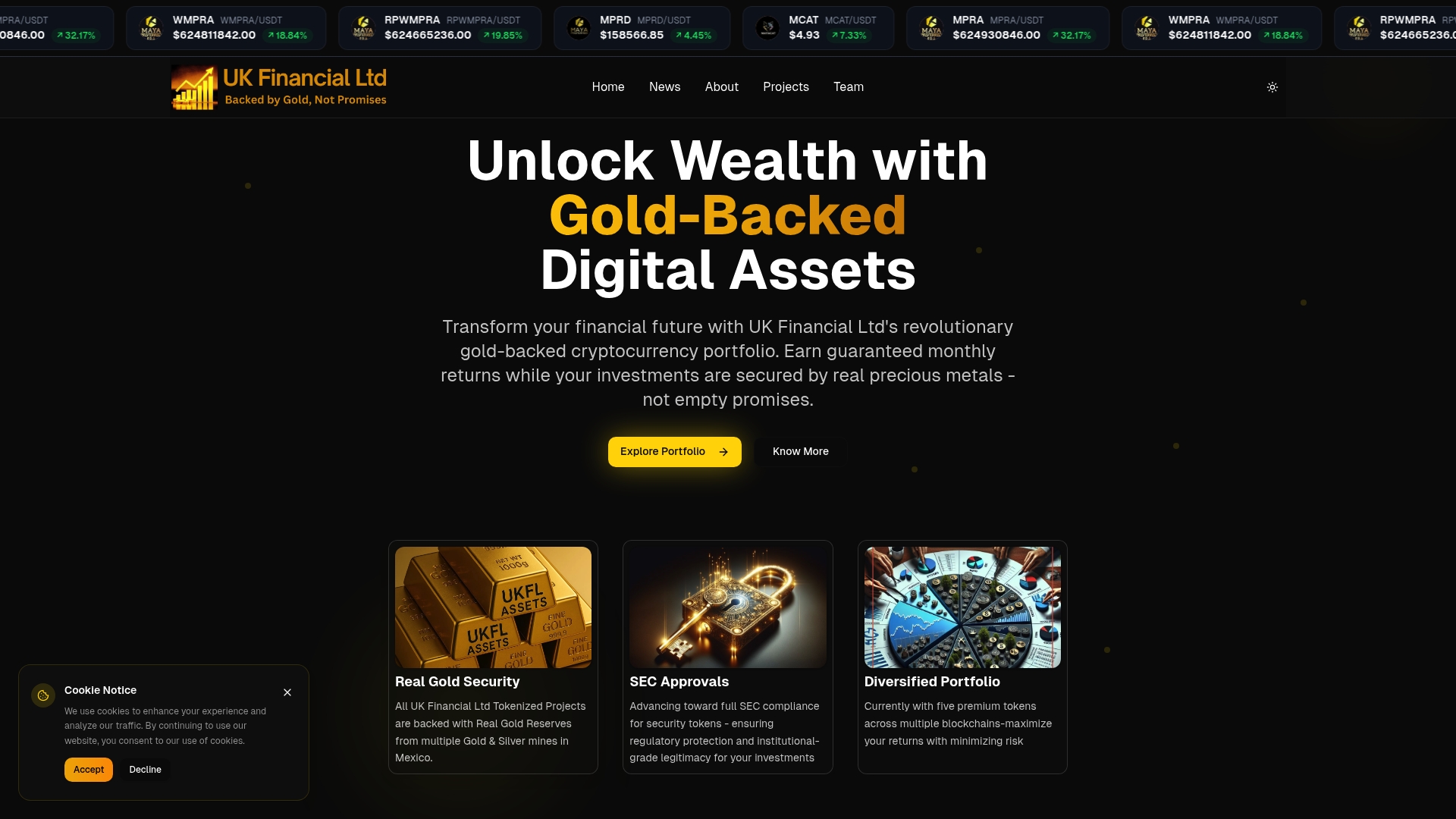
Discover the difference of investing in digital assets that combine the innovation of blockchain technology with the stability of tangible gold and silver backing. Take control of your portfolio with transparent, regulated, and secure tokens like Maya Preferred PRA. Visit our site today at UK Financial Ltd and explore how our compliant, asset-backed crypto solutions can help you preserve wealth and reduce risk in today’s volatile market.
Frequently Asked Questions
What are regulated crypto assets?
Regulated crypto assets are digital currencies that comply with government and financial authority regulations, providing enhanced security, legal recognition, and oversight compared to unregulated cryptocurrencies.
Why is compliance important for regulated crypto assets?
Compliance ensures investor protection through rigorous checks, transparency, and adherence to laws, which helps prevent fraud and promotes trust in the digital asset market.
How do regulated crypto assets mitigate risks for investors?
Regulated crypto assets reduce risks by undergoing thorough compliance evaluations, having verified asset backing, and providing transparency through mandated reporting and audit processes.
What are the key differences between regulated and unregulated cryptocurrencies?
Regulated cryptocurrencies are legally recognized, favored by institutional investors, and subject to ongoing oversight, while unregulated cryptocurrencies often lack formal legal status and oversight, making them riskier investments.
Recommended
- UK Financial Ltd Receives Recognition In Platinum Crypto Academy’s Cryptonaire Weekly
- UK Financial Ltd Announces CoinMarketCap Supply Verification And Market Positioning Review For Regulated Security Tokens SMPRA And SMCAT
- UK Financial Ltd – Gold-Backed Cryptocurrency Portfolio
- UK Financial Ltd Executes Compliance Tasks Ahead Of First-Ever ERC-3643 Exchange-Traded Token, SMCAT & Sets Date For Online Investor Governance Vote
- Top 5 Investiciono-zlato.com Alternativa 2026 za Individualne Investitore i Kolekcionare Zlata