
Why Precious Metals Crypto Matters for Investors

Managing portfolio risk and ensuring asset security challenge even the most experienced investors today. Traditional precious metals offer stability but can be burdened by limited liquidity and storage costs. Tokenization of precious metals bridges these gaps, enabling fractional ownership and 24/7 global trading while maintaining intrinsic value and transparency. This article examines how blockchain-backed gold, silver, and platinum tokens are reshaping regulated investment strategies for institutional investors seeking robust wealth preservation.
Table of Contents
- Defining Precious Metals Crypto and Tokenization
- Types of Asset-Backed Crypto and Variations
- How Blockchain Secures Physical Precious Metals
- Regulatory Compliance and Proof of Reserves
- Risks, Costs, and Alternatives for Investors
Key Takeaways
| Point | Details |
|---|---|
| Tokenization of Precious Metals | Tokenization enables fractional ownership of physical metals, making investments more accessible through blockchain technology. |
| Investment Alternatives | Investors can choose between precious metals tokens, physical holdings, ETFs, and mining stocks, each with unique risk profiles. |
| Regulatory Compliance Importance | Stricter regulations are essential for ensuring transparency and confidence in precious metals cryptocurrencies. |
| Blockchain Security | Blockchain technology enhances security and transparency, reducing fraud potential; verify protocols and storage practices before investing. |
Defining Precious Metals Crypto and Tokenization
Tokenization represents a groundbreaking financial innovation that transforms traditional precious metals investment by converting physical assets into digital representations on blockchain networks. Precious metals tokenization enables investors to own fractional quantities of gold, silver, platinum, and other valuable metals through secure digital tokens, dramatically reducing traditional barriers to entry.
At its core, precious metals crypto involves creating blockchain-based digital assets that correspond directly to specific quantities of physical metals stored in secure vault facilities. These tokens provide several compelling advantages:
- 24/7 Global Trading: Unlike physical metal markets with limited operating hours
- Fractional Ownership: Enabling investments with smaller capital amounts
- Enhanced Liquidity: Easy digital transfer and trading capabilities
- Transparent Tracking: Blockchain guarantees verifiable ownership records
The tokenization process requires rigorous legal and operational frameworks to ensure investor protection. Regulatory developments worldwide are establishing comprehensive guidelines that validate these digital assets, particularly in regions like the European Union and United Arab Emirates.
By bridging traditional asset ownership with blockchain technology, precious metals crypto transforms investment accessibility. Institutional investors can now acquire metal-backed digital assets with unprecedented transparency, reducing storage costs and eliminating many conventional investment complications.
Pro tip: Always verify the precise metal backing, vault storage conditions, and regulatory compliance before investing in any precious metals cryptocurrency.
Types of Asset-Backed Crypto and Variations
Asset-backed cryptocurrencies represent a sophisticated financial innovation that bridges traditional investment vehicles with blockchain technology. Stablecoin classification reveals multiple categories of digital assets, each designed to provide unique investment characteristics and risk management strategies for institutional and retail investors.
The primary types of asset-backed cryptocurrencies include:
- Fiat-Backed Tokens: Directly linked to national currencies like US Dollar
- Commodity-Backed Tokens: Representing physical assets such as precious metals
- Crypto-Collateralized Tokens: Backed by other cryptocurrencies
- Hybrid Asset Tokens: Combining multiple collateral sources
Precious metal tokens represent a particularly interesting subcategory of commodity-backed cryptocurrencies. Asset-backed crypto variations demonstrate that these digital assets can significantly impact portfolio risk profiles, with gold-backed tokens offering unique investment dynamics compared to traditional financial instruments.

The complexity of asset-backed cryptocurrencies extends beyond simple tokenization. Each variation requires sophisticated mechanisms for maintaining price stability, ensuring transparent asset verification, and providing robust regulatory compliance. Investors must carefully evaluate the underlying collateral, management structure, and liquidity characteristics of these digital assets.
Here is a comparison of the main types of asset-backed cryptocurrencies and their distinctive features:
| Token Type | Backing Asset | Typical Use Case | Risk Level |
|---|---|---|---|
| Fiat-backed | National currencies | Stable payments and hedges | Low to moderate |
| Commodity-backed | Precious metals, oil | Diversify with real assets | Moderate |
| Crypto-collateralized | Other cryptocurrencies | Leverage and decentralized finance | High |
| Hybrid asset | Mixed assets | Advanced portfolio strategies | Varies by mix |
Pro tip: Conduct thorough due diligence on the specific backing mechanism and regulatory compliance of any asset-backed cryptocurrency before making an investment decision.
How Blockchain Secures Physical Precious Metals
Blockchain technology provides an unprecedented level of security and transparency for precious metals investments through digital tokenization. Blockchain metal tokenization creates a robust infrastructure that fundamentally transforms how physical assets are tracked, verified, and traded in the digital era.
The key security mechanisms of blockchain for precious metals include:
- Immutable Transaction Records: Preventing unauthorized alterations
- Transparent Ownership Tracking: Real-time verification of metal ownership
- Decentralized Verification: Eliminating single points of failure
- Smart Contract Automation: Ensuring precise token-to-metal matching
Smart contracts play a critical role in securing the connection between digital tokens and physical metals. Precious metal blockchain security enables automated, transparent management of metal-backed tokens, with each digital asset precisely corresponding to a specific weight of physical metal stored in audited vaults.
The decentralized nature of blockchain fundamentally mitigates traditional risks associated with precious metal investments. By creating a transparent, tamper-proof ledger, blockchain technology ensures that every token represents a verifiable, auditable fraction of physical metal, dramatically reducing fraud potential and increasing investor confidence in digital asset investments.
Pro tip: Always verify the specific blockchain protocol and third-party audit mechanisms supporting any precious metals cryptocurrency before investing.
Regulatory Compliance and Proof of Reserves
Regulatory frameworks are revolutionizing the precious metals cryptocurrency landscape, establishing critical standards for transparency and investor protection. Global crypto regulation introduces comprehensive guidelines that mandate stringent compliance mechanisms for digital asset providers.
Key regulatory compliance requirements include:
- Transparent Reserve Reporting: Verifiable physical metal holdings
- Independent Third-Party Audits: Regular asset verification
- Custody Standard Adherence: Secure asset management protocols
- Jurisdictional Compliance: Meeting international financial regulations
Proof of reserves represents a critical mechanism for establishing trust in precious metals cryptocurrencies. These auditing processes require detailed documentation demonstrating that each digital token maintains direct, verifiable correspondence with physical metal reserves, ensuring investors can confidently track their underlying asset backing.
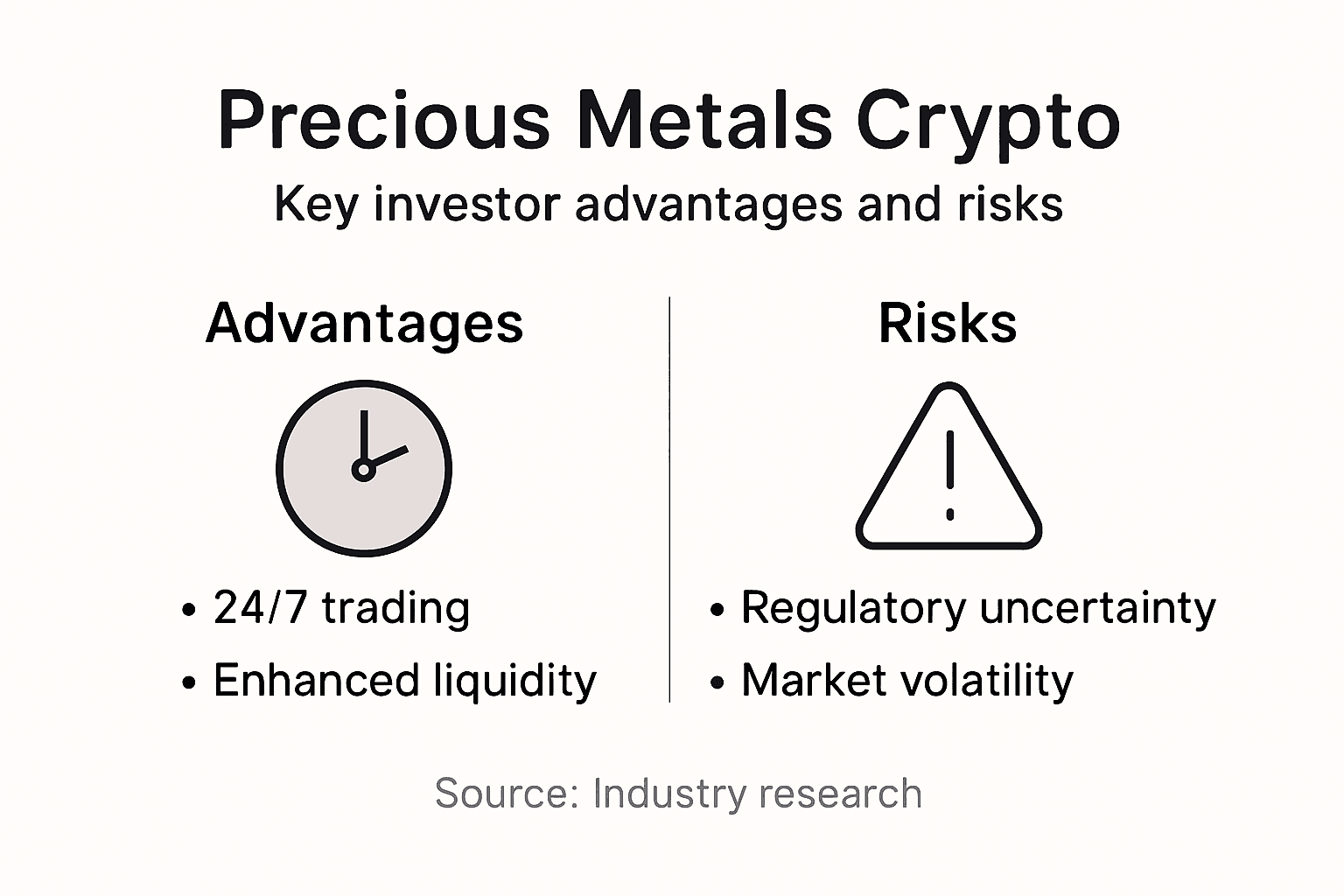
The evolving regulatory landscape demands unprecedented levels of financial transparency. Cryptocurrency platforms must now implement robust reporting mechanisms that provide real-time visibility into asset holdings, metal storage conditions, and ownership structures. This shift represents a fundamental transformation in how digital assets are managed, tracked, and validated across global financial ecosystems.
Pro tip: Request comprehensive proof of reserves documentation and independent audit reports before investing in any precious metals cryptocurrency.
Risks, Costs, and Alternatives for Investors
Investment strategies involving precious metals cryptocurrencies require careful consideration of multiple financial dimensions. Precious metals investment risks reveal complex trade-offs between traditional and digital asset approaches that demand sophisticated investor analysis.
Key investment alternatives include:
- Physical Metal Holdings: Traditional bullion ownership
- Metal-Backed Cryptocurrency Tokens: Blockchain-enabled digital assets
- Exchange Traded Funds (ETFs): Paper-based metal investment vehicles
- Mining Company Stocks: Indirect precious metals market exposure
Comparative investment risks span multiple dimensions of financial complexity. Investment alternatives research demonstrates that each investment vehicle presents unique advantages and potential drawbacks, requiring investors to carefully evaluate liquidity, transaction costs, regulatory environment, and personal risk tolerance.
Investors must comprehensively assess technological, regulatory, and market risks associated with digital precious metal assets. Blockchain-based tokens offer unprecedented liquidity and accessibility, but simultaneously introduce technological complexity and potential regulatory uncertainty that traditional metal investments do not typically encounter.
The following table highlights key differences between precious metal tokens, ETFs, and physical metal:
| Investment Vehicle | Ownership Structure | Liquidity | Storage Requirement |
|---|---|---|---|
| Precious metal token | Digital fractional claim | High, 24/7 trading | Professional vault services |
| Physical metal (bullion) | Direct personal holding | Lower, dealer-dependent | Personal or bank vault |
| Precious metals ETF | Indirect paper claim | High, market hours | No personal storage |
Pro tip: Develop a diversified investment strategy that balances digital and physical asset exposure to mitigate individual investment risks.
Unlock the Power of Precious Metals Crypto with UK Financial Ltd
Investing in precious metals crypto presents unique challenges such as ensuring transparent proof of reserves, regulatory compliance, and securing physical asset backing with trustworthy blockchain technology. The article highlights crucial concerns like verifying vault storage conditions, fractional ownership benefits, and overcoming barriers related to liquidity and market access. For investors seeking stable yet innovative asset exposure, addressing these pain points with a partner who prioritizes security and transparency is essential.
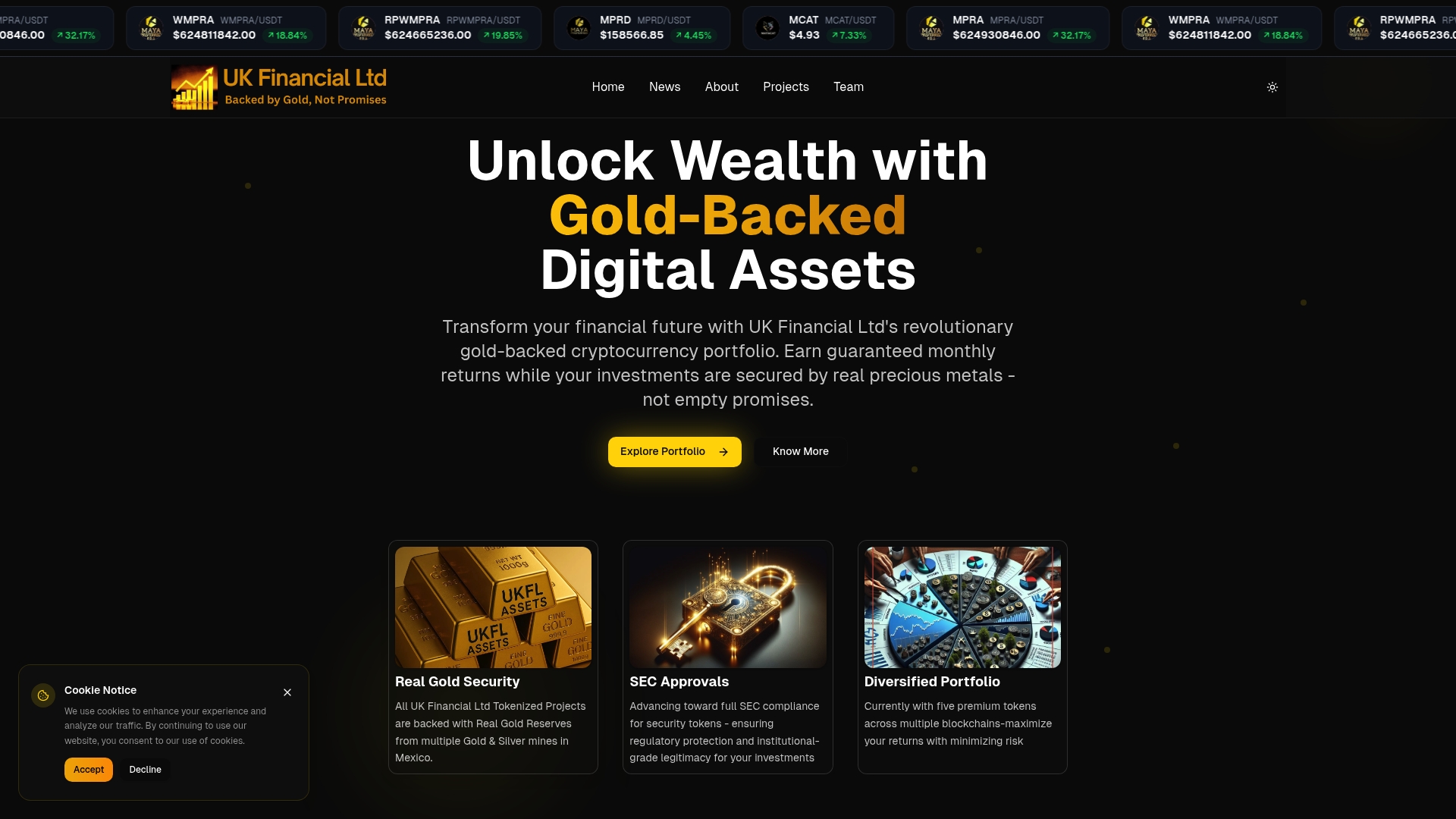
At UK Financial Ltd, we specialize in delivering fully backed gold and silver cryptocurrency tokens that meet rigorous compliance standards and provide real-time blockchain asset tracking. Our flagship tokens including the Maya Preferred PRA and MayaCat meme coin grant you direct digital access to precious metals with impeccable proof of reserves and professional audit mechanisms. This enables you to invest confidently in a regulated ecosystem designed for both retail and institutional investors aiming to diversify and preserve wealth securely.
Explore how our platform bridges traditional metals ownership with next-generation digital assets while maintaining uncompromising transparency and liquidity. Visit UK Financial Ltd to see live token performance, understand our corporate governance, and join a community committed to innovative, secure investments.
Invest smarter today by partnering with a trusted provider that transforms precious metals crypto challenges into opportunities.
Discover your gateway to gold-backed digital security now.
Explore Gold-Backed Tokens at UK Financial Ltd
Frequently Asked Questions
What is precious metals crypto?
Precious metals crypto refers to blockchain-based digital assets that represent ownership of physical precious metals, like gold or silver. These digital tokens allow investors to own fractional quantities of these metals while benefiting from blockchain’s security and transparency.
How does tokenization of precious metals work?
Tokenization involves converting physical precious metals into digital tokens stored on a blockchain. Each token corresponds to a specific weight of the physical metal, which is securely stored in vaults, allowing for easy trading and fractional ownership.
What are the benefits of investing in precious metals cryptocurrency compared to traditional physical investments?
Investing in precious metals cryptocurrency offers several advantages, including 24/7 global trading, enhanced liquidity, reduced barriers for fractional ownership, and transparent tracking of ownership due to the blockchain’s immutable records.
What should I consider before investing in precious metals crypto?
Before investing, it’s essential to verify the metal backing, storage conditions, regulatory compliance, and the specifics of the blockchain protocol supporting the cryptocurrency. Conducting thorough due diligence and requesting proof of reserves documentation is crucial for investor confidence.
Recommended
- UK Financial Ltd – Gold-Backed Cryptocurrency Portfolio
- UK Financial Ltd Establishes United States Operations in Delaware, Announces Texas Expansion
- UK Financial Ltd Receives Recognition In Platinum Crypto Academy’s Cryptonaire Weekly
- News | UK Financial Ltd
- Top 5 Investiciono-zlato.com Alternativa 2026 za Individualne Investitore i Kolekcionare Zlata