
Why Choose Gold-Backed Assets for Secure Wealth

Every institutional investor faces the challenge of balancing security with innovation in a rapidly shifting global market. The introduction of gold-backed digital assets brings the stability of physical gold into the digital age, offering new pathways for portfolio diversification. This article examines how these regulated, gold-pegged solutions combine the reassurance of tangible wealth with advanced blockchain features, while addressing critical factors like custodial integrity, compliance, and transparency.
Table of Contents
- Gold-Backed Assets Defined And Debunked
- Types Of Gold-Backed Investment Vehicles
- How Asset-Backed Tokens Ensure Transparency
- Regulatory Standards In Gold-Backed Assets
- Risks, Costs, And Market Comparisons
Key Takeaways
| Point | Details |
|---|---|
| Gold-backed assets offer unique advantages | They bridge traditional investments and digital finance, providing intrinsic value tied to physical gold. |
| Investors must ensure transparency and compliance | Comprehensive proof of reserve, independent audits, and clear redemption policies are crucial for credibility. |
| Regulatory landscapes impact investment strategies | Institutional investors need to stay informed about evolving compliance requirements across various jurisdictions. |
| Risk management is essential | Evaluate market volatility, technological risks, and custodial dependencies to make informed investment decisions. |
Gold-Backed Assets Defined And Debunked
Gold-backed assets represent a unique intersection between traditional precious metal investments and modern digital financial technologies. These innovative financial instruments provide investors with a way to own and trade gold through digital tokens, offering unprecedented flexibility and accessibility. Gold-backed cryptocurrencies are digital assets specifically designed to represent physical gold reserves, creating a bridge between tangible wealth and digital markets.
At their core, gold-backed assets function through a straightforward mechanism: each digital token corresponds to a specific quantity of physical gold held in secure reserves. This direct connection provides several critical advantages for institutional investors:
- Stable Value Proposition: Tokens maintain intrinsic value tied to physical gold
- Fractional Ownership: Enables investment in smaller gold quantities
- Enhanced Liquidity: Easier trading compared to physical gold transactions
- Transparent Tracking: Blockchain technology allows real-time reserve verification
However, these assets are not without challenges. Investors must carefully evaluate the credibility of gold custodians, understand the precise redemption mechanisms, and assess the regulatory compliance of the underlying infrastructure. The dependence on third-party gold storage introduces potential counterparty risks that sophisticated investors must thoroughly investigate.
Gold-backed digital assets represent a sophisticated financial instrument bridging traditional wealth preservation with cutting-edge blockchain technology.
The verification of gold reserves becomes paramount in these investments. Institutional investors should demand comprehensive proof of reserve documentation, independent audits, and clear redemption policies. The reliability of the custodial institution directly impacts the asset’s credibility and investor confidence.

Pro tip: Always conduct comprehensive due diligence on the specific gold-backed asset’s custodial framework, redemption terms, and regulatory compliance before making any investment decisions.
Types Of Gold-Backed Investment Vehicles
Investors have multiple options for engaging with gold-backed investment vehicles, each offering unique advantages and strategic opportunities. Gold-backed tokens represent a sophisticated approach to precious metal investment, providing diverse mechanisms for portfolio diversification and wealth preservation.
The primary categories of gold-backed investment vehicles include:
- Stablecoins: Digital tokens pegged directly to gold value
- Tokenized Securities: Gold ETFs transformed into blockchain-native assets
- Blockchain Gold Tokens: Native digital assets representing physical gold reserves
- Physical Gold Certificates: Traditional paper-based gold ownership instruments
Each investment vehicle carries distinct characteristics that appeal to different investor profiles. Stablecoins offer maximum digital liquidity, while traditional gold certificates provide more conventional ownership structures. The blockchain-based options introduce unprecedented transparency and fractional ownership possibilities.
Here is a comparison of gold-backed investment vehicles to help guide selection:
| Investment Vehicle | Main Advantage | Typical Investor Profile | Notable Consideration |
|---|---|---|---|
| Stablecoins | Instant global liquidity | Tech-savvy, liquidity-focused | Subject to digital asset regulation |
| Tokenized Securities | Integration with blockchains | ETF investors, institutions | May be restricted to certain markets |
| Blockchain Gold Tokens | Transparent fractional ownership | Crypto investors, innovators | Technology and custody risks |
| Physical Gold Certificates | Tangible ownership proof | Traditional, conservative | Limited digital liquidity |
Digital gold investments are revolutionizing how institutional investors approach precious metal portfolios.
The regulatory landscape significantly influences these investment vehicles. Stablecoins typically operate under stringent compliance frameworks, requiring regular audits and precise reserve documentation. Blockchain gold tokens often provide more flexible trading mechanisms, enabling 24/7 global transactions with reduced intermediary costs.
Institutional investors must carefully evaluate each vehicle’s unique risk profile, liquidity characteristics, and regulatory compliance. Factors such as redemption mechanisms, storage costs, and transaction transparency become critical decision-making parameters.
Pro tip: Conduct comprehensive due diligence on the specific gold-backed investment vehicle’s regulatory status, redemption terms, and underlying asset verification process before committing capital.
How Asset-Backed Tokens Ensure Transparency
Transparency represents the cornerstone of trust in digital asset investments, particularly for sophisticated institutional investors seeking verifiable and secure financial instruments. Asset-backed tokens leverage advanced blockchain technologies to create unprecedented levels of accountability and real-time asset verification.
The key mechanisms for ensuring transparency in asset-backed tokens include:
- Immutable Blockchain Recording: Permanent, unalterable transaction histories
- Real-Time Reserve Tracking: Continuous monitoring of underlying asset reserves
- Smart Contract Automation: Transparent execution of predefined token rules
- Independent Audit Capabilities: Regular third-party verification processes
- Public Ledger Accessibility: Open-source transaction documentation
Blockchain technology fundamentally transforms traditional asset verification by creating a decentralized, tamper-resistant system of record-keeping. Every transaction, reserve adjustment, and ownership transfer becomes permanently documented and instantly verifiable by authorized participants.
Blockchain transparency eliminates the opacity that has historically plagued traditional financial asset management.
Institutional investors benefit from multiple layers of transparency validation. Digital signatures and cryptographic proofs ensure that each token represents exactly its claimed underlying asset value. The technological infrastructure enables instantaneous verification of total outstanding tokens against physical asset reserves, dramatically reducing counterparty risks.
The most advanced asset-backed token systems implement multi-layered verification protocols. These include real-time reserve auditing, automated compliance checks, and comprehensive transaction monitoring that provides investors with unprecedented visibility into their investment’s precise composition and performance.
Pro tip: Develop a systematic due diligence framework that evaluates an asset-backed token’s transparency mechanisms, focusing on its blockchain infrastructure, audit frequency, and reserve verification protocols.
Regulatory Standards In Gold-Backed Assets
Gold-backed assets operate within a complex regulatory framework designed to protect investor interests and ensure financial stability. Basel Framework regulations fundamentally shape how financial institutions manage and classify gold-related investments, creating a robust governance structure for these sophisticated assets.
Key regulatory considerations for gold-backed assets include:
- Capital Requirements: Specific risk weightings for gold holdings
- Liquidity Standards: Minimum reserve and asset conversion guidelines
- Compliance Reporting: Comprehensive documentation of asset reserves
- Third-Party Verification: Independent auditing of asset backing
- Cross-Border Transaction Rules: International transfer and trading regulations
Regulatory frameworks vary significantly across different jurisdictions, with each financial authority implementing unique oversight mechanisms. The European Union, United Kingdom, and United States have developed nuanced approaches to managing gold-backed digital assets, focusing on transparency, investor protection, and systemic risk mitigation.
Regulatory compliance transforms gold-backed assets from speculative instruments to credible investment vehicles.
Institutional investors must navigate a complex landscape of regulatory compliance that extends beyond traditional asset management. Digital gold tokens face additional scrutiny, requiring sophisticated technological infrastructure to meet stringent reporting and verification standards. The most advanced gold-backed asset platforms implement multi-layered compliance mechanisms that exceed basic regulatory requirements.
The intersection of blockchain technology and traditional financial regulations creates a dynamic environment for gold-backed assets. Sophisticated investors must continuously monitor evolving regulatory landscapes, understanding how technological innovation intersects with established financial governance frameworks.
Pro tip: Develop a comprehensive compliance tracking system that monitors regulatory changes across multiple jurisdictions, ensuring your gold-backed asset investments remain fully compliant with emerging financial standards.
Risks, Costs, And Market Comparisons
Institutional investors must carefully evaluate the complex landscape of gold-backed token investment risks, understanding the nuanced trade-offs between potential returns and underlying challenges. These sophisticated financial instruments present a multifaceted investment profile that demands comprehensive risk assessment.
Key risk categories for gold-backed assets include:
- Market Volatility: Price fluctuations tied to gold market movements
- Technological Risks: Cybersecurity and blockchain infrastructure vulnerabilities
- Regulatory Uncertainty: Evolving compliance requirements across jurisdictions
- Custodial Risks: Dependence on third-party asset management
- Liquidity Constraints: Potential limitations in asset conversion and trading
Cost structures for gold-backed tokens involve multiple layers of financial considerations. Investors encounter expenses ranging from custody fees and trading commissions to compliance-related overhead. These costs can significantly impact the overall investment performance, requiring meticulous financial modeling and ongoing expense management.
Sophisticated investors recognize that comprehensive risk management transcends simple cost calculation.
When compared to traditional investment vehicles, gold-backed digital assets offer unique advantages. Blockchain-enabled tokens provide enhanced transparency, fractional ownership capabilities, and 24/7 global trading potential that conventional gold investment mechanisms cannot match. However, these benefits come with their own set of technological and operational complexities.
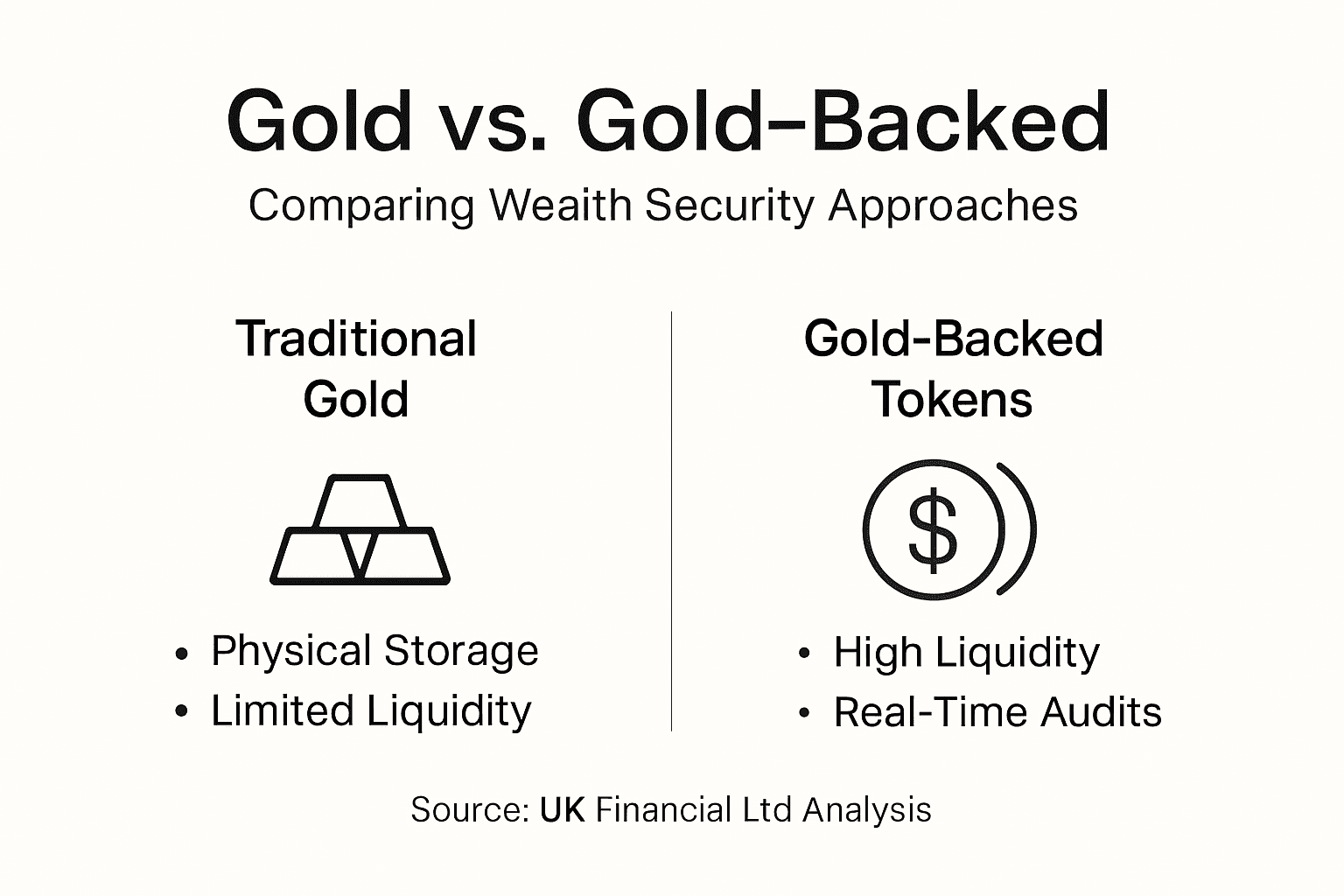
Market comparisons reveal that gold-backed tokens occupy a distinctive investment niche. They bridge the gap between traditional precious metal investments and cutting-edge digital financial technologies, offering institutional investors a sophisticated alternative to conventional asset classes. The ability to combine gold’s historical stability with blockchain’s technological innovation creates a compelling investment proposition.
The table below summarizes key cost and risk dimensions for gold-backed digital assets versus traditional gold options:
| Category | Gold-Backed Digital Assets | Traditional Gold Investments |
|---|---|---|
| Transaction Speed | Seconds to minutes | Days to weeks |
| Custody Risk | Third-party, tech-dependent | Secure vault, physical risk |
| Regulatory Clarity | Emerging, varies by region | Established, well-defined |
| Liquidity | 24/7, global markets | Limited to business hours |
| Cost Structure | Trading, custody, compliance | Storage, insurance, broker fees |
Pro tip: Develop a dynamic risk assessment framework that continuously monitors technological, regulatory, and market variables affecting gold-backed digital assets, enabling proactive investment strategy adjustments.
Secure Your Wealth with Trusted Gold-Backed Digital Assets
Understanding the complexities and risks associated with gold-backed assets is essential for any investor looking to preserve wealth securely and transparently. The article highlights critical challenges such as verifying gold reserves, navigating regulatory compliance, and mitigating custodial risks. If you seek stable value, real-time transparency, and regulated asset exposure, these concerns are exactly where innovative platforms must deliver.
At UK Financial Ltd, we address these pain points head-on by offering a comprehensive suite of gold-backed digital tokens, including our flagship Maya Preferred PRA, each fully secured by verified precious metal reserves. Our platform ensures proof of reserve through blockchain tracking, rigorous regulatory compliance following SEC plans, and ongoing independent audits so you can invest confidently and monitor your holdings anytime. With features designed for both retail and institutional investors, we bridge the gap between traditional wealth preservation and the cutting-edge advantages of tokenized assets.
Explore our innovative gold-backed portfolio to discover how you can harness secure, transparent, and liquid precious metal investments.
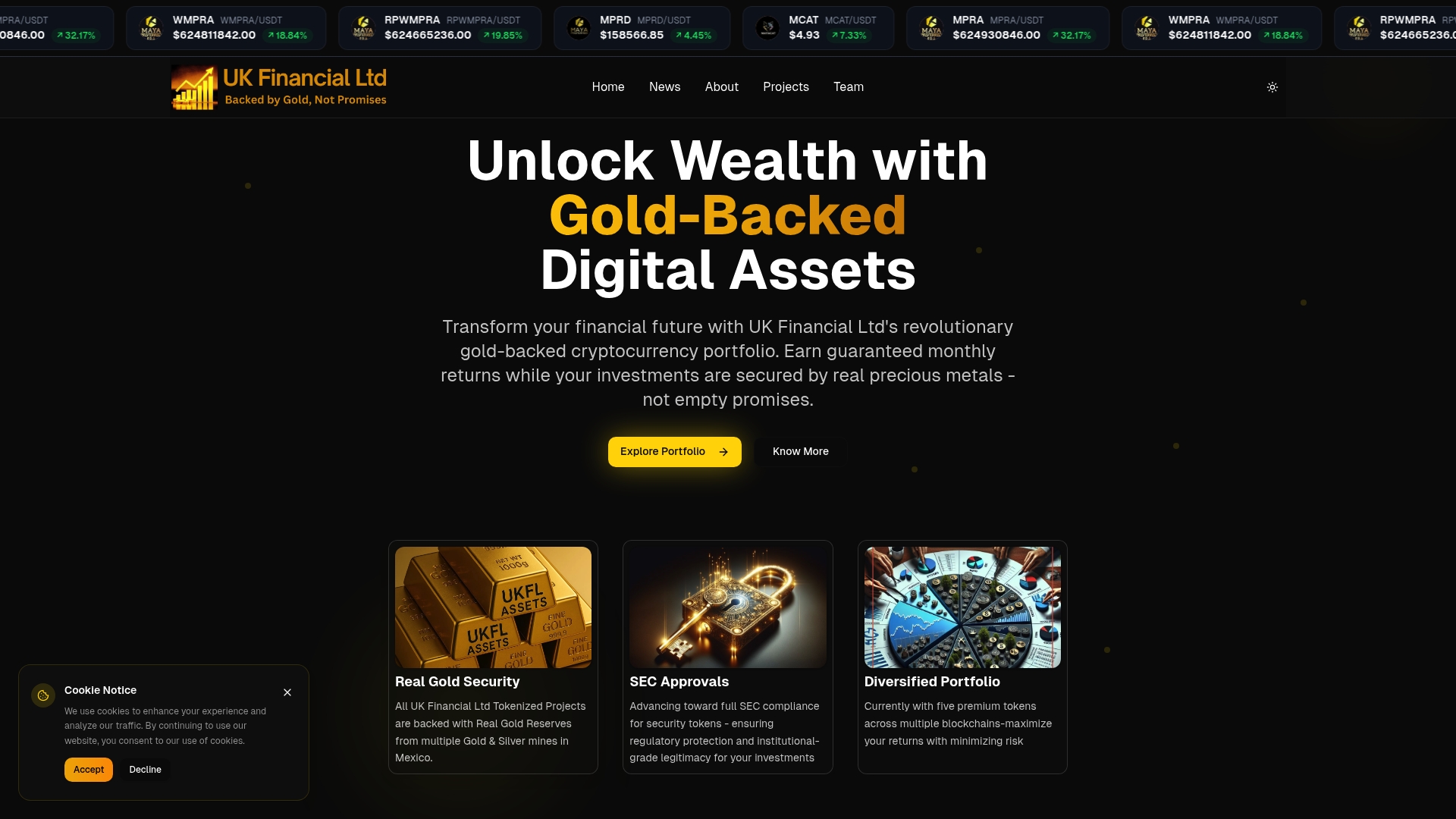
Take control of your financial future today with gold-backed tokens built on trust and technology. Visit UK Financial Ltd to learn more and start investing with peace of mind.
Frequently Asked Questions
What are gold-backed assets?
Gold-backed assets are financial instruments that represent ownership of physical gold reserves through digital tokens. They allow investors to trade gold in a digital format while maintaining a connection to tangible wealth.
How do gold-backed assets ensure stability and liquidity?
Gold-backed assets offer a stable value proposition tied to the intrinsic value of physical gold. They enhance liquidity by allowing easier trading compared to traditional physical gold transactions, often enabling 24/7 global trading.
What are the key risks associated with investing in gold-backed assets?
Investors should be aware of several risks, including market volatility, technological risks related to cybersecurity, regulatory uncertainty, custodial risks from third-party management, and potential liquidity constraints in asset conversion or trading.
How can I verify the credibility of a gold-backed asset?
To verify the credibility of a gold-backed asset, investors should request proof of reserve documentation, independent audit reports, and transparently defined redemption policies from the custodial institution managing the asset.