
What Makes a Token Asset-Backed? Investor Insights

More than 40 percent of gold-backed digital assets now attract direct interest from American and European institutional investors seeking secure, compliant alternatives to traditional holdings. In an era of rising market unpredictability, the need to balance transparency, regulatory adherence, and asset protection has never been greater. This overview explores what truly sets gold-backed tokens apart from conventional cryptocurrencies, highlighting how fractional ownership, enhanced auditability, and global legal frameworks offer new pathways for wealth diversification.
Table of Contents
- Defining Asset-Backed Tokens And Common Myths
- Types Of Underlying Assets And Tokenization Methods
- How Gold-Backed And Commodity Tokens Operate
- Proof Of Reserve, Audits, And Transparency Mechanisms
- Legal, Regulatory, And Investor Risk Factors
Key Takeaways
| Point | Details |
|---|---|
| Understanding Asset-Backed Tokens | These tokens are linked to real-world assets like gold and real estate, providing more stability than traditional cryptocurrencies. |
| Investor Misconceptions | Many investors confuse asset-backed tokens with utility tokens, failing to recognize their distinct value proposition and regulatory implications. |
| Tokenization Methods | Different tokenization approaches—direct, indirect, and hybrid—affect liquidity and legal structures, impacting potential investor outcomes. |
| Regulatory Compliance | Institutional investors must navigate complex legal landscapes and ensure adherence to jurisdiction-specific compliance requirements. |
Defining Asset-Backed Tokens and Common Myths
Asset-backed tokens represent a sophisticated financial instrument that bridges traditional investment frameworks with blockchain technology. Security tokens offer a revolutionary approach to representing ownership rights, transforming how institutional investors conceptualize digital asset ownership and investment strategies.
At their core, asset-backed tokens are digital representations of real-world assets like gold, real estate, or commodities, secured by verifiable underlying value. Unlike traditional cryptocurrencies which lack intrinsic value, these tokens provide investors a direct link to tangible assets, creating a more stable and transparent investment mechanism. Key characteristics include:
- Precise fractional ownership representation
- Transparent blockchain-based tracking
- Regulatory compliance potential
- Direct connection to physical asset value
Many investors mistakenly believe asset-backed tokens are identical to traditional cryptocurrencies or utility tokens. This misconception overlooks critical differences in regulatory treatment, risk profile, and underlying value proposition. While utility tokens derive value from potential future platform use, asset-backed tokens maintain direct correlation with physical asset performance, offering a more predictable investment instrument.

Pro tip: Always verify the precise asset reserves and independent auditing mechanisms before investing in any asset-backed token to ensure genuine value backing.
Types of Underlying Assets and Tokenization Methods
Global asset tokenization strategies represent a sophisticated approach to converting tangible and intangible assets into digital representations with verifiable ownership. Institutional investors increasingly recognize these methods as transformative mechanisms for creating more liquid, accessible, and transparent investment instruments.
The primary underlying asset categories for tokenization include:
- Financial Securities: Stocks, bonds, and derivatives
- Real Estate: Commercial and residential properties
- Commodities: Gold, silver, oil, and agricultural products
- Intellectual Property: Patents, copyrights, and licensing rights
- Alternative Investments: Art, collectibles, and rare assets
Tokenization methods can be broadly categorized into three primary approaches: direct, indirect, and hybrid models. The Bank for International Settlements outlines comprehensive frameworks for understanding these tokenization arrangements, which determine how digital tokens represent and transfer asset ownership. Direct tokenization involves creating a digital token with a direct, one-to-one relationship with the underlying asset, providing maximum transparency and minimal intermediation.
Indirect tokenization introduces additional layers of complexity, often involving special purpose vehicles or legal entities that hold the physical asset while issuing fractional digital representations. This approach can provide enhanced regulatory compliance and risk management capabilities, particularly for complex or regulated asset classes.
Here’s a comparison of direct, indirect, and hybrid tokenization models illustrating their structure and investor impact:
| Tokenization Model | Structure Overview | Investor Benefits | Potential Challenges |
|---|---|---|---|
| Direct | Token holds direct claim to asset | Highest transparency | Potentially less regulatory flexibility |
| Indirect | Special purpose entity holds asset | Enhanced regulatory compliance | Additional legal layers increase complexity |
| Hybrid | Combines direct and indirect elements | Customizable for asset type | Complex setup and oversight required |
Pro tip: Conduct thorough due diligence on the specific tokenization method and legal structure before investing, as the approach significantly impacts token liquidity, transferability, and underlying asset protection.
How Gold-Backed and Commodity Tokens Operate
Digital gold token operational models represent a sophisticated approach to transforming physical commodity investments into blockchain-enabled financial instruments. These tokens provide institutional investors a precise mechanism for accessing precious metal markets with enhanced transparency, liquidity, and fractional ownership capabilities.
The operational framework for gold-backed tokens typically involves several critical components:
- Physical Reserve Management: Actual gold stored in secure, audited vaults
- Token Issuance: Digital representations with direct asset correlation
- Custody Arrangements: Professional third-party storage and verification
- Redemption Mechanisms: Options to convert tokens back to physical metal
- Blockchain Tracking: Real-time transparent ownership records
Regulatory frameworks for commodity tokens vary significantly across global jurisdictions, creating complex compliance landscapes for institutional investors. The most robust gold-backed tokens implement rigorous verification processes, including regular independent audits, precise reserve documentation, and transparent reporting mechanisms to ensure genuine asset backing.
Indirect and direct tokenization models offer different approaches to commodity representation. Direct models provide a one-to-one token-to-asset ratio, while indirect models might involve special purpose vehicles or more complex legal structures that introduce additional layers of financial engineering and potential regulatory oversight.
Pro tip: Always request and independently verify the most recent proof-of-reserve documentation before investing in any gold-backed or commodity token to ensure actual asset backing and minimize potential risk.
Proof of Reserve, Audits, and Transparency Mechanisms
Cryptographic verification techniques represent the cornerstone of modern asset-backed token transparency, providing institutional investors with sophisticated mechanisms to validate underlying asset reserves. These advanced methodologies move beyond traditional audit approaches, leveraging blockchain technology to create real-time, verifiable tracking of asset backing.
Key components of robust Proof of Reserve mechanisms include:
- Independent Third-Party Audits: Regular, comprehensive asset verification
- Cryptographic Validation: Mathematically secure reserve confirmation
- On-Chain Transparency: Publicly accessible reserve documentation
- Real-Time Reporting: Continuous asset tracking and disclosure
- Automated Verification: Algorithmic cross-checking of reserve claims
On-chain reserve verification technologies have evolved to address critical investor concerns about asset backing. These systems integrate multiple verification layers, including periodic independent audits, automated blockchain checks, and sophisticated cryptographic proofs that validate the exact quantity and authenticity of underlying assets.
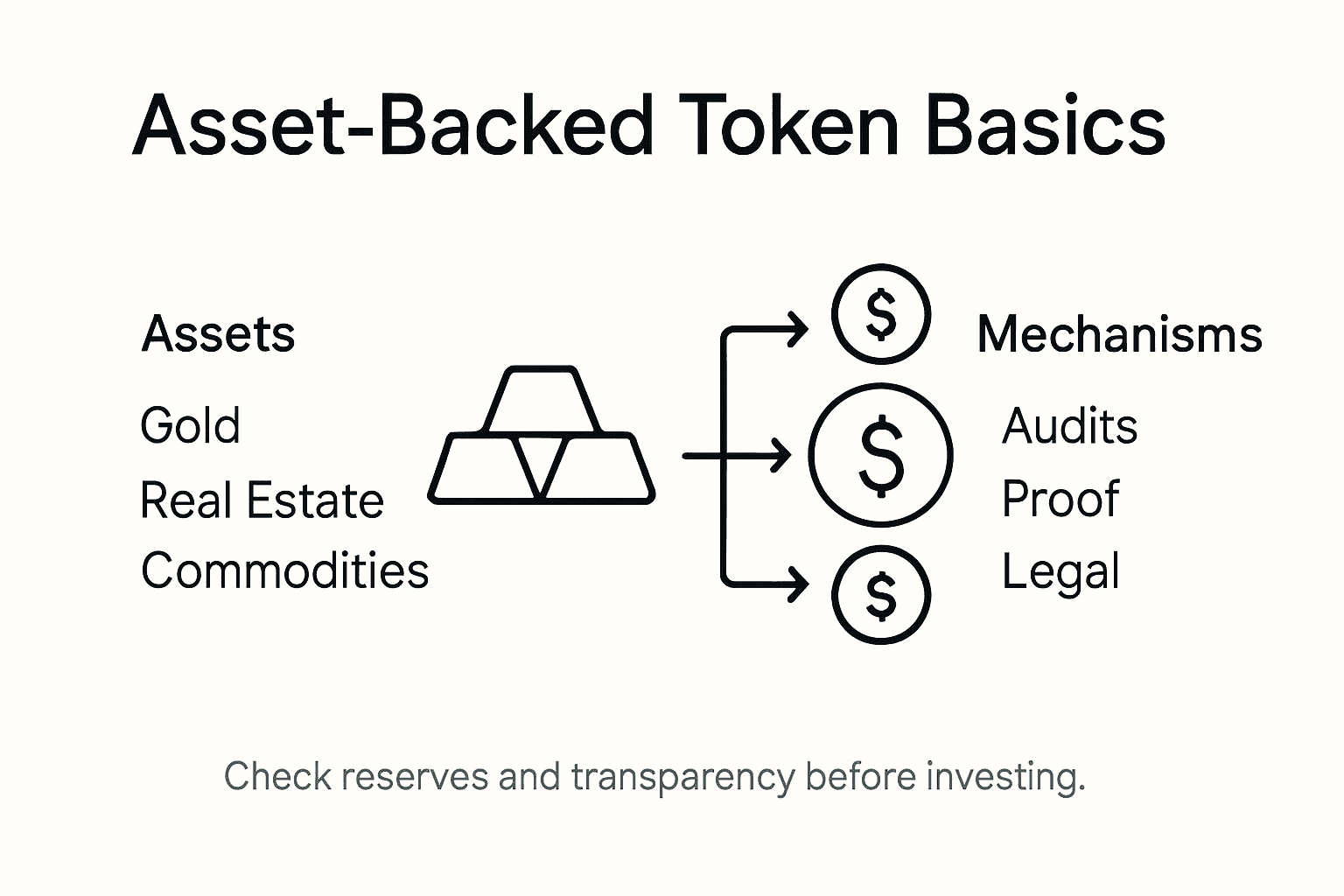
The most advanced transparency mechanisms go beyond simple snapshot audits, implementing continuous verification protocols that provide real-time insights into asset reserves. This approach minimizes potential discrepancies, reduces counterparty risk, and gives institutional investors unprecedented visibility into the actual backing of their digital asset investments.
The following table summarizes major proof of reserve methods and their effectiveness for asset-backed tokens:
| Proof of Reserve Method | Key Technology | Level of Transparency | Common Use Case |
|---|---|---|---|
| Independent Audit | Third-party verification | High, but periodic | Institutional-grade tokens |
| On-Chain Validation | Blockchain smart contracts | Real-time, public view | Mainstream commodity tokens |
| Cryptographic Proof | Zero-knowledge proofs | Continuous, automated | High-value asset tokens |
Pro tip: Develop a systematic checklist for evaluating Proof of Reserve mechanisms, focusing on audit frequency, cryptographic verification methods, and the reputation of independent auditing entities.
Legal, Regulatory, and Investor Risk Factors
Global regulatory frameworks for crypto assets represent a complex landscape of evolving legal considerations that institutional investors must carefully navigate. The diversity of international regulations creates a challenging environment where compliance requirements can dramatically differ across jurisdictions, demanding sophisticated risk management strategies.
Key regulatory risk factors for asset-backed tokens include:
- Jurisdictional Classification: Variable legal definitions of digital assets
- Compliance Requirements: Stringent KYC and AML regulations
- Securities Law Exposure: Potential classification as regulated financial instruments
- Cross-Border Transfer Restrictions: Complex international transaction rules
- Tax Treatment Uncertainty: Evolving approaches to digital asset taxation
Regulatory approaches to tokenized securities demonstrate significant international variation, with each jurisdiction implementing unique frameworks that can materially impact investor risk. The United States, European Union, and Asia-Pacific regions maintain distinctly different regulatory perspectives, creating a challenging compliance landscape for global institutional investors.
Institutional investors must implement comprehensive due diligence processes that account for the multifaceted regulatory risks inherent in asset-backed token investments. This includes continuous monitoring of regulatory developments, understanding jurisdiction-specific compliance requirements, and maintaining flexible investment strategies that can adapt to rapidly changing legal frameworks.
Pro tip: Develop a dynamic compliance tracking system that monitors regulatory changes across key jurisdictions, enabling rapid adaptation of investment strategies to emerging legal requirements.
Secure Your Investment with True Asset-Backed Tokens
Investing in asset-backed tokens demands confidence in genuine physical reserves, transparent proof of ownership, and airtight regulatory compliance. This article highlights critical challenges such as verifying proof of reserve, navigating complex tokenization models, and mitigating regulatory risks — all vital concerns for every smart investor seeking stability in digital assets.
At UK Financial Ltd, we understand these hurdles. Our platform offers a trusted gateway to gold-backed digital assets secured by verified precious metal reserves with comprehensive audit trails and real-time blockchain tracking. Explore how our flagship Maya Preferred PRA token and other secure offerings deliver transparency, regulatory adherence, and peace of mind for both retail and institutional investors.
Are you ready to elevate your portfolio with asset-backed tokens designed for security and compliance?
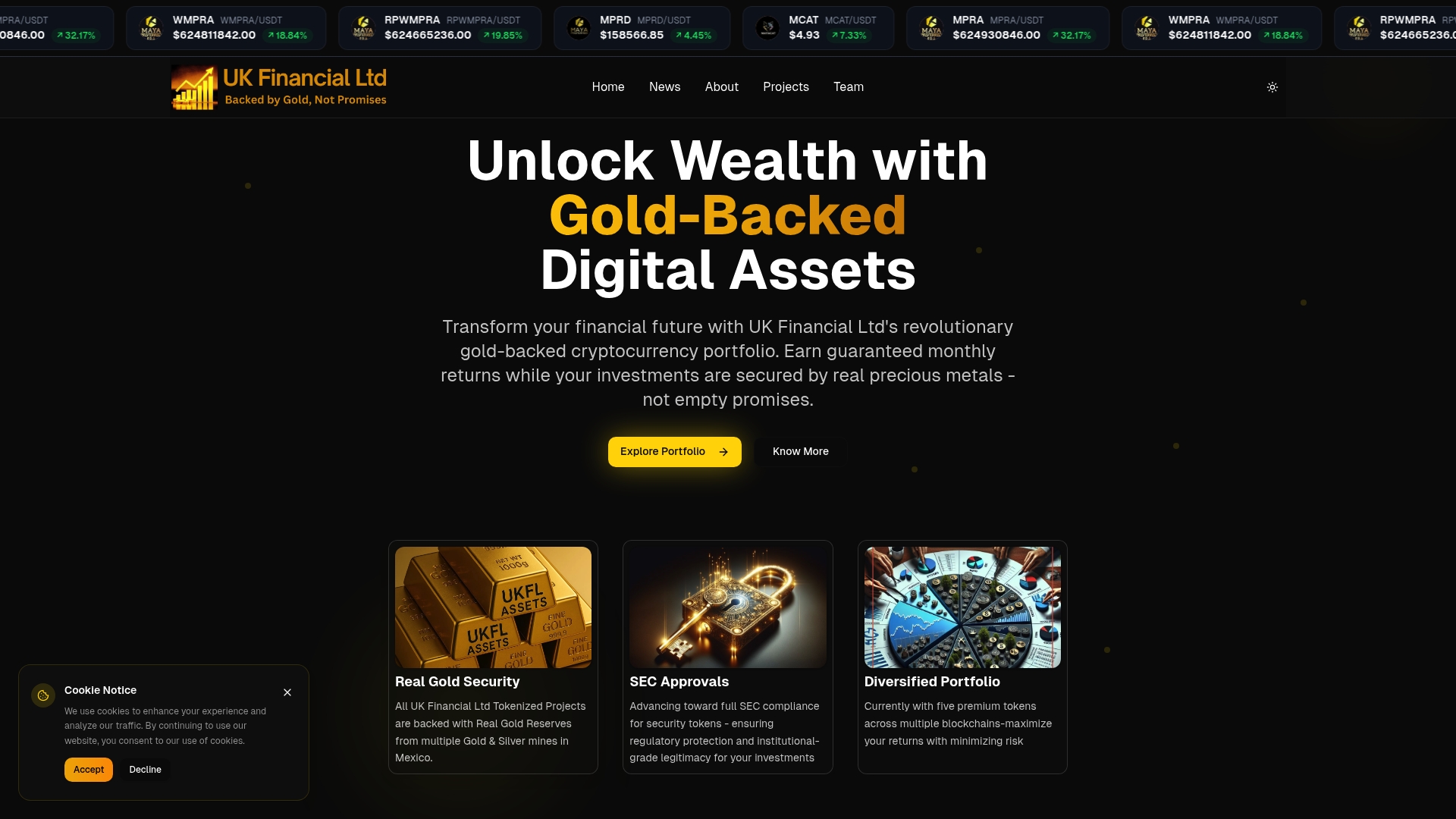
Discover your next investment opportunity now at UK Financial Ltd. Learn more about our gold-backed tokens and how we are pioneering transparency and trust in the digital asset space. Act today to secure your exposure to tangible asset value with industry-leading proof of reserve standards.
Frequently Asked Questions
What are asset-backed tokens?
Asset-backed tokens are digital representations of real-world assets such as gold, real estate, or commodities, secured by underlying value. They provide investors with a direct link to tangible assets, offering a more stable investment compared to traditional cryptocurrencies.
How do asset-backed tokens differ from traditional cryptocurrencies?
Unlike traditional cryptocurrencies, which may lack intrinsic value, asset-backed tokens have a direct correlation to physical assets, maintaining their value based on the performance of the underlying asset rather than speculative future use.
What are the common types of underlying assets for tokenization?
Common underlying assets for tokenization include financial securities (stocks, bonds), real estate, commodities (gold, silver), intellectual property (patents), and alternative investments (art, collectibles).
What should investors check before investing in asset-backed tokens?
Investors should verify the asset reserves, independent auditing mechanisms, and thorough documentation of the proof-of-reserve processes associated with the asset-backed tokens to ensure genuine value backing.