
What Is Tokenized Asset and Why It Matters

Most American fund managers now consider digital assets as part of a modern, diversified portfolio. With over $3 trillion in real-world assets expected to be tokenized within a few years, institutional investors are actively seeking transparent, compliant solutions for wealth preservation that include gold-backed options. Understanding how tokenized assets work sets the foundation for secure investment strategies across international markets, bringing clarity to complex concepts and the unique benefits these digital innovations offer.
Table of Contents
- Tokenized Assets Defined And Core Concepts
- Types Of Tokenized Assets And Differences
- How Asset Tokenization Works On Blockchain
- Regulatory Compliance And Investor Rights
- Risks, Liabilities, And Security Challenges
Key Takeaways
| Point | Details |
|---|---|
| Tokenization Enhances Accessibility | Tokenized assets allow for fractional ownership, making high-value investments accessible to a broader range of investors. |
| Blockchain Ensures Transparency | The use of blockchain technology provides real-time, verifiable ownership records, enhancing trust in asset management. |
| Regulatory Compliance is Crucial | Investors should thoroughly evaluate the regulatory frameworks of tokenization platforms to ensure compliance and protection of their rights. |
| Security Risks Must be Managed | Understanding and addressing cybersecurity threats is essential for anyone investing in tokenized assets to safeguard their investments. |
Tokenized Assets Defined and Core Concepts
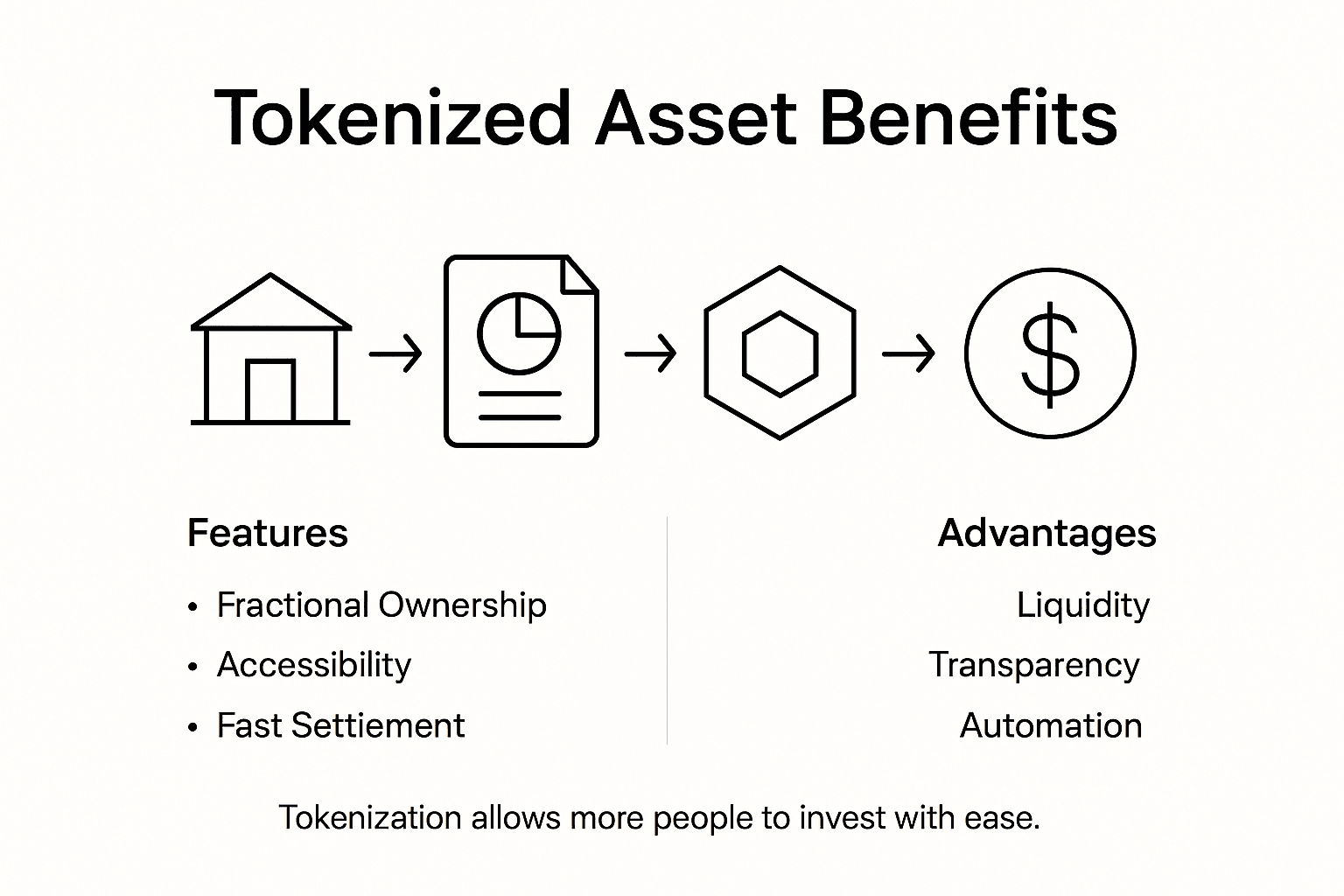
Tokenized assets represent a revolutionary approach to converting real-world assets into digital representations secured through blockchain technology. At their core, these digital tokens function as cryptographic representations of underlying physical or financial assets, enabling fractional ownership, enhanced liquidity, and unprecedented transparency in asset management.
Blockchain Tokenization fundamentally transforms traditional asset ownership by breaking down valuable resources like real estate, precious metals, or investment funds into tradable digital units. These tokens utilize sophisticated cryptographic protocols that ensure each digital representation maintains a verifiable, immutable connection to its original asset. The process involves creating a digital certificate of ownership tracked on decentralized ledgers, which allows for seamless transfer, division, and authentication of asset rights.
The key characteristics of tokenized assets include:
- Fractional Ownership: Enables investors to purchase smaller portions of high-value assets
- Enhanced Liquidity: Transforms traditionally illiquid assets into easily tradable digital units
- Global Accessibility: Removes geographical barriers for international investment
- Transparent Tracking: Provides real-time, verifiable ownership records through blockchain infrastructure
Tokenization introduces a paradigm shift in asset management by democratizing investment opportunities and reducing traditional transactional friction. Institutional investors can now access previously restricted markets with improved efficiency, lower transaction costs, and enhanced security mechanisms.
Pro Investor Insight: Research potential tokenization platforms thoroughly and understand their regulatory compliance, technological infrastructure, and asset verification processes before making any investment decisions.
Types of Tokenized Assets and Differences
Tokenized assets represent a diverse ecosystem with multiple classifications, each serving unique financial purposes and investment strategies. Researchers have identified distinct categories of tokens that enable investors to navigate complex digital asset landscapes with precision and strategic intent.

Payment Tokens function as digital currency equivalents, facilitating direct financial transactions without intermediary institutions. These tokens operate similarly to cryptocurrencies, providing rapid, secure transfer mechanisms across global networks. Utility Tokens represent access rights to specific platforms or services, allowing holders to interact with blockchain-based ecosystems through predefined mechanisms.
The most sophisticated category involves Asset Tokens, which provide direct representation of tangible and intangible resources. These tokens can encompass a wide range of assets, including:
- Real Estate Properties
- Financial Instruments
- Precious Metals
- Commodities
- Intellectual Property Rights
- Art and Collectibles
Hybrid tokens combine characteristics from multiple token types, offering nuanced investment opportunities that blend payment, utility, and direct asset representation functionalities. This sophisticated approach enables more complex financial instruments that can adapt to specific investor requirements and market conditions.
Here is a comparison of major token types and their primary investment uses:
| Token Type | Main Function | Typical Underlying Asset | Common Investor Benefit |
|---|---|---|---|
| Payment Token | Enables digital payments | None (acts as currency) | Fast global transactions |
| Utility Token | Platform/service access | Platform rights or services | Exclusive platform features |
| Asset Token | Represents real-world value | Real estate, equities, etc. | Direct ownership representation |
| Hybrid Token | Mixed functionality | Varies by project | Flexible, diversified use cases |
Pro Investor Insight: Carefully analyze the specific token’s underlying asset, regulatory compliance, and blockchain infrastructure before making investment commitments to ensure alignment with your financial goals.
How Asset Tokenization Works on Blockchain
Asset tokenization transforms traditional ownership models by converting physical and financial assets into digital tokens through sophisticated blockchain infrastructure. This revolutionary process enables fractional ownership, enhanced liquidity, and transparent tracking of asset rights across decentralized networks.
The tokenization mechanism involves several critical technical steps. Smart Contracts play a pivotal role by automatically encoding ownership rules, transfer protocols, and compliance requirements directly into the digital token’s programming. These self-executing contracts ensure that each token represents a precise, verifiable fraction of the underlying asset, with predefined governance mechanisms that protect investor interests.
Blockchain tokenization typically follows a structured workflow:
- Asset Verification: Comprehensive authentication of the physical or financial asset
- Digital Representation: Creating cryptographic tokens with precise ownership specifications
- Smart Contract Development: Encoding transfer rules, compliance requirements, and ownership rights
- Token Issuance: Generating and distributing tokens through secure blockchain platforms
- Ongoing Governance: Maintaining transparent, immutable records of token transactions
The integration of blockchain technology with investment instruments dramatically reduces transactional friction, eliminates intermediary costs, and provides real-time transparency. Institutional investors gain unprecedented access to granular asset ownership, enabling more flexible and dynamic investment strategies that were previously impossible through traditional financial infrastructure.
Pro Investor Insight: Always conduct thorough due diligence on the blockchain platform’s security protocols, regulatory compliance, and asset verification mechanisms before investing in tokenized assets.
Regulatory Compliance and Investor Rights
Indirect tokenization involves complex legal structures designed to protect investor rights and ensure transparent asset representation. These sophisticated legal frameworks establish critical safeguards that distinguish tokenized assets from traditional investment vehicles, providing institutional investors with robust protection mechanisms.
Regulatory Compliance represents a multi-layered approach to managing digital asset investments. Financial authorities require tokenization platforms to implement comprehensive verification processes, including:
- Know Your Customer (KYC) protocols
- Anti-Money Laundering (AML) screening
- Investor accreditation verification
- Continuous transaction monitoring
- Detailed reporting and disclosure requirements
Regulatory guidelines from financial oversight bodies mandate strict investor protection standards. These regulations ensure that tokenized assets maintain equivalent legal standing to traditional securities, with additional blockchain-based transparency benefits. Investors receive verifiable ownership rights, clear redemption mechanisms, and protected investment pathways that mitigate potential risks associated with digital asset transactions.
The legal infrastructure surrounding tokenized assets creates a comprehensive ecosystem of investor rights. This includes precise definition of ownership transfer protocols, embedded compliance mechanisms within smart contracts, and clearly defined governance structures that protect investor interests across international jurisdictions.
Pro Investor Insight: Always request and thoroughly review the platform’s regulatory compliance documentation, focusing on jurisdiction-specific investor protection frameworks before committing any investment capital.
Risks, Liabilities, and Security Challenges
Tokenization introduces complex risk landscapes that demand sophisticated institutional investor strategies beyond traditional investment risk management approaches. These digital assets present multifaceted security challenges that require comprehensive understanding and proactive mitigation techniques.
Cybersecurity Risks represent the most critical threat vector in tokenized asset ecosystems. Potential vulnerabilities include:
- Smart contract code exploitation
- Blockchain network penetration
- Private key compromise
- Token wallet security breaches
- Unauthorized transaction manipulation
The technological complexity of tokenized assets creates unique Regulatory Uncertainty environments. Different international jurisdictions maintain inconsistent legal frameworks, potentially exposing investors to unexpected compliance risks. Institutional investors must develop adaptive risk management strategies that anticipate evolving regulatory landscapes and potential legal ambiguities.
Technical security challenges require sophisticated multilayered defense mechanisms. Advanced blockchain platforms implement robust protection strategies including cryptographic authentication, decentralized verification protocols, and continuous security monitoring. These technical safeguards create multiple defensive barriers that significantly reduce potential exploitation risks while maintaining transactional transparency and investor protection.
The following table summarizes common security challenges and best practice mitigations in tokenized asset investing:
| Security Challenge | Typical Threat Vector | Best Practice Mitigation |
|---|---|---|
| Smart contract vulnerabilities | Coding errors, exploits | Regular code audits |
| Private key compromise | Phishing, theft | Use encrypted, multi-factor wallets |
| Unauthorized transactions | Insider threats, weak controls | Strict access control processes |
| Regulatory uncertainty | Changing laws, unclear rules | Obtain expert legal compliance review |
Pro Investor Insight: Conduct comprehensive third-party security audits of tokenization platforms, focusing on their blockchain infrastructure, smart contract integrity, and historical security performance before making significant investment commitments.
Unlock the Power of Tokenized Assets with Verified Gold Backing
The article highlights the critical challenges investors face with tokenized assets, including the need for transparent verification, strong regulatory compliance, and security against cybersecurity risks. Many investors seek trustworthy opportunities that offer fractional ownership and enhanced liquidity but worry about unclear asset backing and fragmented governance. At UK Financial Ltd, we address these pain points by offering a comprehensive portfolio of gold-backed digital tokens secured by verified precious metal reserves. Our platform prioritizes transparency through real-time blockchain asset tracking and detailed proof of reserve reports, giving investors peace of mind and confidence in their digital asset investments.
Experience the benefits of asset tokenization without compromising security or compliance. Discover how our flagship Maya Preferred PRA token and innovative projects like MayaCat deliver tangible value through strict regulatory adherence and corporate governance. Explore more about our solutions on UK Financial Ltd and see firsthand how secure, asset-backed tokens can transform your investment strategy.
Are you ready to embrace tokenized assets with integrity and security Explore our token offerings now and join a growing community focused on sustainable wealth preservation.
Take the next step toward secure, transparent tokenized ownership. Visit UK Financial Ltd and start investing in gold-backed digital assets designed for both retail and institutional needs today.
Frequently Asked Questions
What are tokenized assets?
Tokenized assets are digital representations of real-world assets secured through blockchain technology, allowing for fractional ownership, enhanced liquidity, and greater transparency in asset management.
How does the process of tokenization work?
Tokenization involves several steps, including asset verification, creating digital representations as tokens, developing smart contracts to govern ownership and transfers, issuing the tokens, and providing ongoing governance for tracking transactions on a blockchain.
What are the key benefits of investing in tokenized assets?
Key benefits include fractional ownership, which allows smaller investments in high-value assets; enhanced liquidity, enabling easier trading; global accessibility, removing geographical barriers; and transparent tracking of ownership through blockchain technology.
What are the different types of tokenized assets?
The main types of tokenized assets include payment tokens (similar to cryptocurrencies), utility tokens (providing access to services), asset tokens (representing real-world assets), and hybrid tokens (combining features of different types).