
Tokenized Gold: Secure Digital Asset Backing

Traditional gold investments are evolving as gold-backed digital assets gain traction among European institutional investors who recognize their compliance and portfolio advantages. Over 75 percent of institutional portfolios now include some exposure to digital or tokenized assets, with American innovators leading global advancements in blockchain-based gold solutions. This article highlights how compliant tokenized gold bridges the best of precious metals with cutting-edge cryptocurrency technology, helping you distinguish practical benefits from common misconceptions.
Table of Contents
- Tokenized Gold Defined And Common Misconceptions
- Types Of Gold-Backed Tokens And Structures
- How Tokenized Gold Works On Blockchain
- Legal Compliance And Regulatory Standards In Europe
- Risks, Costs, And Investor Considerations
Key Takeaways
| Point | Details |
|---|---|
| Tokenized Gold | Tokenized gold offers a digital representation of physical gold, enhancing liquidity and transparency without the need for physical storage. |
| Regulatory Compliance | Reputable tokenized gold platforms adhere to strict regulations, ensuring tangible asset backing and investor protection through audits and reporting. |
| Investment Risks | Potential risks in tokenized gold investments include technological vulnerabilities and regulatory complexities, necessitating thorough due diligence. |
| Blockchain Advantage | Blockchain technology provides real-time tracking and verification of gold reserves, transforming traditional investment methodologies. |
Tokenized Gold Defined and Common Misconceptions
Tokenized gold represents a sophisticated digital financial instrument where physical gold reserves are represented through blockchain-based cryptographic tokens, enabling investors to own fractional gold assets without physical storage challenges. These digital assets bridge traditional precious metal investments with modern cryptocurrency technologies, creating a unique investment vehicle for institutional and individual investors seeking portfolio diversification.
The fundamental mechanism behind tokenized gold involves creating digital representations of actual gold reserves, where each token corresponds to a specific weight of physical gold stored in secure, audited vaults. Unlike traditional gold investments, these tokens offer unprecedented transparency, allowing investors to verify reserve holdings through blockchain technology and track asset backing in real time. Investors can buy, sell, or trade these tokens with greater liquidity and lower transaction costs compared to physical gold purchases.
Common misconceptions about tokenized gold often stem from misunderstandings about its underlying structure and regulatory environment. Many investors incorrectly assume these tokens are unregulated or lack tangible asset backing. In reality, reputable tokenized gold platforms maintain strict compliance with financial regulations, conduct regular third-party audits, and ensure each token represents a precise, verifiable quantity of physical gold. These digital assets are not speculative cryptocurrencies but represent direct ownership of real, tradable gold reserves.
Pro tip: Before investing in tokenized gold, always verify the platform’s proof of reserve reports and understand the specific gold-backing ratios for each token to ensure transparency and asset security.
Types of Gold-Backed Tokens and Structures
Gold-backed tokens represent a sophisticated digital asset class with diverse structural approaches, each designed to meet different investor requirements and technological standards. Comprehensive token structures range from fully-backed physical gold reserves to innovative hybrid models that blend on-chain digital representations with traditional custodial frameworks. These tokens fundamentally transform how investors can interact with precious metal investments, offering unprecedented flexibility and accessibility.
The primary categories of gold-backed tokens include fully-backed tokens, which maintain a strict 1:1 physical gold reserve ratio, and fractional ownership tokens that enable investors to purchase smaller gold investment increments. Popular examples like PAX Gold (PAXG), Tether Gold (XAUT), and DigixGlobal (DGX) demonstrate the variety of approaches within this emerging asset class. These tokens are typically issued on established blockchain platforms such as Ethereum, Binance Smart Chain, and Solana, each providing unique smart contract mechanisms for minting, burning, and trading digital gold representations.
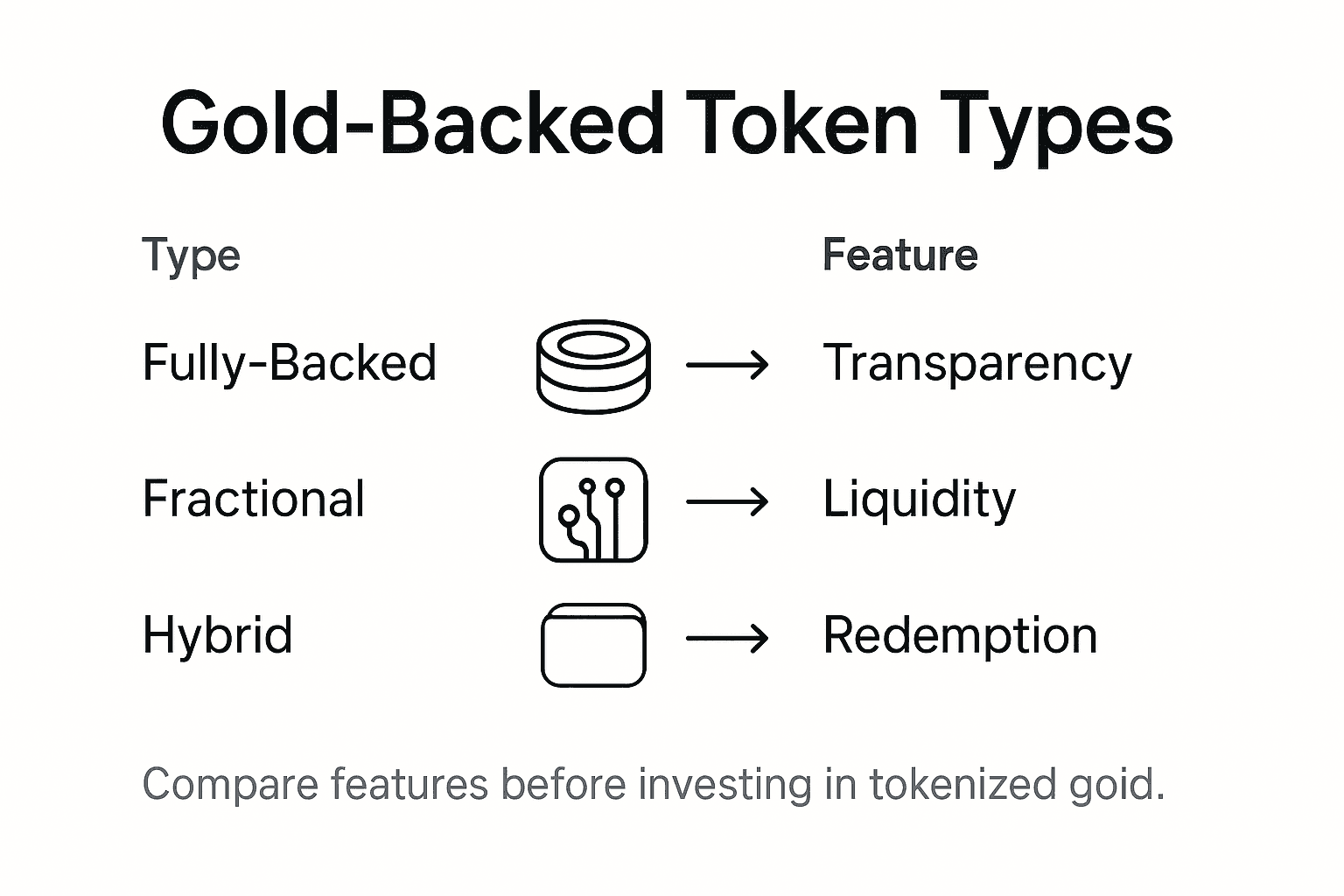
Blockchain technology enables these tokens to offer remarkable transparency and liquidity compared to traditional gold investments. Different structures provide varying levels of physical gold redemption, with some tokens allowing direct conversion to physical gold, while others focus exclusively on digital trading. Institutional investors particularly appreciate the sophisticated custody arrangements, regular third-party audits, and comprehensive reserve attestations that accompany these advanced digital assets.
Here’s a summary comparing common gold-backed token structures and their business impacts:
| Token Structure | Physical Redemption | Fractional Ownership | Business Impact |
|---|---|---|---|
| Fully-backed tokens | Usually allowed | Yes | Enhanced trust, lower risk |
| Fractional ownership | Rarely allowed | Yes | Accessible to small investors |
| Hybrid/custodial model | Sometimes allowed | Yes | Flexible, may require trust |
Pro tip: When evaluating gold-backed tokens, carefully compare the blockchain platform, redemption policies, and custody arrangements to ensure alignment with your specific investment strategy and risk tolerance.
How Tokenized Gold Works on Blockchain
Blockchain technology enables a revolutionary approach to gold ownership through a sophisticated process of digital representation and asset management. The fundamental mechanism involves creating cryptographic tokens that serve as direct representations of physical gold, securely stored in certified vaults and tracked through immutable blockchain ledgers. This innovative approach transforms traditional gold investment by introducing unprecedented levels of transparency, accessibility, and fractional ownership capabilities.
The tokenization process begins with the secure procurement of physical gold, followed by storage in audited and certified repositories. Smart contracts then generate digital tokens with precise links between the token supply and actual gold reserves. Each token represents a specific weight of gold, enabling investors to purchase and trade fractional amounts that were previously impossible with traditional gold investments. Blockchain platforms like Ethereum, Binance Smart Chain, and Solana provide the technological infrastructure, utilizing sophisticated smart contract mechanisms to manage token minting, burning, and transfer processes.
Blockchain’s inherent characteristics dramatically enhance the gold investment landscape by providing real-time, transparent tracking of asset ownership. The immutable ledger ensures that every token transaction is permanently recorded, creating an auditable trail that reduces counterparty risk and enables instant global trading. Institutional investors particularly benefit from the 24/7 trading capabilities, reduced settlement times, and the ability to verify gold reserves through cryptographic proof, which eliminates many traditional barriers associated with physical gold investments.
Pro tip: Before investing in tokenized gold, verify the platform’s blockchain infrastructure, smart contract audit history, and the specific custodial arrangements that guarantee your physical gold backing.
Legal Compliance and Regulatory Standards in Europe
European regulatory frameworks for tokenized gold represent a sophisticated approach to digital asset governance, balancing innovative financial technologies with robust investor protections. The regulatory landscape is characterized by comprehensive standards designed to ensure transparency, prevent financial misconduct, and create a secure environment for digital asset investments. These frameworks primarily focus on establishing clear guidelines for token issuance, custody, and trading, with particular emphasis on Anti-Money Laundering (AML) and Know Your Customer (KYC) compliance.

The Markets in Crypto-Assets (MiCA) directive emerges as a cornerstone of European regulatory strategy, providing a comprehensive legal structure for tokenized assets. Regulatory standards across European Union member states mandate stringent requirements for token issuers, including detailed disclosure protocols, investor classification mechanisms, and rigorous asset safeguarding practices. These regulations aim to create a harmonized approach to digital asset regulation, ensuring that tokenized gold offerings meet strict transparency and accountability standards while protecting institutional and retail investors from potential financial risks.
Compliance requirements for tokenized gold in Europe extend beyond mere legal documentation, encompassing comprehensive audit trails, secure custody arrangements, and continuous verification of physical gold reserves. Token issuers must implement sophisticated governance structures that include regular third-party audits, transparent reserve reporting, and robust mechanisms for investor asset protection. The regulatory approach demonstrates a nuanced understanding of blockchain technologies, seeking to balance innovation with prudent financial oversight, thereby creating a trusted environment for digital asset investments.
Pro tip: When considering European tokenized gold investments, carefully review the issuer’s MiCA compliance documentation and verify their specific regulatory certifications across different EU jurisdictions.
Risks, Costs, and Investor Considerations
Tokenized gold investments present a complex landscape of potential risks and strategic opportunities that require meticulous evaluation by institutional investors. The investment approach demands a sophisticated understanding of multiple risk dimensions, including technological vulnerabilities, custody complexities, and regulatory uncertainties. Unlike traditional gold investments, tokenized assets introduce additional layers of complexity that necessitate comprehensive due diligence and strategic risk management.
The primary risk categories for tokenized gold include technological vulnerabilities, counterparty risks, and regulatory challenges. Smart contract infrastructure can potentially expose investors to hacking threats or systemic blockchain vulnerabilities, while custody arrangements require rigorous verification of physical gold reserves. Financial considerations extend beyond typical investment costs, encompassing issuance fees, storage expenses, insurance premiums, and trading transaction costs. These multifaceted expense structures demand careful analysis to ensure the investment’s overall economic viability and potential returns align with institutional investment strategies.
Institutional investors must conduct thorough assessments of tokenized gold platforms, evaluating their governance structures, technological robustness, and compliance frameworks. Key evaluation criteria should include the platform’s transparency mechanisms, third-party audit histories, reserve verification protocols, and regulatory compliance across different jurisdictions. The potential benefits of liquidity, fractional ownership, and simplified international trading must be carefully balanced against the inherent technological and financial risks associated with digital asset investments.
The table below summarizes key risk factors and costs involved in tokenized gold investing:
| Risk/Cost Type | Description | Potential Impact |
|---|---|---|
| Technological risk | Smart contract vulnerabilities | Loss of tokens or hacking |
| Custody complexity | Verification of gold reserves | Exposure to fraud or disputes |
| Regulatory requirement | Compliance documentation | Barriers for cross-border trade |
| Transaction and storage fees | Costs for trading and holding | Erodes investment returns |
Pro tip: Develop a comprehensive risk assessment matrix that quantifies technological, regulatory, and financial risks specific to each tokenized gold platform before committing institutional investment capital.
Secure Your Future with Trusted Tokenized Gold Solutions
Investing in tokenized gold offers incredible benefits like transparency, fractional ownership, and blockchain-backed security. Yet challenges such as verifying physical gold reserves, navigating regulatory compliance, and managing technological risks can create uncertainty. UK Financial Ltd understands these critical pain points and delivers a reliable platform where gold-backed tokens like the flagship Maya Preferred PRA and MayaCat meme coin are secured by verified precious metal reserves. Our focus on regulatory compliance, proof of reserve reports, and real-time blockchain asset tracking bridges the trust gap for both retail and institutional investors aiming for wealth preservation and diversification.
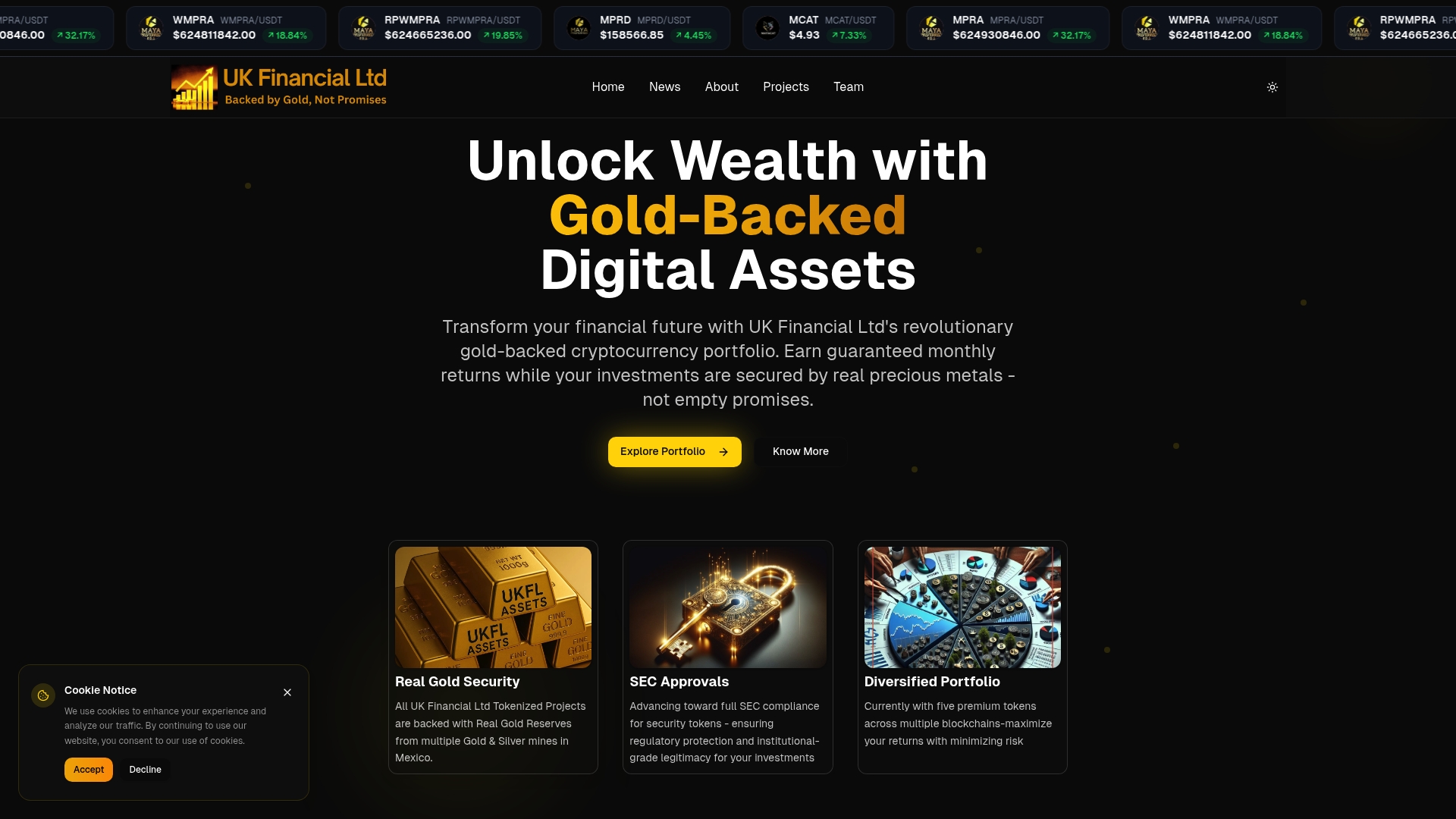
Explore how our comprehensive ecosystem transforms the complex process of tokenized gold investment into a clear and secure opportunity. Visit UK Financial Ltd to access live token performance data and detailed governance information. Take control today and gain exposure to secure, asset-backed digital gold with confidence. Visit our platform now and step into the future of trusted precious metal investment.
Frequently Asked Questions
What is tokenized gold?
Tokenized gold is a digital financial instrument that represents physical gold reserves using blockchain-based tokens, allowing investors to own fractional amounts of gold without the challenges of physical storage.
How does tokenized gold ensure asset security and transparency?
Tokenized gold platforms typically undergo regular third-party audits and maintain strict compliance with financial regulations, ensuring that each token is directly linked to a verifiable quantity of physical gold stored in secure vaults.
What are the different types of gold-backed tokens available?
Gold-backed tokens can be categorized into fully-backed tokens that maintain a 1:1 gold reserve and fractional ownership tokens that allow investors to buy smaller increments of gold, providing flexible investment options.
What risks should investors consider when investing in tokenized gold?
Investors should be aware of risks such as technological vulnerabilities related to smart contracts, custody complexities in verifying gold reserves, and regulatory compliance issues that might impact their investment.
Recommended
- UK Financial Ltd – Gold-Backed Cryptocurrency Portfolio
- News | UK Financial Ltd
- UK Financial Ltd Sets Official 30-Day Conversion Deadline for Three Exchange-Listed Tokens Ahead of Regulated Upgrade
- Official News | UK Financial Ltd
- Gold und Immobilien: Diversifikation für Krisenzeiten – GoldSilberMarkt