
Role of Compliance in Digital Assets: SEC Influence

Regulatory action in digital asset markets is accelerating, with over 80 percent of institutional investors in North America and Europe prioritizing compliance when considering gold-backed token exposure. For any American or European fund manager concerned about security, transparency, and meeting cross-border standards, understanding today’s evolving compliance frameworks is essential. This overview explains the real regulatory risks and details the strategies needed to confidently access secure digital assets while remaining aligned with regional requirements.
Table of Contents
- Defining Compliance In Digital Asset Markets
- Key Regulations Shaping Digital Asset Compliance
- SEC Compliance For Gold-Backed Tokens
- Proof Of Reserve: Enhancing Transparency And Trust
- Investor Onboarding And AML/KYC Standards
Key Takeaways
| Point | Details |
|---|---|
| Digital Asset Compliance is Multifaceted | Compliance frameworks encompass AML, KYC, and transaction monitoring, essential for protecting investors in evolving markets. |
| Regulatory Evolution Requires Agility | Investors must adapt to shifting regulations across jurisdictions, necessitating proactive risk management and flexible compliance strategies. |
| Proof of Reserve Enhances Transparency | Implementing Proof of Reserve systems ensures asset verification but should complement traditional auditing for comprehensive oversight. |
| Robust Investor Onboarding is Critical | Effective AML and KYC processes enhance trust while leveraging technology reduces errors and improves efficiency in compliance management. |
Defining Compliance in Digital Asset Markets
Compliance in digital asset markets represents a sophisticated framework of regulatory procedures designed to mitigate financial risks and protect investor interests across complex technological environments. Modern regulatory approaches demand comprehensive strategies that balance innovation with robust security protocols. Financial institutions must navigate intricate regulatory landscape challenges while maintaining operational flexibility.
At its core, digital asset compliance encompasses multiple critical dimensions including anti-money laundering (AML) protocols, know your customer (KYC) verification processes, and rigorous transaction monitoring systems. These mechanisms serve as foundational safeguards against potential financial misconduct, enabling institutional investors to participate confidently in emerging digital markets. Jurisdictions worldwide have developed unique regulatory frameworks, recognizing that standardized global approaches remain challenging due to technological complexity and rapid market evolution.
The World Economic Forum highlights that effective digital asset compliance requires harmonized global standards that protect stakeholders while fostering technological innovation. Key regulatory considerations include product classification, licensing requirements, and sophisticated risk management protocols. Institutional investors must pay particular attention to jurisdictional variations, understanding that compliance strategies must be adaptable and responsive to regional regulatory nuances.
Successful navigation of digital asset compliance demands continuous education, proactive risk management, and strategic technological infrastructure. Investors and financial professionals must remain agile, anticipating regulatory shifts and implementing robust compliance frameworks that can withstand increasing scrutiny.
Pro tip: Develop a comprehensive compliance monitoring system that integrates real-time regulatory updates and automated verification processes to maintain ongoing regulatory alignment.
Key Regulations Shaping Digital Asset Compliance
The global regulatory landscape for digital assets is experiencing unprecedented transformation, with increasingly sophisticated frameworks emerging to address the unique challenges posed by blockchain technologies. Regulatory trends demonstrate a strategic approach toward balancing technological innovation with comprehensive risk management protocols across multiple jurisdictions.
Key regulatory frameworks have emerged from major financial centers, with significant developments in the European Union, United States, and United Kingdom. The European Union’s Markets in Crypto-Assets (MiCA) regulation represents a pioneering approach, establishing clear guidelines for crypto asset classification, investor protection, and mandatory disclosure requirements. In the United States, the Securities and Exchange Commission (SEC) and Commodity Futures Trading Commission (CFTC) continue to refine their oversight mechanisms, focusing on preventing market manipulation and ensuring transparent financial reporting for digital asset platforms.

Complex regulatory considerations extend beyond traditional financial oversight, encompassing critical areas such as anti-money laundering (AML), know your customer (KYC) protocols, and decentralized finance (DeFi) governance. Cross-border regulatory challenges remain particularly nuanced, with jurisdictions developing unique approaches to addressing technological innovations that transcend traditional regulatory boundaries. Institutional investors must carefully navigate these intricate frameworks, understanding that compliance requirements can vary dramatically between different national and regional contexts.
The evolving regulatory environment demands continuous adaptation and proactive risk management strategies. Financial professionals must remain agile, developing comprehensive compliance infrastructures that can respond quickly to emerging regulatory requirements and technological advancements.
Here’s a comparison of leading regulatory frameworks influencing digital asset compliance:
| Jurisdiction | Key Regulation | Main Focus | Notable Requirement |
|---|---|---|---|
| European Union | MiCA | Asset classification | Mandatory disclosures |
| United States | SEC/CFTC oversight | Market manipulation | Transparent reporting |
| United Kingdom | FCA rules | Investor protection | Licensing required |
Pro tip: Implement a dynamic compliance monitoring system that integrates real-time regulatory updates from multiple jurisdictions to ensure comprehensive and adaptive risk management.
SEC Compliance for Gold-Backed Tokens
Gold-backed tokens represent a sophisticated financial instrument that demands rigorous regulatory scrutiny, particularly from the Securities and Exchange Commission (SEC). Regulatory complexities surrounding gold tokens require institutional investors to develop comprehensive compliance strategies that address multiple layers of financial oversight.
The SEC evaluates gold-backed tokens through a multifaceted lens, typically classifying them as securities that necessitate stringent registration and disclosure requirements. This classification means token issuers must provide transparent documentation about their physical gold reserves, custody arrangements, and comprehensive auditing processes. Institutional investors must understand that these tokens are subject to the same regulatory standards as traditional securities, which includes detailed reporting on asset backing, valuation methodologies, and potential risks associated with the underlying physical gold reserves.
Navigating the regulatory landscape requires a proactive approach to compliance. Comprehensive legal frameworks mandate that gold-backed token issuers establish robust mechanisms for verifying asset reserves, maintaining transparent custody arrangements, and implementing sophisticated tracking systems. The SEC places significant emphasis on ensuring that investors receive accurate, timely information about the token’s underlying assets, requiring detailed disclosures that demonstrate the direct correlation between the digital token and its physical gold reserve.
Successful SEC compliance for gold-backed tokens involves creating a comprehensive regulatory strategy that anticipates potential scrutiny and demonstrates unwavering commitment to investor protection. Financial professionals must develop adaptive compliance frameworks that can respond quickly to evolving regulatory requirements while maintaining the highest standards of transparency and financial integrity.
Pro tip: Develop a comprehensive compliance documentation system that provides real-time tracking and verification of physical gold reserves to streamline SEC reporting requirements.
Proof of Reserve: Enhancing Transparency and Trust
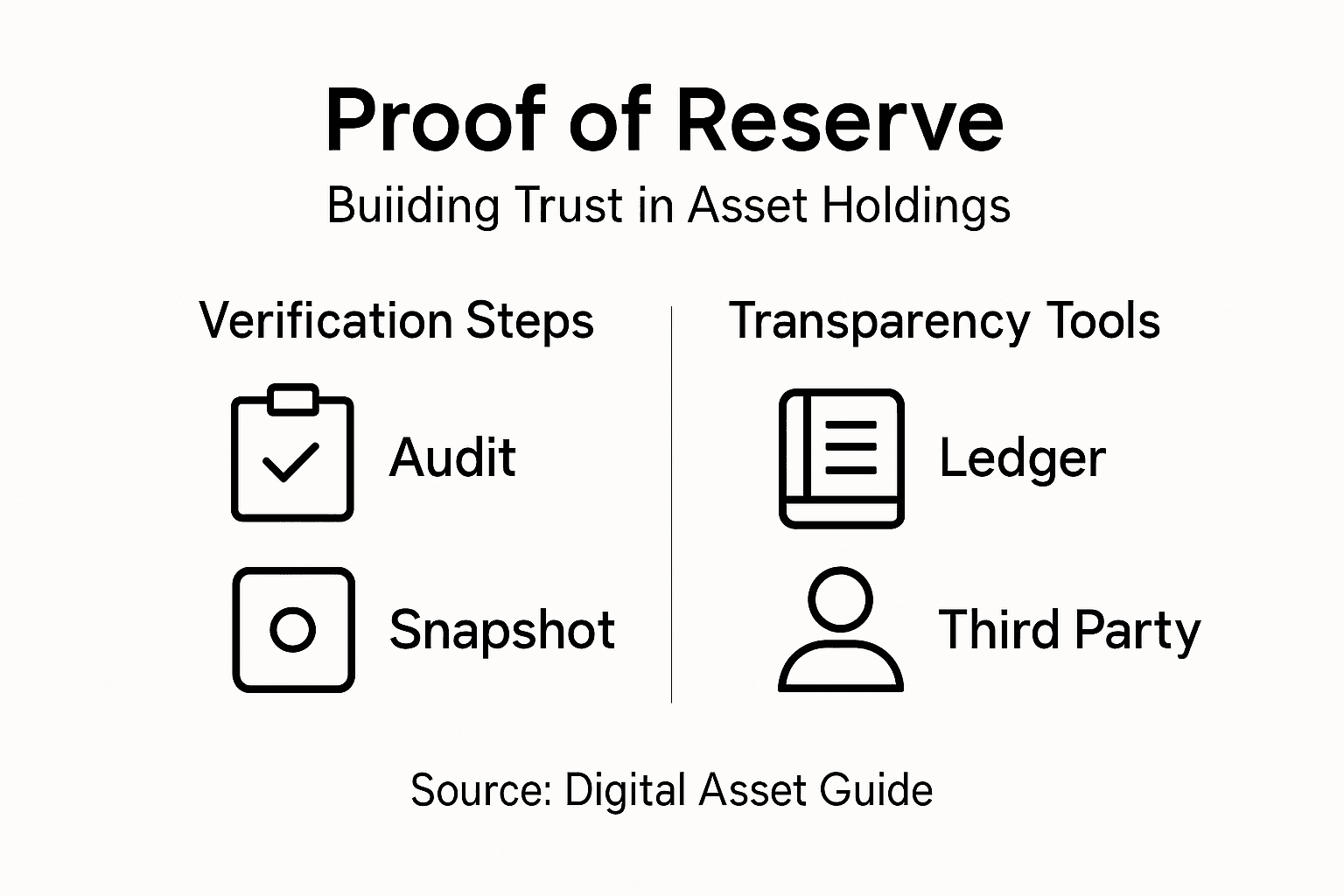
Proof of Reserve (PoR) represents a critical technological mechanism designed to establish unprecedented levels of transparency and accountability in digital asset management. Blockchain transparency mechanisms offer institutional investors a sophisticated method for verifying asset holdings through cryptographic proofs and immutable blockchain records.
The fundamental architecture of Proof of Reserve involves creating a comprehensive, verifiable snapshot of an organization’s asset holdings, enabling external stakeholders to independently confirm the existence and sufficiency of underlying reserves. This process utilizes advanced cryptographic techniques that allow for real-time auditing without compromising sensitive financial information. By implementing robust PoR protocols, digital asset platforms can demonstrate their commitment to financial transparency, providing investors with tangible evidence of their asset backing and operational integrity.
However, institutional investors must recognize that Proof of Reserve is not a comprehensive solution but rather one component of a broader risk management strategy. PoR snapshots represent a moment-in-time assessment and do not guarantee future financial stability. Sophisticated investors should view these proofs as complementary to traditional financial auditing methods, requiring ongoing verification, comprehensive internal controls, and dynamic risk assessment protocols. The most effective PoR implementations integrate blockchain technology with rigorous external auditing processes, creating a multilayered approach to financial transparency.
Successful implementation of Proof of Reserve demands a holistic approach that combines technological innovation with traditional financial governance principles. Organizations must develop sophisticated frameworks that not only meet current regulatory standards but anticipate future compliance requirements, demonstrating a proactive commitment to investor protection and financial transparency.
Pro tip: Implement a dynamic Proof of Reserve system that provides continuous, real-time verification of asset holdings and integrates automated compliance monitoring.
Investor Onboarding and AML/KYC Standards
Modern digital asset investment demands sophisticated investor onboarding processes that integrate robust anti-money laundering (AML) and know your customer (KYC) protocols. Digital compliance workflows represent a critical technological and regulatory infrastructure designed to protect financial ecosystems from potential fraud and illicit activities.
The investor onboarding process involves multiple comprehensive verification stages, each meticulously designed to establish the identity, financial background, and risk profile of potential investors. These procedures typically require extensive documentation, including government-issued identification, proof of address, financial statements, and detailed background checks. Advanced digital platforms now leverage artificial intelligence and machine learning technologies to streamline these verification processes, reducing manual review time while maintaining exceptional accuracy and compliance standards.
Institutional investors must recognize that AML and KYC standards extend far beyond initial identification procedures. Comprehensive compliance protocols demand continuous monitoring, periodic risk reassessments, and dynamic reporting mechanisms. This ongoing surveillance ensures that investor profiles remain current and that any suspicious financial activities can be rapidly detected and reported to appropriate regulatory authorities. The most effective compliance programs integrate real-time screening against international sanctions lists, politically exposed person (PEP) databases, and advanced risk scoring algorithms.
Successful AML and KYC implementation requires a holistic approach that balances regulatory compliance with a seamless user experience. Financial institutions must develop flexible, technology-driven frameworks that can adapt to evolving regulatory landscapes while maintaining the highest standards of security and transparency.
The following table summarizes core AML/KYC verification methods and their impact on investor onboarding:
| Verification Method | Purpose | Impact on Onboarding |
|---|---|---|
| Identity Documents | Confirm legitimacy | Enhances regulatory trust |
| AI-Based Screening | Automate checks | Reduces manual errors |
| Risk Scoring Algorithms | Profile investors | Detects high-risk behavior |
Pro tip: Implement an integrated compliance management system that combines automated verification, continuous monitoring, and adaptive risk assessment technologies.
Secure Your Investments with Proven Compliance and Transparency
Navigating the complex landscape of SEC compliance and regulatory oversight for gold-backed tokens can feel overwhelming. The article highlights the importance of rigorous compliance frameworks, transparent Proof of Reserve systems, and real-time asset verification to build investor trust. If you seek a digital asset platform that prioritizes these critical factors, understanding the nuances of SEC influence and compliance is essential to safeguard your investments.

At UK Financial Ltd, we deliver an unmatched commitment to regulatory compliance, transparency, and security. Our suite of gold-backed and cryptocurrency tokens, including the flagship Maya Preferred PRA, combines blockchain-based asset tracking with comprehensive compliance strategies aligned with SEC requirements. Explore how our platform integrates advanced Proof of Reserve reports and live performance data to empower both retail and institutional investors with confidence and clarity. Act now to secure your exposure to asset-backed digital tokens by visiting our site and learning more about our commitment to compliance and investor protection.
Frequently Asked Questions
What is digital asset compliance?
Digital asset compliance refers to the regulatory framework and procedures established to ensure adherence to laws, protect investors, and mitigate financial risks in digital asset markets.
How does the SEC influence compliance for gold-backed tokens?
The SEC classifies gold-backed tokens as securities, imposing strict registration and disclosure requirements to ensure transparency about asset reserves and custody arrangements.
What are the key components of AML and KYC protocols in digital asset investment?
AML (anti-money laundering) and KYC (know your customer) protocols involve verifying investor identities, screening against sanctions and risk databases, and continuously monitoring for suspicious activities.
Why is Proof of Reserve important for digital asset transparency?
Proof of Reserve provides a verifiable snapshot of an organization’s asset holdings, allowing external stakeholders to confirm the existence and sufficiency of reserves, thereby enhancing financial transparency.
Recommended
- UK Financial Ltd Executes Compliance Tasks Ahead Of First-Ever ERC-3643 Exchange-Traded Token, SMCAT & Sets Date For Online Investor Governance Vote
- UK Financial Ltd Establishes United States Operations in Delaware, Announces Texas Expansion
- UK Financial Ltd – Gold-Backed Cryptocurrency Portfolio
- News | UK Financial Ltd
- Financial Stability Oversight Council Softens Crypto Stance in 2025 Report
- Role Of Accountants In Compliance: Why It Matters In UK
- Crypto Trading Bot Security: Protecting Profits and Data