
Regulatory Guide for Digital Assets 2025: Achieve Full Compliance

Compliance for gold-backed digital assets holds new urgency as major jurisdictions shape their own frameworks for tokenization and asset management. Institutional investors face increased complexity since a single structure rarely fits all markets from the United States to Singapore and Switzerland. This overview gives you a clear view of regulatory divergence and classification challenges so you can build a robust compliance roadmap for 2025.
Table of Contents
- Step 1: Assess Global Regulatory Frameworks For Digital Assets
- Step 2: Establish Robust Compliance Structures For Token Operations
- Step 3: Implement Secure Asset-Backing And Proof Of Reserves
- Step 4: Fulfill Ongoing Disclosure And Global Reporting Obligations
- Step 5: Verify Compliance Through Audits And Legal Reviews
Quick Summary
| Key Insight | Explanation |
|---|---|
| 1. Assess global regulatory frameworks | Understand diverse regulations in key jurisdictions to ensure compliance for gold-backed digital assets. |
| 2. Establish robust compliance structures | Develop internal policies and governance to maintain legal operations and meet regulatory requirements. |
| 3. Implement secure proof of reserves | Validate existence of physical gold reserves with transparent and auditable processes to build investor trust. |
| 4. Fulfill ongoing disclosure obligations | Maintain a disclosure system that ensures ongoing compliance with reporting standards across jurisdictions. |
| 5. Conduct regular audits and legal reviews | Engage independent auditors and legal experts to verify compliance and adapt to evolving regulations. |
Step 1: Assess global regulatory frameworks for digital assets
Your gold-backed digital assets operate within a complex web of regulatory requirements that vary dramatically by jurisdiction. Before you commit capital or expand your portfolio, you need a clear picture of which regulatory regimes apply to your specific holdings and how they’ll affect your compliance obligations. This step focuses on understanding the key regulatory frameworks that shape the digital asset landscape in 2025.
Start by identifying the primary jurisdictions where your institutional investors operate and where your assets are marketed or traded. The regulatory environment isn’t monolithic. A framework that works for token issuance in Singapore may create entirely different compliance challenges in the European Union or United States. Comparative analysis of global regulatory frameworks reveals how jurisdictions approach digital asset classification, investor protection, and anti-money laundering requirements differently. Some treat digital assets as securities, others as commodities, and still others as foreign exchange instruments. Document each jurisdiction’s specific stance on asset-backed tokens and determine whether your gold-backed structures align with their classification standards.
Next, map the regulatory taxonomy for each market. Key areas to assess include anti-money laundering protocols, know-your-customer requirements, decentralized finance restrictions, and data privacy policies. The World Economic Forum has documented how digital asset regulation varies across jurisdictions, emphasizing both the commonalities and critical differences that affect compliance strategies. For institutional investors managing gold-backed digital assets, pay particular attention to whether your jurisdiction requires separate compliance for the blockchain-based token versus the physical reserve backing. Additionally, research whether your jurisdiction has established technical sandboxes or regulatory innovation programs that might provide guidance for token structures like ERC-3643 standards used in asset-backed offerings.
Create a compliance matrix documenting each jurisdiction’s requirements, implementation timelines, and potential penalties for non-compliance. This becomes your operational reference guide. As you evaluate each framework, assess how emerging regulations interact with existing financial services laws in your territory. The regulatory landscape continues evolving, and what’s compliant today may shift next quarter.
The table below summarizes how major jurisdictions approach gold-backed digital asset regulation:
| Jurisdiction | Asset Classification | Token Issuance Requirements | AML/KYC Standards |
|---|---|---|---|
| United States | Securities or commodities | SEC or CFTC registration, specific license | Strict, identity and source verification |
| European Union | Financial instruments or e-money | MiCA compliance, central bank notification | Strong, GDPR-aligned privacy practices |
| Singapore | Digital payment token or commodity | MAS licensing, sandbox options available | Comprehensive, ongoing monitoring |
| Switzerland | DLT securities or investment assets | FINMA approval, technology-neutral | Risk-based, includes institutional focus |
Pro tip: Assign a dedicated compliance resource to monitor regulatory announcements from your primary jurisdictions through official financial regulatory authority channels and industry associations, since framework changes often take effect with minimal notice.
Step 2: Establish robust compliance structures for token operations
Building a compliance infrastructure isn’t a one-time checkbox exercise. It’s the foundational system that keeps your token operations functioning legally across multiple jurisdictions while protecting your institutional investors. This step walks you through creating the operational and governance structures that enable sustainable, compliant token operations.
Start by defining your token’s regulatory classification within each jurisdiction where you operate. Gold-backed digital assets can fall into different categories depending on local frameworks, and this classification drives everything downstream. Some jurisdictions treat them as securities requiring securities licenses, while others classify them under financial services regulations or treat them as commodities. Regulatory categories and licensing requirements differ substantially across markets, so document exactly how your token is classified in each territory. This classification determines which compliance controls apply, who needs to be licensed, and what ongoing reporting obligations you’ll face. Once you’ve mapped classifications, establish clear operational boundaries for each jurisdiction and create internal policies reflecting those boundaries.

Next, implement your anti-money laundering and know-your-customer framework. This isn’t generic compliance theater; it’s tailored to your specific token operations and investor base. Institutional investors require sophisticated KYC processes that go beyond standard identity verification. You’ll need to establish transaction monitoring systems, beneficial ownership verification for institutional clients, and suspicious activity reporting procedures. Policy measures for crypto-asset activities emphasize that licensing regimes and ongoing supervision create investor protection while enabling institutional adoption. Build these controls into your platform infrastructure from day one rather than retrofitting them later. Document your policies in writing, train your team thoroughly, and establish clear escalation procedures for suspicious transactions.
Create a governance structure with defined roles and responsibilities. Assign a chief compliance officer or compliance team member with direct authority to implement and enforce policies. Establish a compliance committee that meets regularly to review policy effectiveness, assess regulatory changes, and approve new operational procedures. Your governance structure should include mechanisms for documenting decisions, maintaining audit trails, and demonstrating to regulators that compliance is genuinely embedded in your operations, not delegated to external consultants alone.
Pro tip: Implement a quarterly regulatory horizon scan where your compliance team reviews announced rule changes in your primary jurisdictions and maps implementation timelines, then conduct internal impact assessments at least 90 days before rules take effect to allow time for system changes.
Step 3: Implement secure asset-backing and proof of reserves
Institutional investors backing gold-backed digital assets demand absolute certainty that reserves actually exist and fully support outstanding tokens. This step focuses on establishing transparent, auditable proof of reserves that demonstrates full collateralization and builds confidence across your investor base and regulatory bodies.
Begin by selecting your proof of reserves methodology. You have several options, each with different trade-offs between transparency and operational complexity. Automated on-chain verification provides real-time confirmation that your digital assets are backed by actual reserves, tying reserve availability directly to token minting and redemption. This approach significantly reduces fractional reserve risk and provides continuous auditability that regulators increasingly expect. For gold-backed tokens, you’ll need to establish mechanisms that verify physical gold holdings alongside your blockchain infrastructure. Many institutions use hybrid approaches where blockchain systems track token issuance while third-party custodians hold verified physical reserves. Document your chosen methodology clearly and ensure it scales with your token growth.
Next, implement independent third-party audits of your reserves. Don’t rely solely on internal accounting. Regulators and institutional investors require external verification from qualified auditors who can confirm that your physical gold holdings match your token issuance. Transparent reserve reporting standards emphasize that frequent attestations and consistent audit frameworks build institutional trust while meeting regulatory expectations. Establish a schedule for regular audits, not just annual ones. Many compliant digital asset issuers conduct quarterly or semi-annual reserve audits to demonstrate ongoing commitment to full collateralization. Work with auditors experienced in both precious metals valuation and blockchain asset verification. They’ll assess physical inventory, verify custodial arrangements, and confirm that reserve movements correspond to token activity.
Create transparent reserve reporting mechanisms accessible to your investors. Publish reserve attestation reports regularly, showing current holdings, audit dates, and verification methods. Make this data easily retrievable so institutional investors can conduct their own due diligence. Include information about your custodial arrangements, insurance coverage for physical reserves, and procedures for emergency reserve access. This transparency becomes your competitive advantage in attracting institutional capital.
Here is a comparison of proof of reserves methods for gold-backed digital assets:
| Method | Transparency Level | Operational Complexity | Common Use Case |
|---|---|---|---|
| Automated on-chain verification | Real-time, highly transparent | Advanced blockchain integration | Digital tokens with blockchain audit |
| Third-party physical audit | High, auditor-dependent | Logistics and physical checks | Custodian-based gold reserves |
| Hybrid approach | Combines digital and physical | Requires both systems | Institutional-grade asset-backed tokens |
Pro tip: Schedule your independent reserve audits 30 days before major institutional investor reporting deadlines and publish attestations within 5 business days of audit completion, creating a predictable rhythm that builds investor confidence and simplifies your institutional client reporting.
Step 4: Fulfill ongoing disclosure and global reporting obligations
Ongoing disclosure isn’t a compliance formality you handle once and forget. Regulators across your operating jurisdictions expect continuous, standardized reporting that demonstrates your commitment to transparency and market integrity. This step guides you through establishing disclosure systems that keep investors informed while meeting evolving global reporting standards.
Start by mapping your disclosure obligations across each jurisdiction where your gold-backed tokens are issued or traded. Different regions require different information at different intervals. Some jurisdictions demand quarterly financial reports, others require real-time transaction data, and still others focus on reserve attestations and investor protection metrics. Enhanced disclosure and reporting frameworks are becoming standardized globally, with regulators increasingly aligned on the need for market transparency and supervisory oversight. Document your specific obligations, including deadlines, format requirements, and responsible parties. Create a disclosure calendar that maps all reporting deadlines across jurisdictions so nothing falls through the cracks. Consider implementing a centralized disclosure management system rather than handling reports manually through email and spreadsheets.
Next, integrate global tax compliance standards into your reporting systems. The OECD’s Crypto-Asset Reporting Framework is reshaping how institutions report digital asset transactions across borders. Your systems must capture transaction data in formats that comply with both your primary regulator and international standards. This means tracking not just holdings but transaction flows, participant identities, and movement patterns. Many institutional fund managers struggle here because their legacy systems weren’t designed for crypto reporting. You’ll need to implement solutions that extract blockchain data, standardize it, and deliver it to multiple regulatory bodies simultaneously. Standardized digital asset disclosures bridge the gap between emerging crypto regulations and established financial reporting standards, allowing your organization to meet comparable disclosure requirements like traditional securities operators.
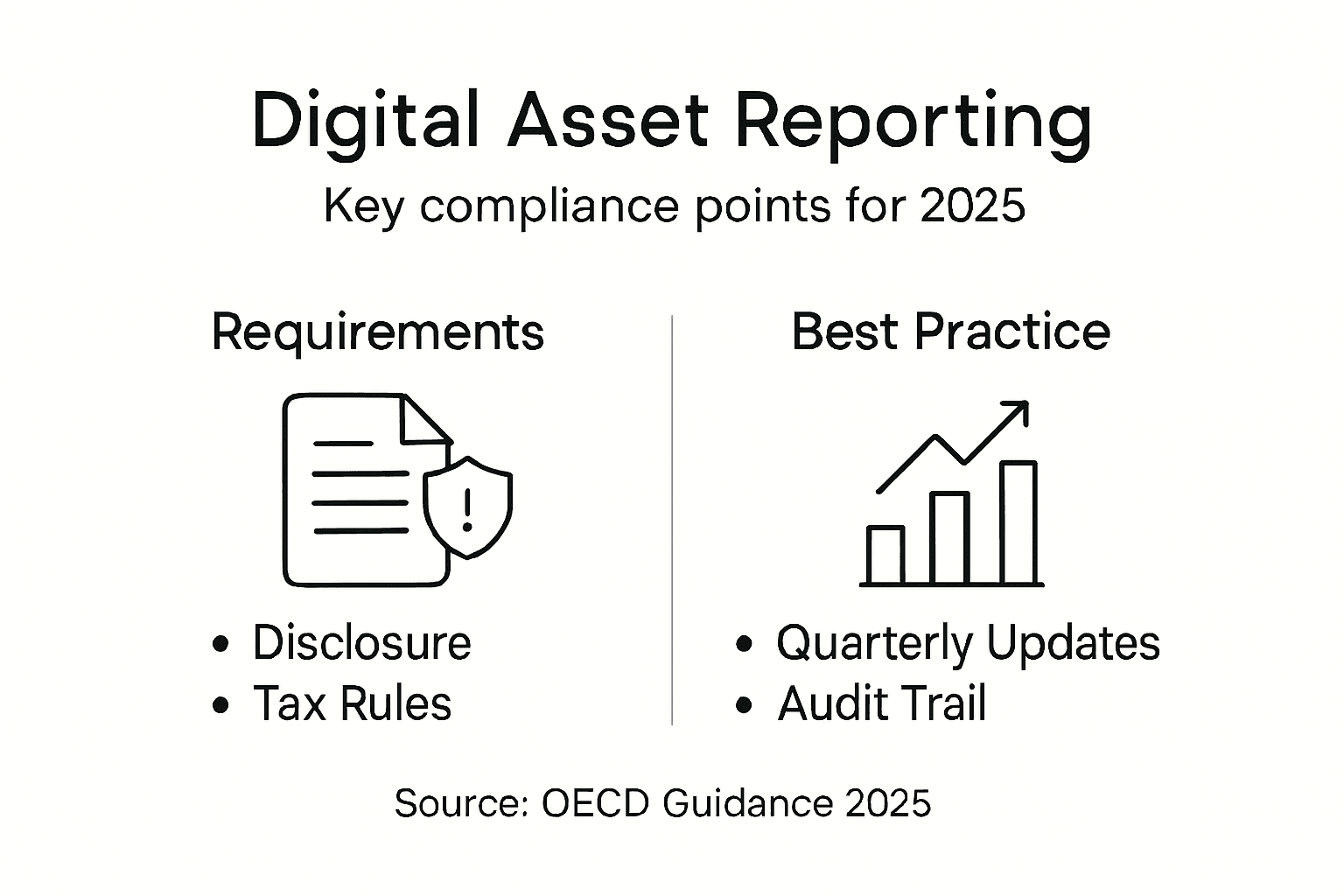
Establish regular investor communications that go beyond minimum regulatory requirements. Publish quarterly performance reports, monthly reserve attestations, and real-time portfolio information through investor portals. This proactive transparency builds institutional confidence and demonstrates that you’re managing compliance seriously. Create templates for each required report and automate data aggregation where possible. Your disclosure operation should feel systematic and reliable to regulators and investors alike.
Pro tip: Implement a 30-day pre-deadline review process where your compliance and finance teams validate all required disclosures before submission, catching errors before they reach regulators and building a documented record of due diligence.
Step 5: Verify compliance through audits and legal reviews
Compliance isn’t something you declare once and move forward. Independent audits and legal reviews provide the verification that regulators demand and that institutional investors require before committing capital to your gold-backed digital assets. This step walks you through establishing systematic audit and legal review processes that demonstrate genuine compliance maturity.
Begin by engaging independent external auditors with specific expertise in digital assets and blockchain operations. Don’t hire general financial auditors and hope they understand token mechanics. You need auditors experienced in evaluating smart contract security, custody arrangements, reserve verification, and transaction monitoring systems. International legal regulations for digital assets emphasize the critical importance of audits and legal frameworks to protect ownership rights and ensure compliance across jurisdictions. Define your audit scope clearly, covering operational controls, financial accuracy, and regulatory adherence. Annual audits are typically the minimum, but many institutional-grade token operations conduct semi-annual audits to stay ahead of rapidly evolving requirements. Your auditors should assess whether your systems actually prevent fractional reserves, whether custody arrangements truly segregate client assets, and whether your transaction monitoring catches suspicious activity. Request detailed audit reports that regulators can review, not just summary letters.
Next, schedule regular legal reviews of your token structure and operational procedures. Digital asset regulations are changing constantly, and something compliant in January may face regulatory questions by June. Engage legal counsel experienced in digital assets and securities law in your primary jurisdictions to conduct periodic reviews of your token documentation, smart contracts, investor agreements, and operational policies. Due diligence and enforcement mechanisms across jurisdictions increasingly emphasize independent verification and operational resilience to maintain market integrity. Your lawyers should specifically assess custody risk, asset segregation practices, and whether your governance structure actually reflects regulatory expectations. Require your legal team to produce written opinions on key compliance questions, particularly regarding whether your token structure qualifies as a security in each jurisdiction and whether your AML/KYC procedures meet evolving standards.
Document audit and legal findings in a central compliance file that you can provide to regulators on request. When issues arise, create remediation plans with specific deadlines and responsible parties. This demonstrates to regulators that you take compliance seriously enough to fix problems when auditors identify them.
Pro tip: Schedule your external audit completion at least 60 days before major regulatory reporting deadlines, giving you time to address any findings and incorporate audit results into your official disclosures and investor communications.
Navigate Digital Asset Compliance with Confidence and Security
The 2025 regulatory landscape for gold-backed digital assets presents complex challenges around classification, proof of reserves, and ongoing disclosure. Institutional and retail investors alike need assurance that their investment tokens comply fully with global AML/KYC standards and reporting frameworks. This means more than just meeting minimum rules. It requires transparent, auditable asset backing and governance structures designed to protect your capital and align with evolving regulations.
At UK Financial Ltd, we understand these critical demands. Our platform offers real-time blockchain asset tracking paired with independently verified proof of reserves for our portfolio of gold-backed tokens like the flagship Maya Preferred PRA. We maintain rigorous compliance protocols modeled on the insights from the latest regulatory guides to safeguard your investment. Discover how our secure, transparent ecosystem integrates comprehensive governance frameworks and ongoing regulatory reporting designed to meet SEC and international standards. Elevate your investment strategy today by exploring our offerings at UK Financial Ltd.

Take control of your digital asset investments with a trusted partner committed to full regulatory compliance and unmatched transparency. Visit UK Financial Ltd now to learn more about our asset-backed tokens and ensure your portfolio is future-proof in the evolving regulatory environment.
Frequently Asked Questions
What are the key regulatory frameworks for digital assets in 2025?
The key regulatory frameworks for digital assets in 2025 vary by jurisdiction, with differing approaches to asset classification and compliance obligations. Start by identifying the jurisdictions relevant to your holdings and assess their specific regulatory requirements.
How should I create a compliance matrix for my gold-backed digital assets?
To create a compliance matrix, document the regulations in each jurisdiction regarding asset classification, token issuance requirements, and anti-money laundering standards. Structure your matrix to include implementation timelines and potential penalties to ensure compliance across all relevant areas.
What steps should I follow to establish an anti-money laundering framework for digital asset operations?
Establish an anti-money laundering framework by implementing tailored know-your-customer processes, transaction monitoring systems, and suspicious activity reporting. Ensure your compliance team documents these policies and provides rigorous training to maintain adherence to the framework.
How do I verify the proof of reserves for my gold-backed digital assets?
You can verify proof of reserves by choosing a transparent methodology, such as automated on-chain verification or independent third-party audits of physical holdings. Implement this verification process regularly to build investor confidence and ensure compliance with regulatory expectations.
What ongoing disclosure obligations must I fulfill for my digital asset offerings?
Ongoing disclosure obligations include regular financial reporting, reserve attestations, and real-time transaction data. Create a disclosure calendar to manage deadlines while ensuring consistent communication with investors about your asset status and compliance activities.
Recommended
- UK Financial Ltd Completes Compliance for SEC-Ready ERC-3643 Token Ahead of CATEX Trading
- UK Financial Ltd Sets Official 30-Day Conversion Deadline for Three Exchange-Listed Tokens Ahead of Regulated Upgrade
- UK Financial Ltd Executes Compliance Tasks Ahead Of First-Ever ERC-3643 Exchange-Traded Token, SMCAT & Sets Date For Online Investor Governance Vote
- UK Financial Ltd Announces CoinMarketCap Supply Verification And Market Positioning Review For Regulated Security Tokens SMPRA And SMCAT
- Digital Tax Submission: Impact on UK Businesses