
Real-World Assets in Crypto: Stability and Compliance

Over thirty percent of asset managers now seek digital solutions for traditional portfolios, with american institutions leading the charge toward secure blockchain integration. This shift matters as wealth preservation strategies increasingly demand both regulatory confidence and tangible backing, especially in gold and silver sectors. Discover how real-world asset tokenization reshapes access to precious metals, offering institutional investors a stronger footing for compliance and global diversification without sacrificing transparency or security.
Table of Contents
- Defining Real-World Assets In Crypto
- Categories And Examples Of Tokenized Assets
- How Asset-Backed Tokenization Works
- Regulatory And Custodial Compliance Requirements
- Risks, Challenges, And Investor Protections
Key Takeaways
| Point | Details |
|---|---|
| Understanding Real-World Assets | Real-World Assets enable the conversion of physical assets into tradable digital tokens, enhancing liquidity and accessibility for investors. |
| Categories of Tokenized Assets | Tokenized assets include security tokens, asset-backed tokens, utility tokens, and commodity tokens, each facilitating unique investment opportunities. |
| Importance of Compliance | Regulatory compliance is essential for protecting investors, necessitating thorough verification, custodial management, and ongoing reporting standards. |
| Risk Awareness | Investors must be aware of potential risks, including smart contract vulnerabilities and regulatory challenges, and adopt protective measures to safeguard their investments. |
Defining Real-World Assets in Crypto
Real-world assets (RWAs) represent a groundbreaking bridge between traditional financial markets and blockchain technology, enabling the digital representation of tangible assets through innovative tokenization processes. Tokenizing physical assets757580_EN.pdf) allows investors to transform conventional holdings like real estate, commodities, stocks, and bonds into tradable digital tokens with enhanced liquidity and accessibility.
The core mechanism behind RWAs involves converting physical assets into blockchain-compatible digital representations using smart contracts and decentralized ledger systems. These digital tokens maintain a direct connection to their underlying physical assets, providing investors with a secure and transparent method of ownership and trading. By fragmenting assets into smaller, more affordable units, RWAs democratize investment opportunities that were previously limited to high-net-worth individuals or institutional investors.
Blockchain technology introduces several critical advantages to asset tokenization, including reduced transaction costs, increased market accessibility, and improved transparency. Blockchain-based asset management enables near-instantaneous global transfers, 24/7 trading capabilities, and robust security protocols that traditional financial systems cannot easily replicate. These digital tokens can represent partial ownership in complex assets like commercial real estate, fine art, or infrastructure projects, allowing broader participation in traditionally exclusive investment categories.
Pro tip: Before investing in tokenized real-world assets, thoroughly research the underlying asset’s legal structure, verify the token’s regulatory compliance, and understand the specific blockchain platform’s technical infrastructure.
Categories and Examples of Tokenized Assets
Tokenized assets represent a revolutionary approach to digital asset management, encompassing a diverse range of financial instruments and tangible holdings that can be converted into blockchain-based digital representations. Tokenization spans multiple asset categories, enabling investors to transform traditional investment vehicles into more accessible, liquid, and fractionally tradable digital tokens.
The primary categories of tokenized assets include security tokens, which represent regulated financial instruments like equity shares and bonds; asset-backed tokens, which provide direct claims on physical goods such as precious metals or real estate; utility tokens, offering platform access and service rights; and commodity tokens, representing tradable physical resources. Blockchain-based asset classifications enable unprecedented granularity in investment opportunities, allowing individuals to participate in previously exclusive markets with lower entry barriers.
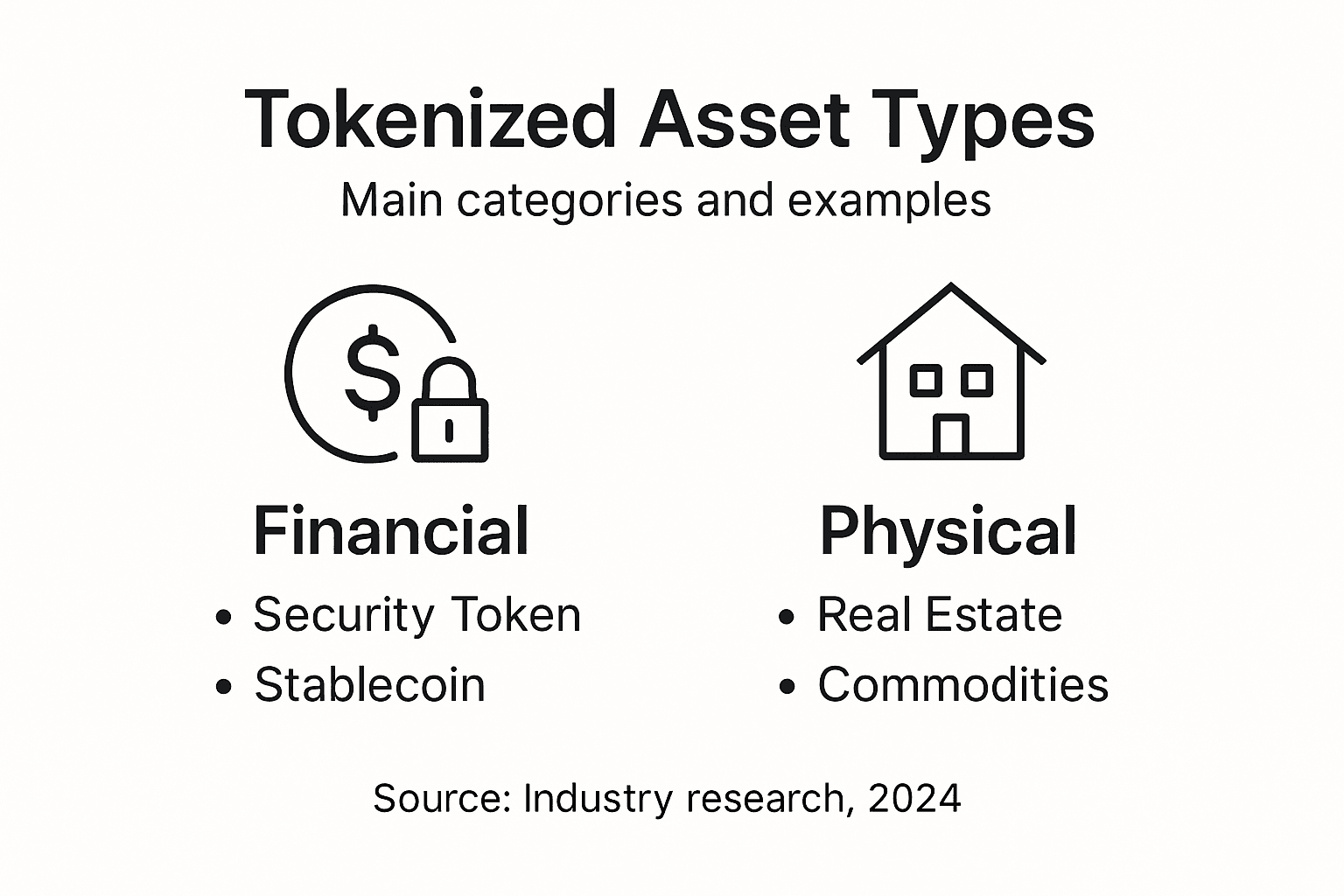
Unique examples of tokenized assets demonstrate the breadth of this emerging financial technology. Real estate tokens can represent fractional ownership in commercial properties, art tokens can divide high-value artwork into tradable shares, and commodity tokens can provide exposure to gold, silver, or oil reserves. Each token type comes with distinct legal frameworks, governance structures, and trading mechanisms, providing investors with a flexible and innovative approach to asset ownership and investment diversification.
Here is a comparison of major tokenized asset categories and their key characteristics:
| Token Type | Underlying Asset Example | Main Benefit | Common Use Cases |
|---|---|---|---|
| Security Token | Company shares | Regulatory investor rights | Equity investment, fundraising |
| Asset-Backed Token | Real estate property | Direct physical ownership | Property investment, REITs |
| Commodity Token | Gold or oil reserves | Transparent commodity trade | Hedging, portfolio diversification |
| Utility Token | Platform services | Access to digital products | Payment for blockchain services |
Pro tip: When exploring tokenized assets, conduct thorough due diligence on the token’s underlying asset, verify its regulatory compliance, and understand the specific blockchain platform’s technical infrastructure and security protocols.
How Asset-Backed Tokenization Works
Asset-backed tokenization transforms traditional asset ownership by converting physical and financial assets into blockchain-based digital representations, creating a revolutionary approach to investment and trading. Asset tokenization process involves carefully converting ownership rights into digital tokens that can be traded globally with unprecedented efficiency and transparency.
The technical mechanism of tokenization begins with rigorous asset verification and custodial management. Blockchain ownership verification requires licensed entities to confirm the underlying asset’s existence, value, and legal standing before creating digital tokens. Smart contracts play a crucial role in this process, automatically defining ownership rights, transferability conditions, and economic benefits. These programmable contracts enable precise control over token distribution, fractional ownership rules, and automated dividend or revenue sharing mechanisms.

Tokenization introduces several transformative capabilities for asset management. Digital tokens can represent partial ownership in complex assets like real estate, commodities, or art collections, allowing investors to purchase smaller fractional shares that were previously inaccessible. The blockchain infrastructure ensures transparent, immutable record-keeping, reducing fraud risks and providing real-time tracking of asset ownership and transactions. This approach dramatically lowers traditional investment barriers, enables 24/7 global trading, and creates liquidity for traditionally illiquid assets by breaking them into tradable digital units.
Pro tip: Before investing in tokenized assets, carefully examine the smart contract’s technical specifications, verify the custodian’s credentials, and understand the exact legal rights associated with your digital token ownership.
Regulatory and Custodial Compliance Requirements
Regulatory compliance forms the critical backbone of asset-backed tokenization, establishing a robust framework that protects investor interests and maintains market integrity. Custodial compliance mechanisms ensure that digital tokens represent legally verifiable ownership, bridging traditional financial regulations with innovative blockchain technologies. This complex process requires sophisticated oversight to validate asset authenticity, manage ownership transfers, and prevent potential financial misconduct.
The regulatory landscape for tokenized assets involves multiple layers of legal and financial scrutiny. Compliance requirements typically include rigorous Know Your Customer (KYC) protocols, Anti-Money Laundering (AML) regulations, securities registration, and ongoing reporting standards. Licensed custodial entities must demonstrate comprehensive capabilities in secure asset storage, private key management, and real-time transaction monitoring. These guardians play a crucial role in maintaining the legal and technical infrastructure that supports tokenized asset ecosystems, ensuring that digital representations remain tethered to their underlying physical or financial assets.
Institutional investors and regulatory bodies demand extensive documentation and transparency throughout the tokenization process. This includes detailed proof of reserve reports, independent asset verification, regular audits, and comprehensive risk assessments. Smart contract architectures must be designed to automatically enforce regulatory requirements, enabling features like investor accreditation checks, trading restrictions, and automated compliance reporting. The goal is to create a secure, transparent environment that provides institutional-grade protections while leveraging the efficiency and accessibility of blockchain technologies.
Key steps and compliance measures in tokenized asset platforms include:
| Step | Purpose | Typical Requirement |
|---|---|---|
| Asset Verification | Confirm physical asset exists | Licensed third-party evaluation |
| Custodial Management | Ensure secure storage | Regulated custodianship arrangement |
| Smart Contract Deployment | Encode ownership and transfer rules | Independent code audit |
| Regulatory Reporting | Maintain legal compliance | Ongoing disclosures, audits |
Pro tip: When evaluating tokenized asset platforms, prioritize those with established regulatory licenses, transparent custody arrangements, and comprehensive compliance documentation that demonstrates a commitment to investor protection.
Risks, Challenges, and Investor Protections
The landscape of tokenized real-world assets presents a complex array of potential risks and strategic challenges that demand sophisticated investor awareness and robust protective mechanisms. Tokenization risk frameworks reveal multiple layers of potential vulnerabilities, ranging from technical infrastructure weaknesses to regulatory uncertainties that can significantly impact investment safety.
Critical risks in tokenized asset markets include smart contract vulnerabilities, cybersecurity threats, and complex cross-jurisdictional legal challenges. Institutional investors must navigate intricate compliance landscapes, including rigorous Know Your Customer (KYC) protocols, Anti-Money Laundering (AML) regulations, and evolving legal classifications that determine token ownership rights. Legal challenges in asset tokenization demand comprehensive due diligence, with particular attention to platform reliability, custody arrangements, and the precise legal mechanisms binding digital tokens to underlying physical assets.
Investor protection strategies require a multifaceted approach that combines technological security, regulatory compliance, and transparent governance. Essential protective measures include independent third-party audits, real-time transaction monitoring, secure oracle data feeds, and robust smart contract architectures designed to automatically enforce investor safeguards. By implementing advanced risk management protocols, platforms can mitigate potential fraud, ensure accurate asset representation, and maintain the integrity of tokenized asset markets. The ultimate goal is creating an ecosystem that balances innovative financial technologies with institutional-grade security and investor confidence.
Pro tip: Always conduct thorough independent research on a tokenization platform’s technical infrastructure, regulatory compliance history, and comprehensive investor protection mechanisms before committing any capital.
Discover Stability and Compliance with Gold-Backed Digital Assets
The article highlights the growing need for regulatory compliance, secure custody, and transparent proof of reserves in the world of real-world asset tokenization. Investors face challenges such as verifying asset authenticity, understanding ownership rights, and navigating complex legal frameworks. At UK Financial Ltd, we address these critical concerns by offering a trusted suite of gold-backed digital tokens designed with full transparency and strict regulatory oversight. Our platform delivers real-time blockchain asset tracking and comprehensive proof of reserve reports to ensure your investments are both secure and verifiable.
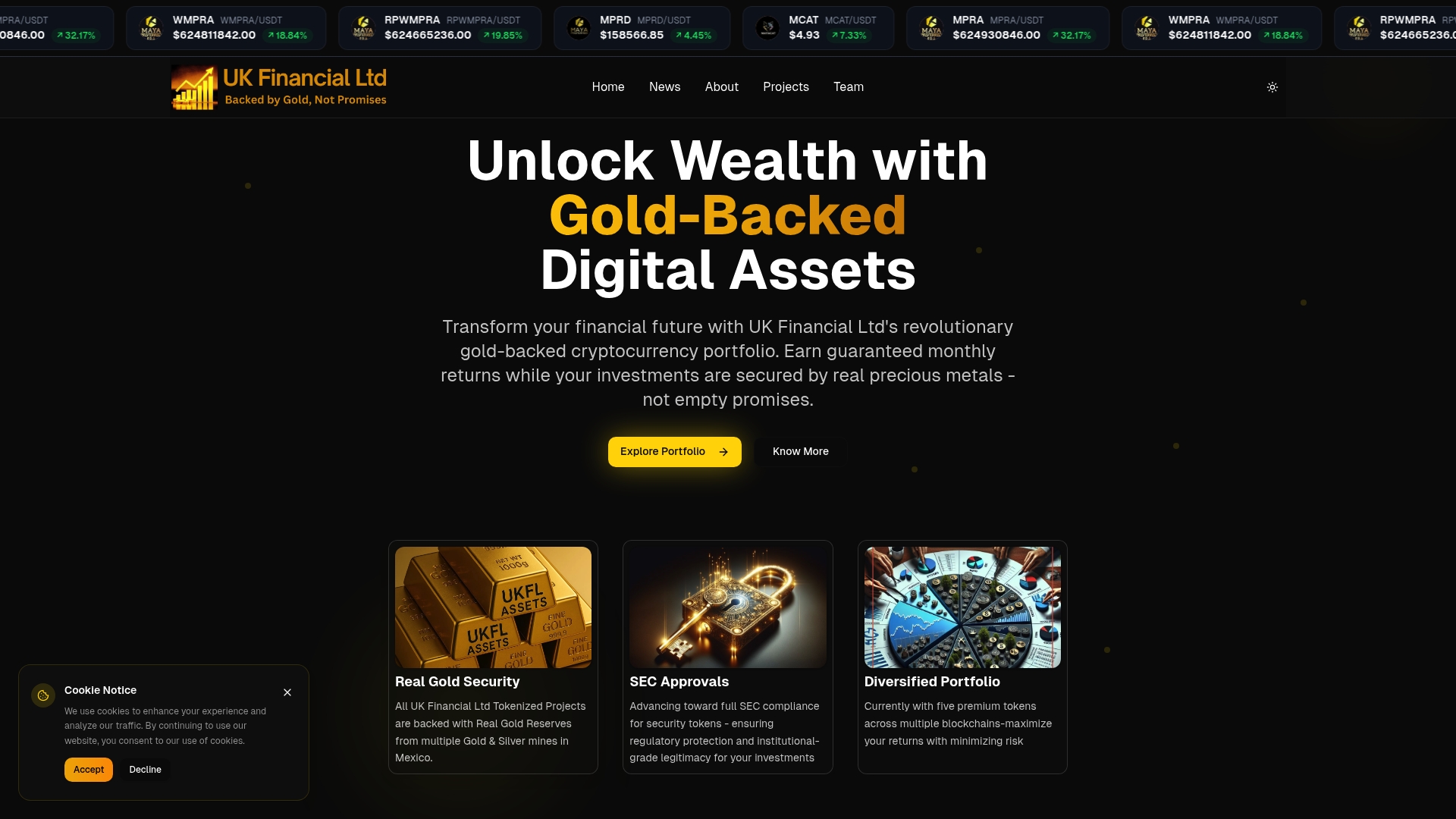
Experience the confidence that comes with investing in digital assets backed by verified precious metals and managed through robust governance structures. Take control of your portfolio with our flagship Maya Preferred PRA token and diversify with our unique project-specific tokens. Visit UK Financial Ltd now to explore how our fully compliant, asset-backed crypto solutions can safeguard your wealth and expand your access to innovative investment opportunities.
Frequently Asked Questions
What are real-world assets (RWAs) in crypto?
Real-world assets in crypto refer to tangible assets like real estate, commodities, and stocks that can be converted into tradable digital tokens through tokenization, providing enhanced liquidity and accessibility.
How does asset-backed tokenization work?
Asset-backed tokenization works by converting physical and financial assets into blockchain-based digital representations, enabling global trading and ownership verification through smart contracts and custodial management.
What are the benefits of investing in tokenized assets?
Investing in tokenized assets offers several benefits, including improved market accessibility, reduced transaction costs, fractional ownership opportunities, and a transparent, secure method of asset management.
What regulatory compliance is required for tokenized assets?
Regulatory compliance for tokenized assets typically includes Know Your Customer (KYC) protocols, Anti-Money Laundering (AML) regulations, securities registration, and ongoing reporting standards to ensure investor protection and market integrity.
Recommended
- UK Financial Ltd – Gold-Backed Cryptocurrency Portfolio
- UK Financial Ltd Establishes United States Operations in Delaware, Announces Texas Expansion
- UK Financial Ltd Sets Official 30-Day Conversion Deadline for Three Exchange-Listed Tokens Ahead of Regulated Upgrade
- UK Financial Ltd Executes Compliance Tasks Ahead Of First-Ever ERC-3643 Exchange-Traded Token, SMCAT & Sets Date For Online Investor Governance Vote
- Cryptocurrency Basics: Building Wealth in a Digital Era – Finblog