
How to Verify Blockchain Assets for Secure Investments

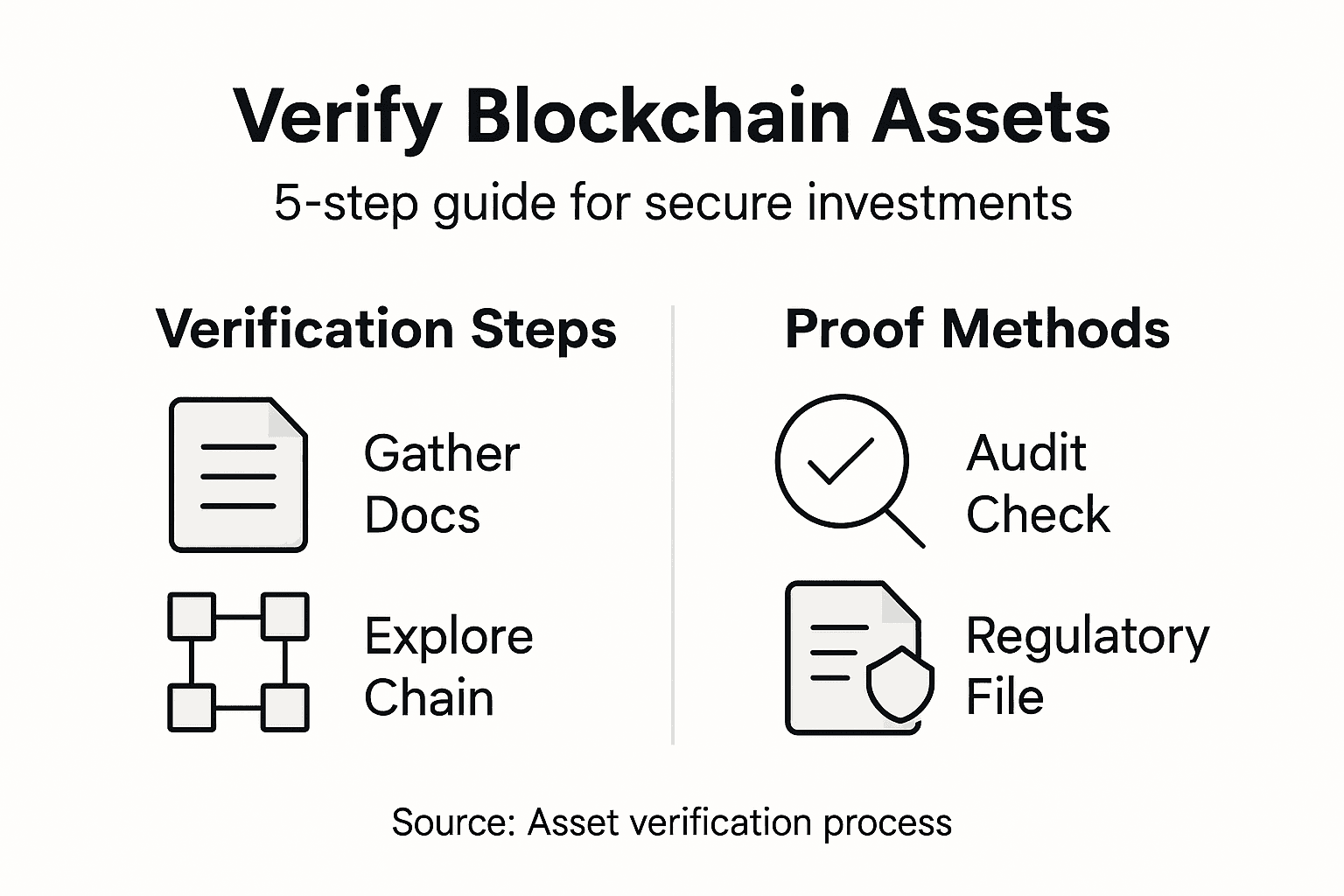
Finding reliable verification methods for gold-backed blockchain assets can feel like navigating a maze for institutional investors and fund managers. Ensuring your portfolio complies with United States, European, or United Kingdom regulations starts with gathering clear evidence of asset backing and operational transparency. This guide will show you how to collect critical asset documentation and reserve reports, leverage blockchain explorers for verification, and assess compliance so your digital gold investments withstand institutional scrutiny.
Table of Contents
- Step 1: Gather Critical Asset Documentation And Reserve Reports
- Step 2: Access Official Blockchain Explorer For Token Data
- Step 3: Validate Cryptographic Proof Of Reserves And Backing
- Step 4: Cross-Check Asset Status With Third-Party Audit Reports
- Step 5: Confirm Regulatory Compliance And Transparency Disclosures
Quick Summary
| Key Point | Explanation |
|---|---|
| 1. Gather Comprehensive Documentation | Collect issuer documentation, including reserve reports, audit statements, and governance details, to verify asset backing. |
| 2. Analyze Blockchain Explorer Data | Use blockchain explorers to verify token activity, holdings, and transaction history for independent validation. |
| 3. Validate Cryptographic Proofs | Ensure cryptographic proofs confirm that the issuer’s claimed assets are genuinely backed and verifiable. |
| 4. Cross-Check Third-Party Audit Reports | Obtain recent audits from reputable firms to assess the accuracy of the issuer’s reserve claims and verify compliance. |
| 5. Confirm Regulatory Compliance | Identify the issuer’s regulatory status and ensure they follow necessary transparency and compliance standards. |
Step 1: Gather critical asset documentation and reserve reports
When you’re evaluating gold-backed blockchain assets for your investment portfolio, gathering the right documentation is your foundation for due diligence. This step separates informed investors from those operating on hope and marketing promises. You need to collect comprehensive evidence that demonstrates actual asset backing, operational transparency, and regulatory positioning.
Start by requesting the complete suite of documentation directly from the issuer or their designated compliance officer. This includes reserve reports that confirm physical gold holdings, audit statements from third-party custodians, and proof of reserve documentation showing the exact amount of precious metals securing the tokens. Ask for the most recent reports first, typically issued monthly or quarterly, depending on the issuer’s transparency standards. You want to see documentation that includes the specific location of stored assets, custodian details, insurance coverage, and any recent audit findings. Don’t settle for vague assurances or marketing materials that lack verifiable detail. Real institutions backing digital assets will provide audited, dated documentation that you can cross-reference with independent sources.
Next, examine the governance and issuance documentation. This includes the token structure, smart contract specifications, and any regulatory filings or compliance plans the issuer has disclosed. For gold-backed tokens, you need clarity on how the backing ratio works, what redemption mechanics exist, and whether the issuer maintains regulatory standing or actively pursues compliance frameworks. Reserve reports confirming backing assets become especially valuable when paired with onchain governance transparency that shows how asset reserves are managed. Request documentation about custodial arrangements, insurance policies, and any third-party verification processes the issuer employs. Some issuers provide real-time onchain proof of reserves through blockchain mechanisms, which you can independently verify by examining the relevant blockchain explorers and wallet addresses.
Build a checklist as you collect materials. Verify dates on all documents to ensure they’re current. Cross-reference custodian names against industry registries and regulatory databases to confirm legitimacy. Look for any gaps between claimed holdings and documented holdings. Request clarification on anything inconsistent or vague. Create a filing system that allows you to track documentation timelines, noting when reports were issued and when they expire or require renewal. Institutional investors often assign specific team members to this documentation gathering process, ensuring consistent verification protocols across multiple token investments. This systematic approach prevents you from missing red flags and creates an audit trail for your compliance records.
You should also gather any public blockchain data that supports the documentation claims. Many issuers provide blockchain addresses where reserves are held. Pull transaction histories, balance confirmations, and any onchain proof mechanisms they’ve implemented. Compare these onchain records with the official reserve reports to identify any discrepancies. Request explanations if the numbers don’t align or if documentation covers different time periods. The goal is triangulation: combining official documentation, custodial verification, and independent onchain evidence creates confidence that backing is genuine.
Professional tip Maintain a standardized documentation request template that you send to each issuer, specifying exact formats you need, audit requirements, and frequency of reporting. This consistency makes comparisons across multiple assets faster and ensures you never miss critical information like insurance coverage or custodial fee structures.
Step 2: Access official blockchain explorer for token data
Blockchain explorers are your window into the actual onchain activity of any token. Instead of relying on what an issuer tells you about their assets, you can verify this information directly from the source. This step teaches you how to access and read blockchain explorer data to confirm token holdings, transaction activity, and reserve movements with complete transparency.
Start by identifying which blockchain your gold-backed token operates on. Most modern tokenized assets run on Ethereum, Bitcoin, or specialized blockchain networks. Once you know the blockchain, navigate to the official explorer for that network. For Ethereum-based tokens, Etherscan provides detailed token data including transaction histories, smart contract information, and holder distribution. For Bitcoin-based assets or multi-chain verification, Blockchain.com explorer offers comprehensive onchain data across multiple networks. These official explorers are maintained by the blockchain networks themselves or trusted third parties, making them authoritative sources for verification.
Once you’re in the explorer, locate your specific token by searching its contract address. Your issuer should provide this address in their documentation or on their website. When you find the token contract, you’ll see critical information displayed: total supply, current circulation, number of token holders, and recent transfer activity. For gold-backed assets, pay close attention to the “Transfers” section, which shows movement of tokens between addresses. Look for patterns that match the issuer’s claims about reserve backing and token issuance. If the issuer claims they hold 1,000,000 tokens in reserve, you should be able to identify a wallet address they control and verify that address holds that quantity. This is where documentation from Step 1 connects to onchain reality.

Examine the token holder distribution as well. A healthy gold-backed token typically shows reasonable diversification among holders rather than extreme concentration in a few addresses. If you see 95 percent of tokens controlled by a single address, that warrants investigation. Cross-reference the top holder addresses with information the issuer provided about their reserve wallets, custodial arrangements, or liquidity pools. Use the “Analytics” or “Holders” tabs available on most explorers to get a clear picture of ownership concentration. You’re looking for transparency that aligns with institutional standards.
Next, trace recent transaction activity to understand token movement patterns. Look at the timestamp and frequency of transfers. For a functioning asset-backed token with active trading or redemption, you should see regular transaction activity. Large irregular transfers might indicate token issuance, holder redemptions, or custodial movements. Click on specific transactions to see sender and receiver addresses, amounts transferred, and timestamps. If the issuer claims they conduct monthly reserve audits, you might see corresponding token movements or wallet adjustments on those dates. Document any unusual patterns and compare them against information the issuer provided in their reserve reports.
Use blockchain explorers to verify smart contract functionality as well. Most explorers display contract code that governs how tokens behave. For institutional investors, this transparency allows you to confirm that the token contract includes appropriate controls like redemption mechanisms, freeze functionality, or governance features claimed by the issuer. You don’t need to be a programmer to spot basic security features or identify if contract code matches what the issuer described.
Professional tip Bookmark the specific token contract pages you review and set them to refresh periodically, creating a personal monitoring dashboard. Many explorers allow you to watch specific addresses or contracts, sending alerts when significant transactions occur, helping you catch reserve movements or unexpected changes immediately rather than discovering them weeks later.
Step 3: Validate cryptographic proof of reserves and backing
Cryptographic proofs represent the frontier of asset verification in blockchain finance. Rather than trusting audit reports alone, you can now validate mathematical proofs that confirm assets exist and backing is legitimate. This step shows you how to understand and verify these cryptographic mechanisms, giving you certainty that tokens are genuinely backed by the physical gold or other assets claimed by the issuer.
Start by understanding what cryptographic proof of reserves actually means. When an issuer creates a gold-backed token, they commit a specific amount of gold to back it. A cryptographic proof uses mathematical algorithms to create a verifiable fingerprint of that commitment. This proof can be checked independently by anyone without revealing sensitive information like exact vault locations or custodian details. The issuer generates these proofs using their private keys and publishes them onchain, where they become part of the permanent blockchain record. You can then verify these proofs using the issuer’s public keys and publicly available information. If the math checks out, you have certainty that the backing exists exactly as claimed. This approach combines the transparency of blockchain with the mathematical certainty of cryptography.
Request the specific cryptographic proof documentation from your issuer. Ask them to provide proof of reserves addresses, the mathematical proofs themselves (often published as transaction data on the blockchain), and the verification methods they use. Cryptographic proof mechanisms within blockchain technology enable auditors and investors to validate asset existence and completeness held in blockchain environments. Look for issuers who publish their proofs on regular schedules, typically monthly or quarterly, coinciding with their audit cycles. The issuer should provide clear instructions on how to verify these proofs yourself. Many platforms now offer automated verification tools where you input the proof data and the system confirms whether backing is valid. Start with these automated tools to understand what validation looks like before attempting manual verification.
Verify the mathematical proofs using the issuer’s published public keys. Most blockchain systems make this process accessible through web interfaces or simple command-line tools. You input the cryptographic proof, the issuer’s public key, and the blockchain data, and the system returns either “valid” or “invalid.” A valid result means the proof was genuinely created by the issuer and demonstrates that they control the claimed reserves. An invalid result means something is wrong, either with the proof itself or with the issuer’s claims about reserves. If you see invalid proofs, that’s a major red flag requiring immediate clarification from the issuer. Cross-reference proof dates with reserve report dates to ensure they align. If the issuer publishes a reserve report claiming 10,000 ounces of gold on March 1st, there should be a corresponding cryptographic proof published around the same date confirming that claim onchain.
Look for issuers using established cryptographic proof frameworks rather than proprietary systems. Reserve protocol uses cryptographic proofs and transparent onchain governance to validate backing of asset baskets through decentralized mechanisms. When an issuer adopts recognized standards or protocols, their proofs become verifiable against industry benchmarks. This makes it harder for bad actors to fake proofs and easier for you to spot inconsistencies. Institutional-grade issuers often publish their proof methodologies openly, allow third-party verification, and invite security researchers to test their systems.
Combine cryptographic proof verification with the documentation and explorer data you gathered in previous steps. Triangle your sources. If the cryptographic proof confirms 10,000 ounces of gold backing, the reserve report should state 10,000 ounces, and the blockchain explorer should show corresponding custodial wallet movements. When all three sources align, you have confidence in the backing. When they diverge, you’ve identified a problem worth investigating before committing capital.
Professional tip Create a verification spreadsheet tracking proof dates, validation results, and any discrepancies you discover across multiple tokens. This longitudinal record helps you spot patterns like consistently delayed proofs or gradual changes in backing amounts, revealing operational issues long before they become crises.
Step 4: Cross-check asset status with third-party audit reports
Third-party audit reports are your independent verification that an issuer’s claims about reserves actually hold up under professional scrutiny. Unlike documentation issued by the company itself, these audits come from external firms with no financial incentive to lie about what they found. This step teaches you how to obtain, interpret, and cross-check audit reports against other verification sources to confirm that asset backing is genuine and current.
Start by requesting the most recent third-party audit report from the issuer. Ask specifically for audits conducted by reputable accounting firms with experience in blockchain assets and digital finance. The audit should cover the reserve holdings as of a specific date, typically the same date covered by the cryptographic proofs and reserve reports you gathered earlier. Request audits from Big Four accounting firms or other established auditing practices that specialize in asset verification and blockchain compliance. These firms have reputational risk and regulatory oversight that incentivizes accuracy. When you receive the audit report, check the auditor’s credentials, their independence from the issuer, and whether they conducted an onsite inspection of the actual reserves. An audit where auditors physically inspected gold in vaults carries more weight than one based solely on documentation review.
Examine the audit scope and findings carefully. Independent audit reports provide transparency and compliance assurances required for secure investment decisions in blockchain assets. The auditor should clearly state what they verified, what methods they used, and any limitations or qualifications on their findings. Look for language indicating the auditor confirmed the existence, location, insurance, and custodial status of the gold reserves. Red flags include audits that only reviewed documentation without physical inspection, audits that disclaim responsibility for certain aspects of the reserves, or audits that qualify their findings with significant caveats. Pay attention to the audit date and how recent it is relative to today. An audit from six months ago is more relevant than one from two years ago, as holdings can change. Request updated audits regularly, at least annually, and ideally quarterly for institutional-sized positions.
Now cross-reference the audit findings with three other sources you’ve already gathered. First, compare the audit’s reserve figures against the reserve reports the issuer provided in Step 1. If the audit states 10,000 ounces of gold as of March 31st and the issuer’s reserve report also states 10,000 ounces for that same date, alignment is good. If the numbers diverge significantly, ask the issuer for an explanation. Second, check the audit findings against the cryptographic proofs you verified in Step 3. A valid cryptographic proof demonstrating 10,000 ounces of backing should correspond to the audit’s findings. If the proof shows backing for a different amount, something is wrong. Third, verify the custody arrangement details in the audit. The audit should name the specific vault or custodian holding the gold. Cross-reference this against the issuer’s documentation about where reserves are stored. If the issuer claims reserves are held at Brinks but the audit shows storage at a different custodian, you’ve found a discrepancy requiring clarification.
Build a timeline of audit reports over multiple quarters or years if possible. Request historical audits or request that the issuer provide a summary of audit results over time. This longitudinal view reveals whether reserve backing is growing, shrinking, or remaining stable. It shows whether the same custodian and location have been consistent or whether the issuer frequently changes where reserves are held. Institutional-grade issuers typically maintain stable custodial relationships and show consistent or growing reserves aligned with token issuance. Frequent changes or declining reserves warrant investigation.
Use third-party audit practices and standards for digital asset verification as your benchmark for what good auditing looks like. The Blockchain Research Institute and other industry bodies have published standards for how audits should be conducted. Review these standards and assess whether the audits you receive meet them. Issuers using auditors that follow recognized standards demonstrate professional commitment to transparency. Don’t hesitate to ask the auditor directly whether they follow specific standards or whether their methodology aligns with industry best practices.
Professional tip Request audit reports with specific attestation language about the auditor’s testing procedures, including the frequency of inventory counts, the methods used to verify ownership of physical gold, and the auditor’s procedures for confirming custodial arrangements. This detailed language in audit reports gives you confidence that real verification occurred rather than simple documentation review.
Step 5: Confirm regulatory compliance and transparency disclosures
Regulatory compliance separates serious blockchain asset issuers from those operating in gray areas or outright violating securities laws. Before committing capital to any gold-backed token, you need to understand the issuer’s regulatory status, their compliance roadmap, and what transparency disclosures they make to regulators and the public. This step teaches you how to investigate regulatory standing and verify that an issuer operates with appropriate legal oversight.
Start by identifying which regulatory jurisdictions apply to the token and issuer. If the issuer is a United States-based company issuing tokens to American investors, Securities and Exchange Commission rules likely apply. If they operate internationally, European regulations, United Kingdom frameworks, or other jurisdictions may govern their activities. Ask the issuer directly what regulatory regime they operate under and whether they hold any licenses or registrations. A legitimate issuer should provide clear documentation of their regulatory status. Some issuers operate under Money Transmitter licenses, others under trust company charters, and others are pursuing SEC compliance as registered securities offerings. The specific license matters less than transparency about what it covers and what it doesn’t. Ask the issuer for copies of their licenses, registration documents, or regulatory filings. These should be publicly available anyway, but requesting them directly signals that compliance matters to you.
Examine the issuer’s transparency disclosures carefully. Regulatory frameworks across multiple jurisdictions for digital assets emphasize the importance of compliance and transparency disclosures to maintain investor protections through aligned regulations and clear public disclosures by blockchain asset issuers. Check whether the issuer publishes regular compliance reports, risk disclosures, or governance updates. Look for information about their compliance officer, audit committee, or board oversight of blockchain operations. Institutional-grade issuers typically publish detailed information about their compliance frameworks, including how they handle know-your-customer (KYC) verification, anti-money-laundering (AML) procedures, and sanctions screening. If the issuer has minimal or vague compliance disclosures, that’s a warning sign. Request their compliance policies directly and ask how they handle regulatory risk. A mature issuer will explain their approach to evolving regulations and their plans for adapting if rules change.
Verify the issuer’s regulatory filings through official channels. For United States securities, check the SEC’s EDGAR database to see if the issuer has filed any registration statements, forms, or amendments. Search the Financial Industry Regulatory Authority (FINRA) database for any disciplinary history. Check state banking regulators if the issuer claims trust company status. For international issuers, use the regulatory databases in their home jurisdictions. These official sources cannot be faked and provide authoritative information about regulatory standing. If an issuer claims SEC registration or compliance but you find no filings, that’s a major red flag. Conversely, if you find compliance filings, read them carefully. Regulatory filings often contain risk disclosures, officer information, and compliance procedures that give you insight into how seriously the issuer takes regulation.
Understand the difference between full regulatory approval and regulatory registration. Some issuers have SEC approval as registered securities, meaning regulators have reviewed their offering and believe it complies with securities laws. Others are registered but not necessarily approved, meaning they’ve provided information to regulators but no regulator has endorsed their offering. Still others operate under regulatory exemptions that allow them to operate without full registration but with specific limitations. Ask the issuer to explain their exact regulatory status and what limitations or requirements apply. Ask whether their token status could change if regulations evolve. Issuers with clear regulatory standing and transparent compliance processes demonstrate lower risk than those operating in regulatory ambiguity.
Build a regulatory compliance file for each token investment. Track the issuer’s licenses, regulatory filings, any enforcement actions or complaints filed against them, and their published compliance policies. Monitor regulatory developments in the jurisdictions where the issuer operates. Set calendar reminders to check on license renewals or regulatory deadline dates the issuer has disclosed. Institutional fund managers often assign compliance specialists to this monitoring function across multiple blockchain asset investments, ensuring consistent surveillance of regulatory changes that might affect your holdings. When regulations shift, established issuers typically proactively communicate how they’re adapting. Issuers that go silent during regulatory changes may be in trouble.
Below is a reference table for typical red flags to watch for during due diligence:
| Red Flag | What It Signals | Recommended Action |
|---|---|---|
| Outdated documentation | Possible change in reserves | Request recent reports |
| Vague audit language | Limited or unclear verification | Clarify with auditor/issuer |
| No regulatory filings or licenses | Possible non-compliance | Check official registries |
| Discrepant onchain and issuer reports | Potential reserve mismatch | Investigate source of the gap |
| High token concentration in one wallet | Centralized control risk | Ask issuer about holder structure |
Here’s a summary comparing key verification methods for gold-backed blockchain assets:
| Verification Method | Main Purpose | Evidence Provided | Key Value for Investors |
|---|---|---|---|
| Issuer Documentation | Asserts asset backing and terms | Reserve reports, audits | Initial transparency |
| Blockchain Explorer Analysis | Confirms onchain token activity | Live token, wallet data | Independent verification |
| Cryptographic Proof of Reserves | Verifies assets via math proofs | Onchain proofs, signatures | Trust without disclosure |
| Third-Party Audit Reports | Independent review of reserves | External audit findings | Professional assurance |
| Regulatory Filings | Demonstrates legal compliance | Registrations, licenses | Lowers regulatory risk |
Professional tip Request written compliance certifications from the issuer stating their current regulatory status, identifying all jurisdictions where they operate, and confirming they conduct KYC and AML procedures on all users. Keep these certifications in your compliance file alongside your audit reports and reserve verifications, creating a comprehensive record that demonstrates your institutional-level due diligence to your own compliance teams or auditors.
Secure Your Investment with Verified Gold-Backed Tokens Today
Navigating the complex world of blockchain asset verification requires more than just understanding cryptographic proofs or scanning blockchain explorers. Investors face the challenge of ensuring transparent documentation, trusted third-party audits, and clear regulatory compliance before committing capital. At UK Financial Ltd, we recognize these pain points and offer a seamless solution that brings together all essential verification elements in one trusted platform. Whether you are concerned about reserve authenticity, token distribution, or ongoing regulatory transparency, our comprehensive portfolio, including the flagship Maya Preferred PRA and other gold-backed tokens, provides the confidence you need for secure investments.
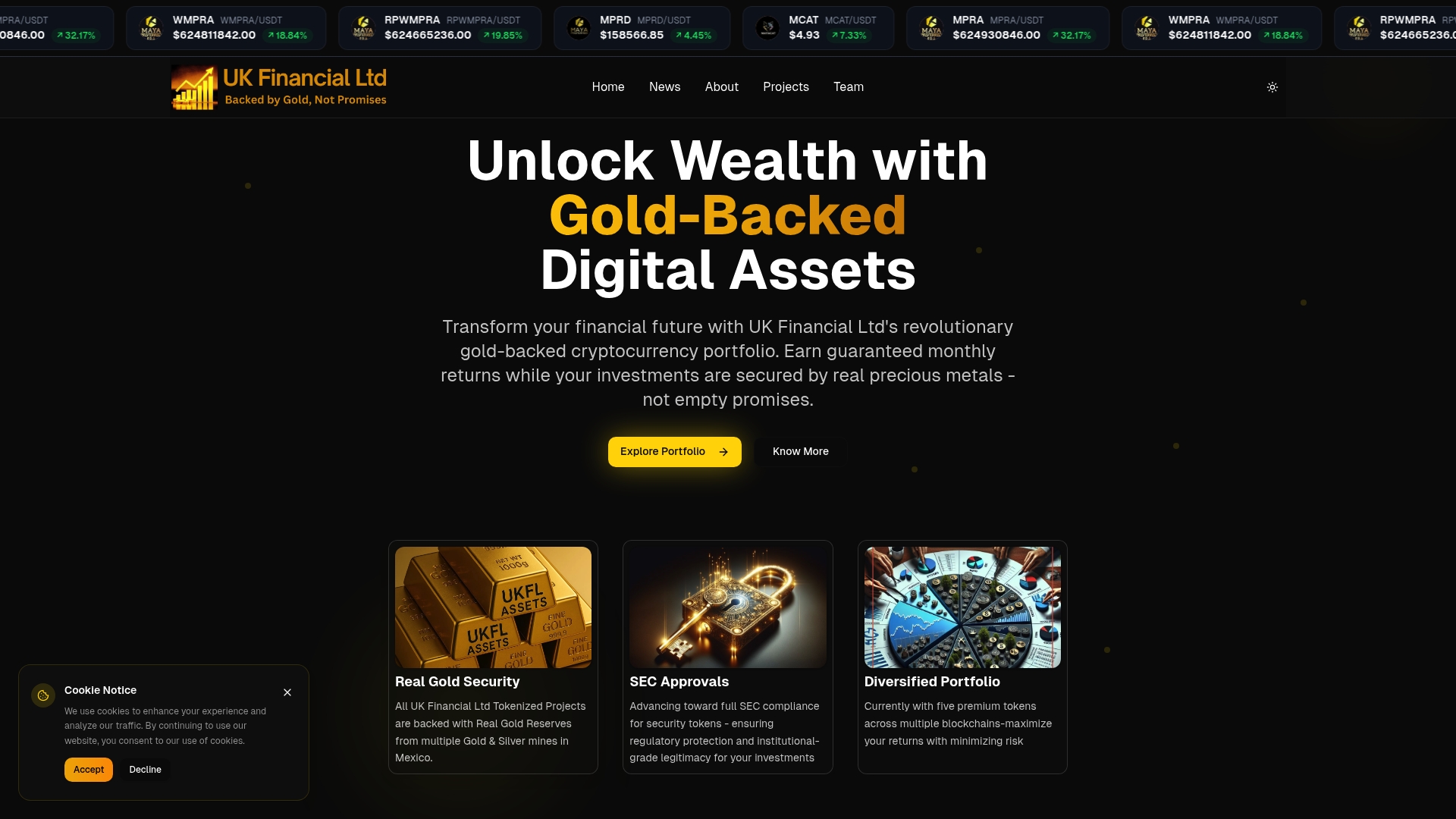
Explore real-time blockchain asset tracking alongside up-to-date proof of reserve reports at UK Financial Ltd. Take control of your investment decisions with detailed corporate governance disclosures and rigorous compliance updates that align with the high standards discussed in “How to Verify Blockchain Assets for Secure Investments.” Don’t wait to elevate your portfolio security. Visit UK Financial Ltd now and gain access to asset-backed cryptographic tokens designed for transparency and long-term value preservation.
Frequently Asked Questions
How can I gather critical asset documentation for blockchain investments?
Start by requesting complete documentation directly from the issuer or their compliance officer, including reserve reports, audit statements, and proof of reserves. Aim to collect the most recent reports to ensure your investment information is up to date.
What should I look for in third-party audit reports?
Examine the auditor’s credentials, independence, and whether they conducted physical inspections of the reserves. Ensure the report clearly states the verified amounts and the methods used; this will provide assurance that the asset backing is reliable and current.
How do I use a blockchain explorer to verify my token’s activity?
Identify the blockchain your token operates on and access the appropriate blockchain explorer. Search for the token’s contract address to view transaction histories, supply data, and holder distribution, confirming claims made by the issuer about asset backing.
What is cryptographic proof of reserves, and why is it important?
Cryptographic proof of reserves provides a mathematical method to verify that assets exist without disclosing sensitive information. Request this proof from the issuer and use it to cross-check the accuracy of asset claims, enhancing your confidence in the investment’s legitimacy.
How can I confirm the regulatory compliance of a blockchain asset issuer?
Identify the regulatory jurisdictions that apply to the issuer and request documentation regarding their licenses and compliance status. Actively monitor their regulatory filings to ensure they maintain a commitment to legal and transparency standards, which is crucial for safe investments.
What are the common red flags to watch for during due diligence on blockchain assets?
Look for outdated documentation, vague audit language, or missing regulatory filings as major red flags. If discrepancies arise between onchain reports and issuer claims, request clarification to validate the asset backing before proceeding with the investment.
Recommended
- UK Financial Ltd – Gold-Backed Cryptocurrency Portfolio
- UK Financial Ltd Executes Compliance Tasks Ahead Of First-Ever ERC-3643 Exchange-Traded Token, SMCAT & Sets Date For Online Investor Governance Vote
- UK Financial Ltd Sets Official 30-Day Conversion Deadline for Three Exchange-Listed Tokens Ahead of Regulated Upgrade
- UK Financial Ltd Confirms Official Corporate Structure of the Maya Preferred Project and Its Dual-Class Token System
- Cryptocurrency Portfolio Balancing Guide for Automated Trading