
How to Track Blockchain Assets for Gold-Backed Tokens

Securing institutional capital in the world of gold-backed digital assets demands more than surface-level research. The line between robust, asset-backed tokens and risky offerings often comes down to factors like legal structure, proof-of-reserve, and transparent compliance frameworks. For institutional investors and fund managers seeking dependable cryptocurrency exposure, mastering how to identify and monitor regulatory-compliant tokens with genuine gold backing offers higher confidence and actionable control in a rapidly evolving market.
Table of Contents
- Step 1: Select Asset-Backed Tokens To Track
- Step 2: Set Up Secure Digital Tracking Tools
- Step 3: Connect To Real-Time Blockchain Data
- Step 4: Verify Proof-Of-Reserve And Compliance
- Step 5: Monitor Token Performance And Reports
Quick Summary
| Key Point | Explanation |
|---|---|
| 1. Select high-quality tokens | Choose gold-backed tokens with strong legal structures and verified reserves to assess investment reliability. |
| 2. Establish robust tracking tools | Implement secure digital systems for ongoing monitoring that ensure data accuracy and protect your assets. |
| 3. Utilize real-time blockchain data | Connect your tracking systems to APIs providing immediate updates on token activity and reserve verification. |
| 4. Verify proof-of-reserve continuously | Ensure tokens are consistently backed by gold through real-time verification processes rather than periodic audits. |
| 5. Regularly monitor performance metrics | Track price stability, volatility, and reserve coverage to catch issues early and inform investment decisions. |
Step 1: Select Asset-Backed Tokens to Track
Before you can track anything, you need to identify which gold-backed tokens deserve your attention. This step separates serious institutional investors from those making reactive decisions. You’re looking for tokens with genuine backing, regulatory clarity, and transparent operational practices. The tokens you select now will form the foundation of your monitoring strategy, so precision matters.
Start by evaluating the legal structure behind each token you’re considering. Legal structures of tokenized assets vary significantly in how they connect digital tokens to physical gold reserves. Some tokens represent complete tokenization, where the entire asset exists on blockchain with full legal backing. Others use incomplete tokenization structures that create legal gaps between the token holder and actual asset ownership. You need to understand this distinction because it affects your ability to verify reserves, claim redemption rights, and protect your investment during market stress. Request documentation from token issuers outlining their specific tokenization approach. Ask whether the gold reserves are held in segregated accounts separate from the issuer’s operational assets. This matters because commingled reserves create counterparty risk if the company faces financial difficulty.
Next, examine the transparency and traceability mechanisms supporting the token. Institutional investors require concrete evidence of gold backing, not marketing promises. Look for tokens that provide real-world asset linkage with transparent reserve verification. Legitimate gold-backed tokens publish regular proof of reserve reports showing the exact quantity and location of backing assets. These reports should come from independent third-party auditors, not the token issuer themselves. Check whether the token ecosystem publishes live reserve data on a regular basis, allowing you to verify claims independently. Platforms offering blockchain-based transparency dashboards give you real-time confirmation that reserves match token circulation. This is fundamentally different from checking a quarterly statement. You want current data you can access whenever you need it.
Evaluate the regulatory compliance framework and jurisdictional positioning. Different tokens operate under different regulatory umbrellas, and this affects your ability to integrate them into institutional portfolios. Some tokens are structured to comply with United States Securities and Exchange Commission (SEC) requirements, while others follow European regulatory frameworks or operate in less-regulated jurisdictions. Your compliance officer needs to understand exactly which regulatory regime applies to each token you’re tracking. Tokens with explicit SEC compliance or registration status provide clearer legal standing and reduce future regulatory risk. Ask issuers directly about their compliance roadmap and whether they’ve pursued formal regulatory approvals or exemptions. The absence of a compliance strategy is a warning sign that should disqualify a token from your watch list.
Assess the platform robustness and operational maturity of the token ecosystem. This means examining the technical infrastructure supporting token issuance, trading, and redemption. A mature platform maintains segregated custody arrangements, provides audit trails for all transactions, and implements security protocols that meet institutional standards. Review the custody structure carefully. Tokens backed by gold held with recognized custodians like Brinks or the London Bullion Market Association (LBMA)-approved depositories carry lower operational risk than tokens backed by gold held at less-established facilities. Check whether the token platform allows direct redemption of tokens into physical gold or only into fiat currency. Redemption flexibility gives you optionality that matters during market dislocations. Look at trading volumes and liquidity patterns as well. A token with strong institutional adoption typically shows consistent liquidity and tighter bid-ask spreads, making it easier for you to enter and exit positions at favorable prices.
Finally, cross-reference your selected tokens against established industry standards and compare their characteristics systematically. Create a simple scorecard that tracks the key attributes: legal structure transparency, reserve verification mechanisms, regulatory compliance status, custody arrangements, and platform maturity. This structured approach prevents you from relying on gut feel or marketing messaging. Institutional investors use this kind of comparative analysis routinely when selecting managers, and tokens deserve the same rigor. Tokens that rank highly across all dimensions become your priority targets for comprehensive tracking.
Here’s how key attributes of gold-backed tokens influence institutional monitoring strategies:
| Attribute | What to Look For | Institutional Importance |
|---|---|---|
| Legal Structure | Full legal asset linkage | Reduces ownership and audit risks |
| Reserve Verification | Third-party real-time audits | Confirms token is genuinely backed |
| Regulatory Compliance | Jurisdiction, formal filings | Mitigates legal and operational risk |
| Custody Arrangement | Segregated, reputable custodians | Protects against issuer insolvency |
| Platform Maturity | Direct redemption, strong liquidity | Ensures tradeability and exit flexibility |
Pro tip: Request Proof of Reserve reports directly from issuers on a monthly basis rather than waiting for quarterly updates, then upload them to your portfolio management system alongside token price data to create a unified tracking dashboard that automatically flags when token circulation exceeds verified reserves.
Step 2: Set Up Secure Digital Tracking Tools
You’ve identified your tokens. Now you need the infrastructure to monitor them reliably without exposing your assets to unnecessary risk. Setting up secure digital tracking tools means choosing technology that protects your data while giving you real-time visibility into your gold-backed token positions. This step requires deliberate choices about which platforms, wallets, and monitoring systems you’ll use to track everything from reserve changes to price fluctuations.
Begin by selecting a secure wallet infrastructure that meets institutional standards. Your tracking system lives or dies based on the strength of your access controls. You need multi-factor authentication and AES-256 encryption as minimum requirements, not optional features. These aren’t just buzzwords for compliance documents. Multi-factor authentication means that even if someone steals your password, they cannot access your accounts without a second verification factor like a hardware security key or time-based code. AES-256 encryption is the same standard used by governments to protect classified information. It makes your private keys and sensitive data unreadable if stolen. Choose wallet providers that clearly document their encryption implementation and have undergone independent security audits. Institutional-grade custodians like Coinbase Custody or Kingdom Trust offer transparent security certifications and compliance documentation. If a provider avoids discussing their security architecture in detail, that’s your signal to look elsewhere.

Implement a decentralized approach to data storage and verification wherever possible. Blockchain technology for digital asset management uses immutability and decentralization to create security that traditional databases cannot match. Rather than storing all your tracking data on a single server that becomes a single point of failure, distribute your records across multiple nodes and use smart contracts to automate verification. This sounds technical, but the practical result is straightforward: your asset records become tamper-proof and accessible from multiple locations simultaneously. If one node goes offline, your data remains available through others. If someone tries to alter a record, the system immediately detects the manipulation and rejects it. Set up your system so that reserve verification reports are stored on-chain whenever possible, creating an immutable audit trail that updates in real-time. This protects you from scenarios where a custodian claims to hold assets but cannot prove it.
Configure automated monitoring dashboards that track key metrics continuously without requiring manual updates. Your tracking tools should pull data directly from blockchain networks and your custodian APIs rather than relying on manual data entry. Real-time analytics help you spot problems immediately instead of discovering them during monthly reconciliation. Set up alerts that notify you instantly when specific conditions occur: if token circulation exceeds verified reserves, if price movements exceed normal ranges, if your wallet receives unexpected transactions. These alerts prevent you from being blindsided by market events or operational issues. Most institutional platforms offer customizable dashboards that can be configured to your specific needs. The time you spend setting this up correctly saves countless hours during crisis situations when you need information fast.
Establish redundancy at every level of your tracking infrastructure. Use multiple wallet providers to avoid depending on a single service. Monitor token data from multiple blockchain explorers and data providers rather than trusting one source. If your primary dashboard goes offline, your backup systems continue operating. This redundancy costs more upfront but prevents the catastrophe of being unable to access information about your assets during exactly the moment when you need it most. Many institutional investors maintain a simple spreadsheet backup that gets updated daily, alongside their more sophisticated digital systems. This low-tech failsafe ensures that even if technology fails completely, you can still reconcile your positions and prove what you own.
Test your entire tracking setup with small positions before deploying your full portfolio. This allows you to verify that data flows correctly, alerts trigger properly, and you can actually access your information when you need it. Many institutional investors make the mistake of setting up infrastructure and then only testing it once they have significant capital deployed. Test everything under normal conditions first, then deliberately create test scenarios that simulate problems like API failures or network outages. This reveals gaps in your setup before they matter.
Pro tip: Store your wallet seed phrases and access credentials in a separate secure location from your tracking system, use a hardware security key as your primary multi-factor authentication method, and maintain a quarterly audit where you physically verify that your tracked token positions match blockchain records and custodian confirmations.
Step 3: Connect to Real-Time Blockchain Data
Your tracking infrastructure is ready, but it remains blind without a direct connection to live blockchain data. Connecting to real-time blockchain data means establishing feeds that show you transaction activity, reserve changes, and token movements the moment they occur. This step determines whether you see market events in real-time or hours after they happen, which matters significantly when managing institutional positions in emerging asset classes.
Start by selecting a reliable blockchain data API that covers the networks where your gold-backed tokens operate. Real-time blockchain data streams through APIs like Bitquery and Alchemy provide persistent, low-latency access to transaction data, token transfers, smart contract calls, and wallet balances across multiple blockchains. Rather than manually checking blockchain explorers, these APIs push data directly to your tracking system automatically. Bitquery offers GraphQL-based queries that let you specify exactly what data you need and get updates as it happens. Alchemy provides webhook capabilities that notify your system instantly when specific transactions occur. The difference between polling data occasionally and receiving pushed updates is the difference between watching a live feed and checking a recorded broadcast hours later. Evaluate APIs based on three criteria. First, coverage: does the API support all blockchains where your tokens exist, such as Ethereum, Polygon, or others? Second, latency: how quickly does the API report transactions after they occur? Third, reliability: does the provider maintain uptime commitments and provide redundancy? Request trial access to multiple providers and test their actual performance before committing. API providers always show their best performance during trials. Real-world reliability often differs from marketing claims.
Configure your connection to track specific token smart contracts rather than monitoring entire blockchains. Each gold-backed token exists as a smart contract with its own address on the blockchain. Tell your API to watch this specific contract and report whenever tokens are minted, transferred, or burned. Set up alerts for specific transaction types that matter to your portfolio. When the reserve verification contract publishes updated proof of reserves, your system receives immediate notification. When someone transfers significant quantities of the token, your dashboard alerts you. When the custodian’s wallet receives deposits or withdrawals of physical gold, your system flags this for investigation. This targeted approach reduces noise from irrelevant transactions while ensuring you never miss critical events. Configure your API connections to maintain persistent subscriptions rather than making repeated requests. Persistent subscriptions use less bandwidth, respond faster, and place less load on both your systems and the API provider’s infrastructure.
Implement multiple data sources to verify information and prevent reliance on a single provider. Blockchain data tools include block explorers, on-chain data providers, and research platforms that approach data aggregation differently. One provider might miss a transaction that another captures correctly. A redundant connection to a second API provider ensures you maintain visibility even if one provider experiences outages or data inconsistencies. Many institutional investors subscribe to both Alchemy and Bitquery for exactly this reason. Query the same information from both sources and alert your team if the responses diverge. This catches data quality issues before they affect your decision making. Maintain a manual verification process where you spot-check API data against official blockchain explorers at least weekly. This catches systematic errors that automated monitoring might miss.
Test your data connections with historical data before going live. Request sample datasets spanning several months of historical token activity and run your queries against this historical data. Verify that your alert thresholds work correctly, that data calculations match your expectations, and that you can access all the information your analysis requires. Many institutional investors miss this step and discover critical gaps only after deploying real capital. Historical testing reveals whether your API configuration actually delivers the metrics you believe you’re receiving. Adjust alert thresholds based on what you learn. If real-world token circulation varies by 2 percent daily, an alert threshold of 0.5 percent generates too many false positives. Set thresholds that distinguish genuine anomalies from normal market noise.
Document your API connections, authentication credentials, and backup procedures in a secure system that your team can access. If your primary API engineer becomes unavailable, your backup staff must be able to maintain the connection without recreating everything from scratch. Store API keys in a secure credential management system rather than in source code or shared documents. Rotate credentials quarterly. This documentation and access protocol takes time to establish but prevents the nightmare scenario where critical monitoring capabilities become unavailable during an actual crisis.
Pro tip: Subscribe to both a primary blockchain data API and a backup provider, configure cross-verification alerts that trigger when data diverges between sources, and run a weekly manual audit that samples at least five transactions from each monitored token contract to verify API accuracy against blockchain explorers.
Step 4: Verify Proof-of-Reserve and Compliance
Your data feeds are live and your monitoring systems are running. Now comes the critical verification step that separates confident investors from those taking unnecessary risks. Verifying proof-of-reserve and compliance means establishing processes that confirm gold-backed tokens are actually backed by gold and that operations comply with relevant regulations. This step transforms raw data into trustworthy information you can base decisions on.
Begin by understanding what proof-of-reserve actually means and why traditional periodic audits fall short. Proof-of-reserve demonstrates that a custodian or token issuer holds sufficient assets to back all circulating tokens. Historically, this required quarterly audits by external firms that provided a snapshot in time. By the time the audit report was published, weeks had passed. Market conditions changed. The gold could have been sold or relocated. Decentralized proof-of-reserve solutions using smart contracts and oracle networks enable continuous, real-time verification that removes this lag entirely. Rather than trusting an annual report, you can verify reserves programmatically every single day. Chainlink-style oracle networks bring external data onto the blockchain in a way that smart contracts can verify and act upon automatically. When the custodian’s gold position changes, the system updates immediately and your tracking dashboard reflects the new reality without any delay. Set up your monitoring to consume these automated proof-of-reserve feeds rather than waiting for periodic reports.
Configure your system to verify multiple dimensions of proof-of-reserve simultaneously. Holding gold in a vault proves only that gold exists somewhere. You need confirmation of three distinct facts. First, the gold is physically held at specific locations you can verify independently. Request documentation showing exactly which vault or depository holds the backing assets. LBMA approved vaults like Brinks or Loomis provide better assurance than unaccredited facilities. Second, the gold quantity matches what the token issuer claims. Third, the gold is segregated for token holders and cannot be used to satisfy the issuer’s other liabilities. Request segregation confirmations from the custodian in writing. Many institutional investors maintain a spreadsheet tracking custody confirmations received from each token issuer, noting dates and specific quantities. When a new token is added to your portfolio, add a line item for its custody location and set a reminder to obtain updated confirmations quarterly.
Verify compliance status through multiple channels rather than accepting issuer statements at face value. Contact your jurisdiction’s financial regulators directly to confirm whether the token issuer has registered or filed appropriate disclosures. The United States Securities and Exchange Commission (SEC) maintains searchable databases of registered offerings. European regulators operate comparable systems. Many institutional investors misunderstand what compliance means. A token issuer might claim regulatory approval when they actually mean compliance consultation. Request evidence of formal registration, exemptive relief, or regulatory guidance letters. These are documents you can independently verify. If an issuer cannot produce these materials, their compliance status remains uncertain. Add this uncertainty to your risk assessment.
Establish ongoing monitoring workflows that check proof-of-reserve continuously rather than relying on one-time verification. Configure your system to flag anomalies automatically. If token circulation suddenly exceeds verified reserves by even 0.1 percent, your system alerts you immediately. If custody confirmations are not updated within the required timeframe, alerts notify your compliance team. If regulatory filings expire or need renewal, your system reminds you to follow up. This continuous verification catches problems early before they become crises. Many institutional investors have been burned by tokens where proof-of-reserve gaps appeared gradually and nobody noticed until the problem became catastrophic. Automated monitoring prevents this.
Maintain an evidence repository where you store all proof-of-reserve documentation, regulatory confirmations, and custody letters. Organize this by token and by date so you can reconstruct the complete verification history when needed. This becomes essential during audits of your own fund operations or when regulators request documentation of your due diligence process. Your evidence repository demonstrates that you conducted appropriate oversight rather than simply assuming issuer representations were accurate. Many institutional investors have avoided regulatory penalties precisely because they maintained meticulous documentation of their verification processes.
Cross-reference blockchain data with official proof-of-reserve reports. Your API connections show token quantities on-chain. Your proof-of-reserve feeds show custodial holdings. These numbers should align closely. If they diverge persistently, something is wrong. It might be a timing lag as transactions settle. It might be tokens in escrow waiting for release. It might be a serious issue where the issuer has misrepresented holdings. Investigation is required. Create a reconciliation process where someone on your team manually compares these figures weekly and documents any discrepancies.
Pro tip: Request proof-of-reserve updates at least monthly rather than quarterly, maintain a compliance calendar with renewal dates for all regulatory filings and custody confirmations, and conduct a quarterly independent verification where you contact the custodian directly to confirm current holdings match the issuer’s claims.
Step 5: Monitor Token Performance and Reports
You have verified the foundation. Now you need to track ongoing performance metrics that tell you whether your gold-backed tokens are behaving as expected. Monitoring token performance and reports means establishing systematic observation of price movements, volatility patterns, reserve adequacy, and issuer communications. This step ensures you catch problems early and maintain the institutional oversight that protects your capital.
Start by establishing baseline performance metrics for each token in your portfolio. Price stability matters significantly for gold-backed tokens because one primary value proposition is reliable asset backing rather than speculative price appreciation. Gold-backed cryptocurrencies perform as hedging instruments with measurable price stability and correlation characteristics that you should track continuously. Set up your monitoring system to record daily price data, weekly price volatility, and monthly price correlation with actual gold spot prices. A well-functioning gold-backed token should maintain tight correlation with gold prices because the token value should move with the underlying asset. If the token price diverges significantly from gold prices over weeks, something is broken. Either the reserve backing has changed, market participants have lost confidence in the issuer, or the token architecture has a flaw. Any of these situations requires investigation. Create alerts that trigger when token price diverges from gold prices by more than 2 percent for more than three consecutive trading days. This early warning gives you time to investigate before the problem becomes catastrophic.
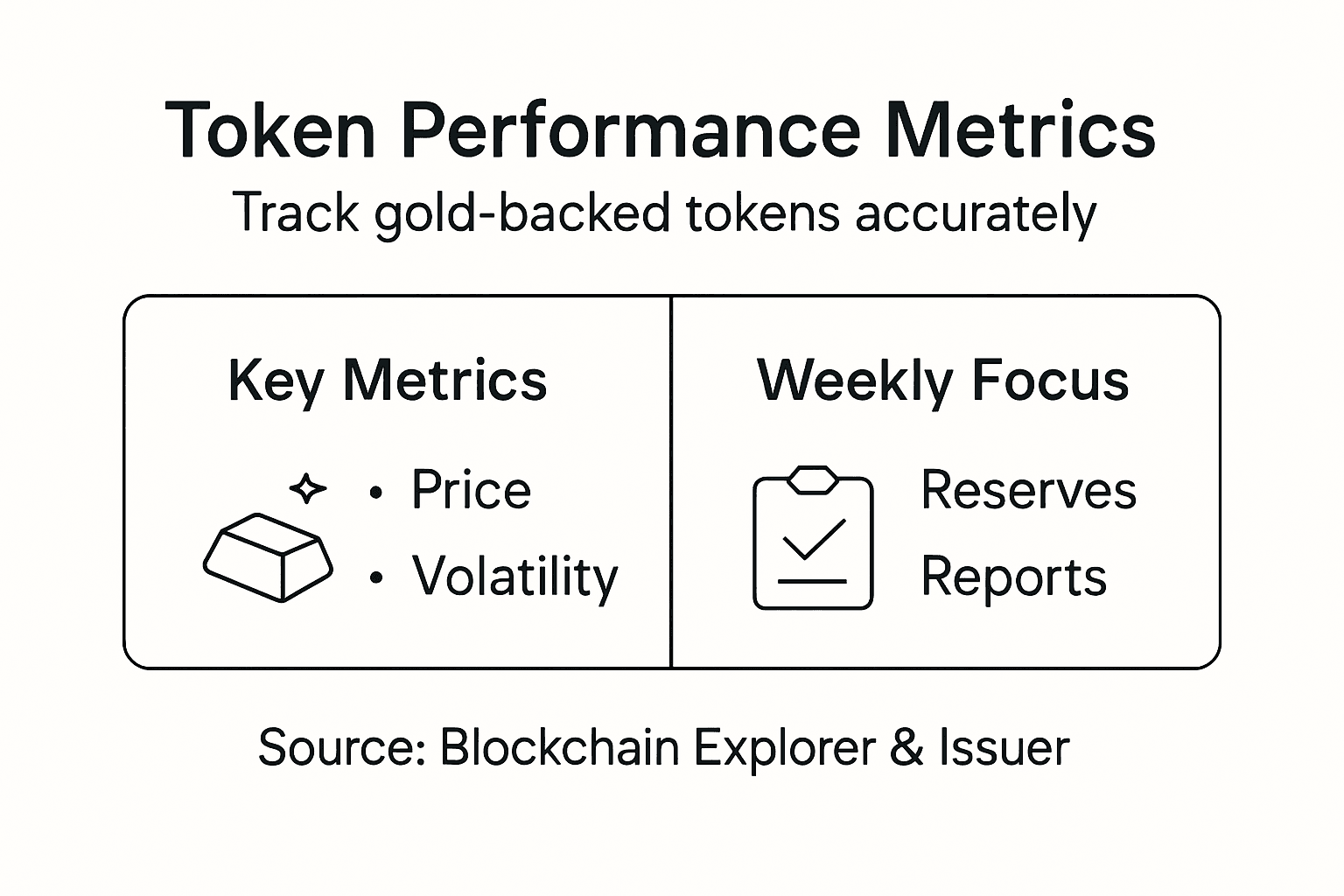
Monitor volatility patterns relative to historical norms and compared to pure gold prices. Volatility should remain relatively low for a properly functioning asset-backed token. If volatility spikes unexpectedly, that signals market stress or confidence changes. Compare your token’s volatility to Spot Gold ETF volatility as a benchmark. If your token is consistently more volatile than the underlying asset, that indicates problematic market conditions or structural issues. Many institutional investors maintain a simple spreadsheet tracking daily price, daily volatility, and weekly correlation statistics. These metrics update automatically if your data connections are configured correctly. Review these metrics weekly during your portfolio management meetings. Ask specific questions when you see divergences. Why did volatility spike on Tuesday? Why did the token price lag gold prices last week? Answering these questions forces engagement with your holdings rather than passive monitoring.
Establish a reporting schedule and structure that captures all critical information for your investment committee. Monthly reports should include token price performance, reserve verification status, regulatory compliance updates, and any material developments from the token issuer. Ask token issuers directly to provide monthly updates rather than waiting for quarterly reports. Include specific sections in your monitoring dashboard for issuer news, custody changes, and regulatory developments. Many institutional investors maintain a shared document where all team members can flag important updates about their assigned tokens. This creates organizational memory and prevents critical information from being missed because it arrived in an email someone didn’t see.
Below is a summary of metrics essential for ongoing gold-backed token performance monitoring:
| Metric | Weekly Review Focus | Why It Matters |
|---|---|---|
| Price Stability | Compare token to gold spot price | Detects loss of asset backing |
| Volatility | Monitor spikes and outliers | Flags structural or market issues |
| Reserve Coverage | Match tokens to proof-of-reserve | Prevents unbacked token risk |
| Issuer Communication | Track response and report timing | Gauges management reliability |
Track the issuer’s track record with scheduled communications. Do they publish proof-of-reserve reports on time? Do they respond promptly to information requests? Do they maintain transparent communications with token holders? Issuers that consistently communicate professionally and transparently typically run more reliable operations than those that are evasive or inconsistent. Create a communication log where you document each time you request information from an issuer and when you receive responses. This becomes invaluable during due diligence for new tokens and helps you identify trustworthy versus problematic counterparties.
Compare performance across multiple gold-backed tokens simultaneously if you hold more than one. Which tokens maintain tighter correlation with gold? Which ones have maintained better reserve coverage? Which issuers communicate more transparently? This comparative analysis helps you decide which tokens deserve increased allocations and which ones should be reduced or eliminated. Your monitoring system should generate comparative performance reports automatically rather than requiring manual calculations.
Evaluate correlation patterns with other portfolio assets during market stress periods. Gold historically serves as a portfolio diversifier that holds value when equities decline. Your gold-backed tokens should exhibit this same characteristic. Monitor whether your tokens maintained stable value or even appreciated during recent equity market downturns. If your gold-backed tokens declined alongside equities during a market crash, they failed their primary purpose as diversifiers. This information should inform whether you continue holding them or reallocate to more reliable gold exposure.
Maintain a decision log documenting why you took specific actions based on your monitoring data. When you increased an allocation to one token based on improved performance metrics, document this decision. When you reduced exposure to another token due to reserve concerns, document the specific metrics that prompted the decision. This creates an audit trail demonstrating that your portfolio management followed rigorous processes rather than making reactive emotional decisions. During regulatory examinations or fund audits, this documentation proves you conducted appropriate monitoring and made rational allocation decisions based on defensible analysis.
Pro tip: Generate weekly performance dashboards comparing each token’s price versus gold spot prices, volatility, and reserve coverage, then schedule a 30-minute weekly review meeting with your team to discuss any metrics that diverge from historical patterns or exceed predetermined alert thresholds.
Take Full Control of Your Gold-Backed Token Investments Today
Tracking blockchain assets for gold-backed tokens comes with complex challenges like verifying proof-of-reserve, ensuring regulatory compliance, and monitoring real-time token performance. Investors face risks from incomplete tokenization, lack of transparency, and unreliable data feeds. You need a solution that provides clear legal backing, continuous reserve verification, and instant access to live blockchain data so you never face surprises or hidden risks.
At UK Financial Ltd, we specialize in delivering institutional-grade oversight with our portfolio of gold-backed tokens including Maya Preferred PRA and MayaCat meme coin. Our platform emphasizes transparency, security, and regulatory readiness with live proof-of-reserve reports and cutting-edge blockchain asset tracking tools. Discover how our ecosystem transforms the complexities of monitoring gold-backed crypto assets into a seamless experience. Start securing your wealth with tangible precious metal-backed tokens today by exploring our comprehensive digital asset solutions and see how we bring clarity to institutional investing.
Frequently Asked Questions
How do I select gold-backed tokens for tracking?
Before tracking, evaluate tokens based on their legal structure, transparency, regulatory compliance, and operational maturity. Begin by researching the legal documentation from token issuers to identify which tokens possess genuine asset backing and relevant regulatory clarity.
What secure tools should I use for tracking gold-backed tokens?
Choose a secure wallet with multi-factor authentication and AES-256 encryption for your tracking tools. Implement automated monitoring dashboards that pull data directly from the blockchain for real-time insights into your token positions.
How do I ensure the accuracy of proof-of-reserve reports?
To verify proof-of-reserve, request regular updates from token issuers and cross-reference these against blockchain data. Establish a routine to compare the issuer’s claims with actual holdings at least monthly to maintain oversight and prevent unexpected discrepancies.
What metrics should I monitor for gold-backed token performance?
Track key performance metrics such as price stability, volatility, and reserve coverage against gold prices. Set alerts for when token prices deviate significantly from gold prices or when volatility spikes, ensuring timely evaluation of your investments.
How often should I review the performance of my gold-backed tokens?
Review your gold-backed token performance weekly to assess price movements and to ensure adherence to established investment metrics. Regularly analyze and document any significant changes or trends to inform your portfolio management decisions.
What should I include in a decision log regarding my gold-backed tokens?
Maintain a decision log that documents actions taken based on monitoring data, including reasons for increasing or decreasing token allocations. This log should provide a clear audit trail, demonstrating that decisions are based on credible data rather than reactive impulses.
Recommended
- UK Financial Ltd – Gold-Backed Cryptocurrency Portfolio
- UK Financial Ltd Establishes United States Operations in Delaware, Announces Texas Expansion
- UK Financial Ltd Sets Official 30-Day Conversion Deadline for Three Exchange-Listed Tokens Ahead of Regulated Upgrade
- News | UK Financial Ltd
- Cryptocurrency Portfolio Balancing Guide for Automated Trading