
Guide to Understanding Asset-Backed Cryptocurrencies Easily

Most American investors are seeking stability in a digital market where volatility can wipe out gains overnight. As asset-backed cryptocurrencies grow more popular, the challenge is knowing which ones offer true security and transparent value. With over 80 percent of global cryptocurrency users admitting concerns about reserve verification, this guide helps you cut through the hype by laying out clear criteria to evaluate, compare, and invest in trustworthy digital assets.
Table of Contents
- Step 1: Assess Key Criteria For Asset-Backed Cryptocurrencies
- Step 2: Evaluate Security, Transparency, And Reserve Backing
- Step 3: Compare Token Mechanics And Market Performance
- Step 4: Verify Compliance And Proof Of Reserves
- Step 5: Implement Strategies For Secure Investment
Quick Summary
| Key Insight | Explanation |
|---|---|
| 1. Assess Reserve Management | Verify the existence and quality of physical or financial assets backing the cryptocurrency. |
| 2. Evaluate Security Infrastructure | Analyze blockchain security, smart contract integrity, and governance to minimize investment risks. |
| 3. Require Transparency in Reporting | Look for independent audits and clear documentation of reserves to build investor confidence. |
| 4. Compare Market Performance Metrics | Use data on price consistency and trading volume to gauge investment potential and liquidity. |
| 5. Establish Compliance Verification | Ensure adherence to regulations with clear proof of reserves and regular independent audits to avoid legal risks. |
Step 1: Assess key criteria for asset-backed cryptocurrencies
When diving into asset-backed cryptocurrencies, you need a systematic approach to evaluate their potential and reliability. This step involves understanding the critical parameters that separate solid investment opportunities from risky ventures.
Start by examining the asset reserves underlying the cryptocurrency. Robust reserve management is crucial for maintaining financial stability. Empirical studies have shown how strategic reserve adjustments can significantly impact market volatility, making transparency a key evaluation criterion. Look for cryptocurrencies that provide clear, verifiable proof of their physical or financial asset backing transparent audit reports, real-time tracking mechanisms, and detailed reserve composition.
Next, conduct a comprehensive security risk assessment. Using advanced frameworks like the ABC threat modeling approach, analyze potential vulnerabilities in the cryptocurrency infrastructure. Evaluate aspects like collateral management, blockchain security protocols, and potential vectors for systemic risks. Pay attention to factors such as regulatory compliance, third-party audits, smart contract integrity, and the overall governance structure of the token ecosystem.
Professional Tip: Always cross reference multiple independent sources when assessing asset-backed cryptocurrency credentials. No single metric tells the full story of an investment opportunity.
Here’s a summary of key criteria to evaluate asset-backed cryptocurrencies:
| Evaluation Area | What to Analyze | Real-World Impact |
|---|---|---|
| Reserve Management | Proof of physical/financial assets | Ensures price stability and trust |
| Security Infrastructure | Blockchain, smart contracts, audits | Reduces risk of hacks and system failure |
| Regulatory Compliance | Legal adherence, reporting standards | Avoids regulatory issues, boosts credibility |
| Transparency | Audit reports, reserve disclosure | Builds investor confidence, deters fraud |
Step 2: Evaluate security, transparency, and reserve backing
Examining the security, transparency, and reserve backing of asset-backed cryptocurrencies requires a meticulous and strategic approach. Your goal is to uncover the fundamental strengths and potential weaknesses that determine a cryptocurrency’s reliability and investment potential.

Global financial authorities have raised significant concerns about stablecoin transparency and monetary implications, making rigorous evaluation more critical than ever. Start by scrutinizing the cryptocurrency’s reserve composition. Demand comprehensive documentation that details the specific assets backing the token. Look for cryptocurrencies with diversified, high-quality reserves that include liquid assets like cash, government bonds, and short-term financial instruments. Verify the reserves are independently audited and regularly reported with full transparency.
Next, conduct a deep dive into the security infrastructure. Analyze the blockchain technology underlying the cryptocurrency, examining factors like smart contract integrity, consensus mechanisms, and potential vulnerability points. Consider historical precedents of stablecoin controversies, such as those surrounding major tokens like Tether, which highlight the importance of stringent security protocols and honest reporting.
Professional Tip: Create a standardized evaluation checklist with weighted scoring for reserve quality, transparency metrics, and security features to systematically compare different asset-backed cryptocurrencies.
Step 3: Compare token mechanics and market performance
Evaluating the mechanics and market performance of asset-backed cryptocurrencies requires a comprehensive analytical approach. Your objective is to understand the intricate dynamics that drive token value, liquidity, and long-term investment potential.
Systematic research reveals complex interactions between cryptocurrency market behaviors and traditional financial systems. Begin by examining the token’s fundamental mechanics such as total supply, distribution model, minting and burning processes, and governance structure. Pay close attention to how these mechanisms impact price stability and market responsiveness. Analyze transaction costs, processing speeds, and network scalability as critical performance indicators that directly influence investor confidence and token utility.
Explore the interconnectedness between cryptocurrency markets and broader financial ecosystems, focusing on volatility patterns and correlation with traditional asset classes. Develop a comprehensive comparative framework that evaluates each token against key performance metrics like price consistency, trading volume, market capitalization, and historical price movements. Look beyond surface-level numbers to understand the underlying economic principles and market sentiment driving the token’s performance.
Professional Tip: Create a dynamic spreadsheet with real-time data tracking that allows you to compare multiple asset-backed cryptocurrencies simultaneously, enabling rapid and informed decision making.
This table outlines how market performance indicators inform investment decisions:
| Metric | Why It Matters | Investor Consideration |
|---|---|---|
| Price Consistency | Indicates token stability | Lower volatility means safer holding |
| Trading Volume | Reflects market interest | High volume signals increased liquidity |
| Network Scalability | Supports transaction growth | Scalable networks handle more demand |
| Historical Price Movement | Reveals past trends and cycles | Helps anticipate potential risk |

Step 4: Verify compliance and proof of reserves
Navigating the complex landscape of cryptocurrency compliance requires a meticulous and strategic approach. Your goal is to thoroughly validate the regulatory adherence and financial transparency of asset-backed tokens, protecting your investment from potential legal and financial risks.
Academic research highlights the critical importance of establishing clear accounting and reporting standards for cryptocurrencies. Begin by examining the token’s regulatory documentation, focusing on its classification and reporting mechanisms. Request comprehensive proof of reserves that demonstrates exact asset backing, including detailed audit reports from independent third party verification firms. Scrutinize the documentation for transparency regarding asset composition, valuation methodologies, and periodic reporting frequency.
Systematic reviews underscore the unique challenges in auditing cryptocurrency assets due to their intangible nature. Develop a comprehensive compliance checklist that covers regulatory requirements across different jurisdictions. Pay special attention to how the token addresses potential legal complexities such as tax reporting, asset classification, and international financial regulations. Verify the token issuer’s commitment to ongoing compliance through regular independent audits and transparent reporting mechanisms.
Professional Tip: Establish direct communication channels with the token issuer to request supplementary compliance documentation and clarify any ambiguities in their regulatory reporting.
Step 5: Implement strategies for secure investment
Mastering secure investment strategies in asset-backed cryptocurrencies requires a systematic approach to risk management and technological understanding. Your primary objective is to develop a robust investment framework that protects your financial interests while maximizing potential returns.
Advanced blockchain transparency frameworks offer innovative mechanisms for enhancing accountability and security in cryptocurrency investments. Develop a multi-layered investment strategy that includes diversification across different asset-backed tokens, careful allocation of your investment portfolio, and implementation of stringent security protocols. Prioritize tokens with verifiable reserve mechanisms, transparent governance structures, and demonstrated track records of financial stability. Consider implementing cold storage solutions for your digital assets, utilizing hardware wallets that provide offline protection against potential cybersecurity threats.
Establish a comprehensive risk management approach that includes regular portfolio rebalancing, continuous monitoring of token performance, and maintaining a disciplined investment strategy. Create alerts for significant market movements, set predefined exit strategies, and maintain a flexible investment approach that allows for rapid adaptation to changing market conditions. Understand the correlation between different asset-backed tokens and traditional financial instruments to optimize your overall investment strategy.
Professional Tip: Develop a personal investment dashboard that tracks real-time performance metrics, compliance status, and risk indicators for your asset-backed cryptocurrency investments.
Secure Your Future with Transparent Asset-Backed Cryptocurrencies
Understanding the complexities of asset-backed cryptocurrencies can be challenging. This guide highlights the critical importance of reserve management, security infrastructure, and compliance to ensure your investments are protected and reliable. If you want to avoid uncertainty and risk while gaining exposure to tokens backed by tangible assets, clarity and transparency are key.
At UK Financial Ltd, we specialize in offering precisely that. Our platform focuses on gold-backed digital assets and cryptocurrencies that prioritize verified reserves, regulatory compliance, and real-time transparency. With features like live token performance data, proof of reserve reports, and a commitment to blockchain security, we empower you to invest confidently in a rapidly evolving market.
Take control of your investment strategy today.
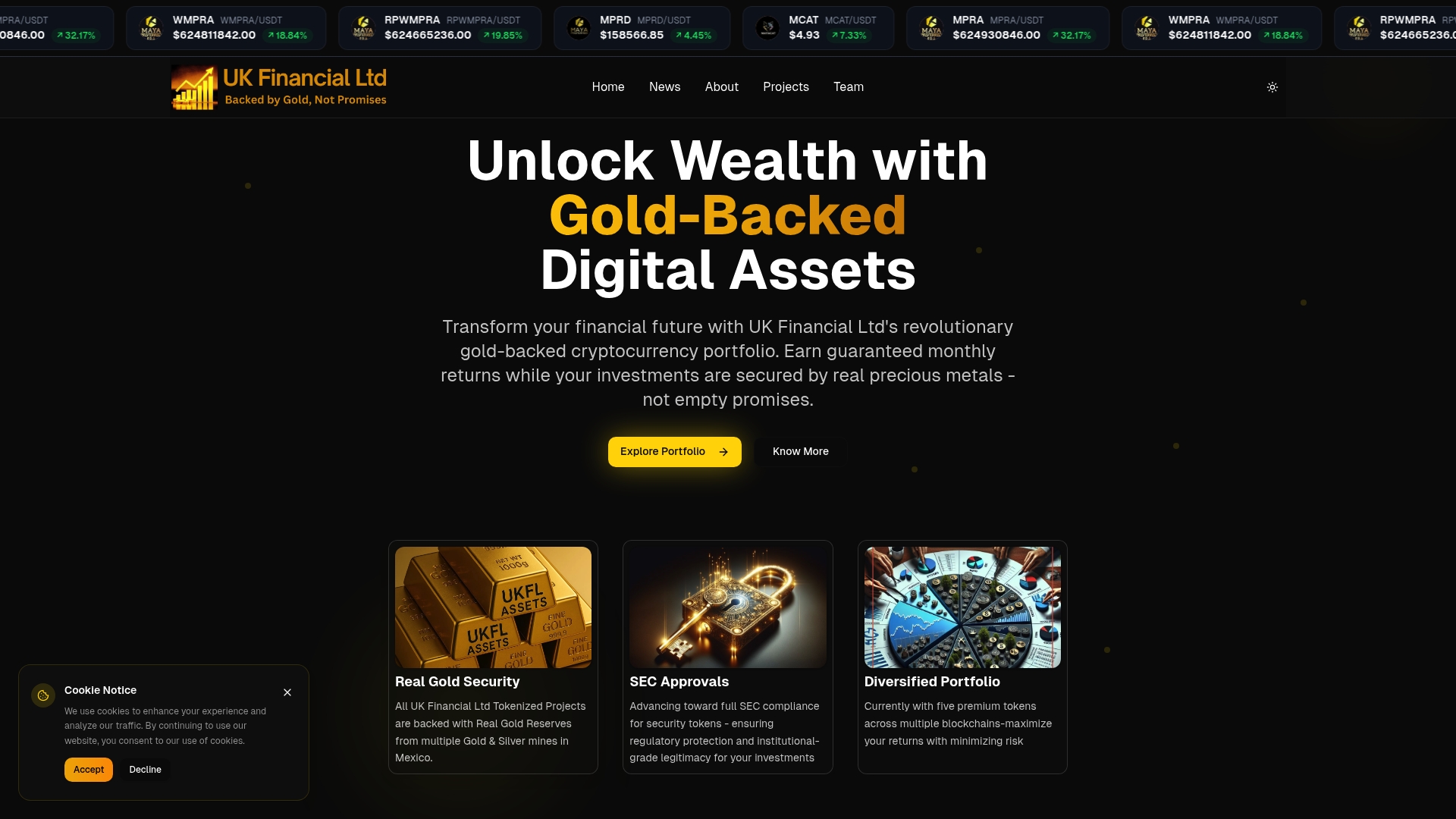
Explore our portfolio including the flagship Maya Preferred PRA and discover how secure, asset-backed tokens can diversify and protect your wealth. Visit UK Financial Ltd now to learn more and start your journey toward safer, transparent cryptocurrency investments.
Frequently Asked Questions
What key criteria should I assess when evaluating asset-backed cryptocurrencies?
To evaluate asset-backed cryptocurrencies effectively, assess key criteria such as reserve management, security infrastructure, regulatory compliance, and transparency. Start by acquiring clear, verifiable proof of asset backing and independent audits for better investment decisions.
How can I conduct a comprehensive security risk assessment for a cryptocurrency?
Conducting a comprehensive security risk assessment involves analyzing the cryptocurrency’s blockchain technology, smart contracts, and potential vulnerabilities. Create a checklist to evaluate aspects like collateral management and governance structure for more informed insights.
What are the mechanics that impact the market performance of asset-backed cryptocurrencies?
Token mechanics, including total supply, distribution models, and governance structures, significantly impact market performance. Examine transaction costs and historical price movements to understand a token’s responsiveness to market demand.
How can I verify compliance and proof of reserves for a cryptocurrency?
To verify compliance and proof of reserves, review the cryptocurrency’s regulatory documentation and request detailed audit reports from independent firms. Scrutinize asset composition and third-party verification frequency to ensure financial transparency.
What strategies can I implement for secure investing in asset-backed cryptocurrencies?
Implement a multi-layered investment strategy that diversifies your portfolio across various asset-backed tokens and includes stringent security protocols. Regularly rebalance your investments and monitor performance metrics to adapt to market changes effectively.