
Future of Gold-Backed Tokens: Impact on Investors

Wealth preservation in volatile markets requires solutions that combine stability with compliance. As institutional investors face growing regulatory demands and seek efficient portfolio diversification, gold-backed tokens offer a compelling approach. These digital assets provide the security of physical gold reserves verified by independent audits, while enabling seamless participation in modern blockchain finance. This overview separates fact from fiction around gold-pegged tokens and highlights their structural advantages for risk management and long-term asset security.
Table of Contents
- Gold-Backed Tokens Defined And Common Myths
- Types, Leading Issuers, And Market Structure
- How Gold-Backed Tokens Function In 2025
- Regulatory Compliance And Governance Trends
- Operational Risks, Costs, And Liquidity Issues
- Comparing Alternatives: Stablecoins And ETFs
Key Takeaways
| Point | Details |
|---|---|
| Gold-Backed Tokens Combine Stability and Innovation | They are cryptocurrencies linked to physical gold, providing a unique investment alternative that merges traditional safety with digital flexibility. |
| Institutional Interest Driven by Advantages | Key benefits include hedging against inflation, enhanced diversification, and reduced counterparty risks, making them appealing to institutional investors. |
| Operational Risks and Compliance Are Vital | Understanding custody security, market liquidity, and regulatory requirements is crucial for investors looking to navigate the complexities of gold-backed tokens. |
| Continuous Market Engagement | Unlike traditional ETFs, gold-backed tokens offer 24/7 global trading, facilitating dynamic investment strategies and real-time portfolio management. |
Gold-Backed Tokens Defined and Common Myths
Gold-backed tokens represent a fascinating intersection between traditional precious metal investments and modern digital finance. These innovative digital assets are cryptocurrencies pegged to physical gold that combine the stability of gold with the technological advantages of blockchain platforms. Each token typically represents a specific quantity of gold stored in secure, audited vaults, offering investors a unique alternative to traditional investment vehicles.
Understanding the core characteristics of gold-backed tokens requires examining their fundamental structure and purpose:
- Precise Gold Representation: Each token corresponds to a specific weight of physical gold (often one troy ounce)
- Third-Party Verified Reserves: Independent audits confirm the actual gold holdings
- Blockchain Transparency: Transactions are recorded on secure, immutable ledgers
- Lower Volatility: Provides more stability compared to traditional cryptocurrencies
Contrary to popular misconceptions, not all cryptocurrencies are backed by physical assets. Bitcoin, for instance, remains an unbacked digital currency with value determined purely by market demand. Gold-backed tokens, however, maintain intrinsic value through their direct connection to a tangible, historically valuable asset.
Institutional investors find gold-backed tokens particularly attractive due to several key advantages:
- Hedge Against Inflation
- Enhanced Portfolio Diversification
- Reduced Counterparty Risk
- Simplified International Transactions
Gold-backed tokens bridge the gap between traditional investment safety and digital asset flexibility, offering a compelling option for risk-conscious investors.
Pro tip: Always verify the specific gold reserve ratio and audit credentials before investing in any gold-backed cryptocurrency token.
Types, Leading Issuers, and Market Structure
The gold-backed token ecosystem is characterized by a diverse range of digital assets designed to represent physical gold through advanced blockchain technologies. These tokens enable investors to access gold’s stability while maintaining the flexibility of digital assets, creating a unique investment instrument that bridges traditional and modern financial markets.
Key types of gold-backed tokens include:
- Centralized Tokens: Issued by regulated financial institutions with direct gold reserve backing
- Decentralized Tokens: Created through blockchain protocols with algorithmic gold representation
- Fully Collateralized Tokens: Maintaining 100% physical gold reserves
- Fractional Ownership Tokens: Allowing investors to purchase small gold quantities
The current market landscape is dominated by several prominent issuers with robust market presence. Leading gold-backed cryptocurrency projects showcase distinctive characteristics that appeal to institutional and retail investors:

Here’s a quick comparison of major gold-backed token issuers and their distinguishing features:
| Token Name | Regulatory Oversight | Key Strength | Notable Feature |
|---|---|---|---|
| Paxos Gold (PAXG) | NY State regulated | High transparency | Redeemable for physical gold |
| Tether Gold (XAUT) | Offshore regulated | Extensive liquidity | Broad global access |
| Kinesis Gold (KAU) | International compliance | Rewards mechanism | Yield for token holders |
| GoldPro Token | Emerging compliance | Innovation focus | Advanced blockchain integration |
- Paxos Gold (PAXG): Regulated by the New York State Department of Financial Services
- Tether Gold (XAUT): Known for extensive liquidity and global accessibility
- Kinesis Gold (KAU): Offering unique rewards mechanisms for token holders
- GoldPro Token: Emerging player with innovative blockchain integration
The gold-backed token market represents a sophisticated financial innovation, combining technological efficiency with traditional asset security.
Institutional investors particularly value these tokens for their transparent structure, which typically involves storing physical gold in LBMA-accredited vaults and maintaining strict compliance with international financial regulations. The integration of blockchain technology ensures real-time auditability and reduces traditional friction associated with gold investments.
Pro tip: Always verify the specific gold reserve ratio, custodial arrangements, and regulatory compliance before investing in any gold-backed cryptocurrency token.
How Gold-Backed Tokens Function in 2025
Gold-backed tokens have evolved into sophisticated digital assets representing precise gold quantities through advanced blockchain technologies. These innovative financial instruments enable investors to access gold’s inherent value while maintaining the flexibility of digital transactions, effectively bridging traditional asset ownership with modern financial infrastructure.
The operational mechanism of gold-backed tokens involves several critical components:
- Direct Asset Representation: Each token corresponds to a specific weight of physical gold
- Secure Vault Storage: Gold reserves maintained in accredited, independently audited facilities
- Blockchain Verification: Transparent, immutable transaction records
- Instant Convertibility: Option to trade or redeem tokens for physical gold
Unique functional characteristics of gold-backed tokens in 2025 include:
- Precise Digital Gold Allocation
- Real-Time Market Value Tracking
- Fractional Ownership Capabilities
- Global Transaction Accessibility
Gold-backed tokens represent a revolutionary approach to asset ownership, combining technological innovation with traditional investment principles.
Institutional investors appreciate these tokens for their hybrid benefits, which merge gold’s stability with blockchain’s liquidity. The sophisticated redemption mechanisms allow seamless conversion between digital tokens, physical gold, and fiat currencies, providing unprecedented financial flexibility.
Pro tip: Carefully evaluate the specific redemption protocols and audit frequency of gold-backed tokens before making any investment decisions.
Regulatory Compliance and Governance Trends
The gold-backed token ecosystem has undergone significant regulatory transformation, with comprehensive legal frameworks emerging to ensure investor protection and market integrity. These regulatory developments represent a critical evolution in digital asset governance, addressing the complex challenges of integrating traditional asset-backed securities with blockchain technologies.
Key regulatory compliance requirements for gold-backed tokens include:
- Transparent Asset Disclosure: Complete reporting of gold reserve details
- Anti-Money Laundering (AML) Protocols: Rigorous verification of investor identities
- Risk Management Systems: Comprehensive internal control mechanisms
- Regular Independent Audits: Third-party verification of token backing
The global regulatory landscape for gold-backed tokens is characterized by several critical trends:
- Unified Reporting Standards
- Enhanced Investor Protection Mechanisms
- Strict Operational Transparency Requirements
- Cross-Border Compliance Frameworks
Regulatory compliance is no longer optional but a fundamental requirement for gold-backed token issuers seeking institutional and retail investor trust.
Institutional investors are particularly attentive to these evolving governance standards, which provide critical safeguards against potential market manipulation and financial instability. The implementation of robust regulatory frameworks ensures that gold-backed tokens maintain their credibility as legitimate financial instruments with genuine asset-backed value.
Pro tip: Conduct thorough due diligence on the regulatory compliance status of any gold-backed token before making investment decisions.
Operational Risks, Costs, and Liquidity Issues
Gold-backed tokens present a complex landscape of operational risks and market challenges that institutional investors must carefully navigate. These digital assets, while innovative, require comprehensive understanding of underlying structural vulnerabilities that can impact investment performance and market participation.
Key operational risks in gold-backed token markets include:
- Custody Security: Potential technological vulnerabilities in digital storage
- Valuation Accuracy: Challenges in real-time asset pricing mechanisms
- Regulatory Compliance: Complex cross-border legal requirements
- Technological Infrastructure: Potential blockchain network limitations
The most critical liquidity challenges for gold-backed tokens stem from several interconnected factors:
- Limited Secondary Market Depth
- Regulatory Trading Restrictions
- Custodial Concentration Risks
- High Transaction Cost Barriers
Successful navigation of gold-backed token investments requires sophisticated understanding of market microstructures and potential operational friction points.
Institutional investors must recognize that tokenized asset markets face significant liquidity constraints, including restricted trading volumes and limited participant diversity. These structural challenges can lead to extended holding periods and reduced market responsiveness, necessitating advanced risk management strategies.
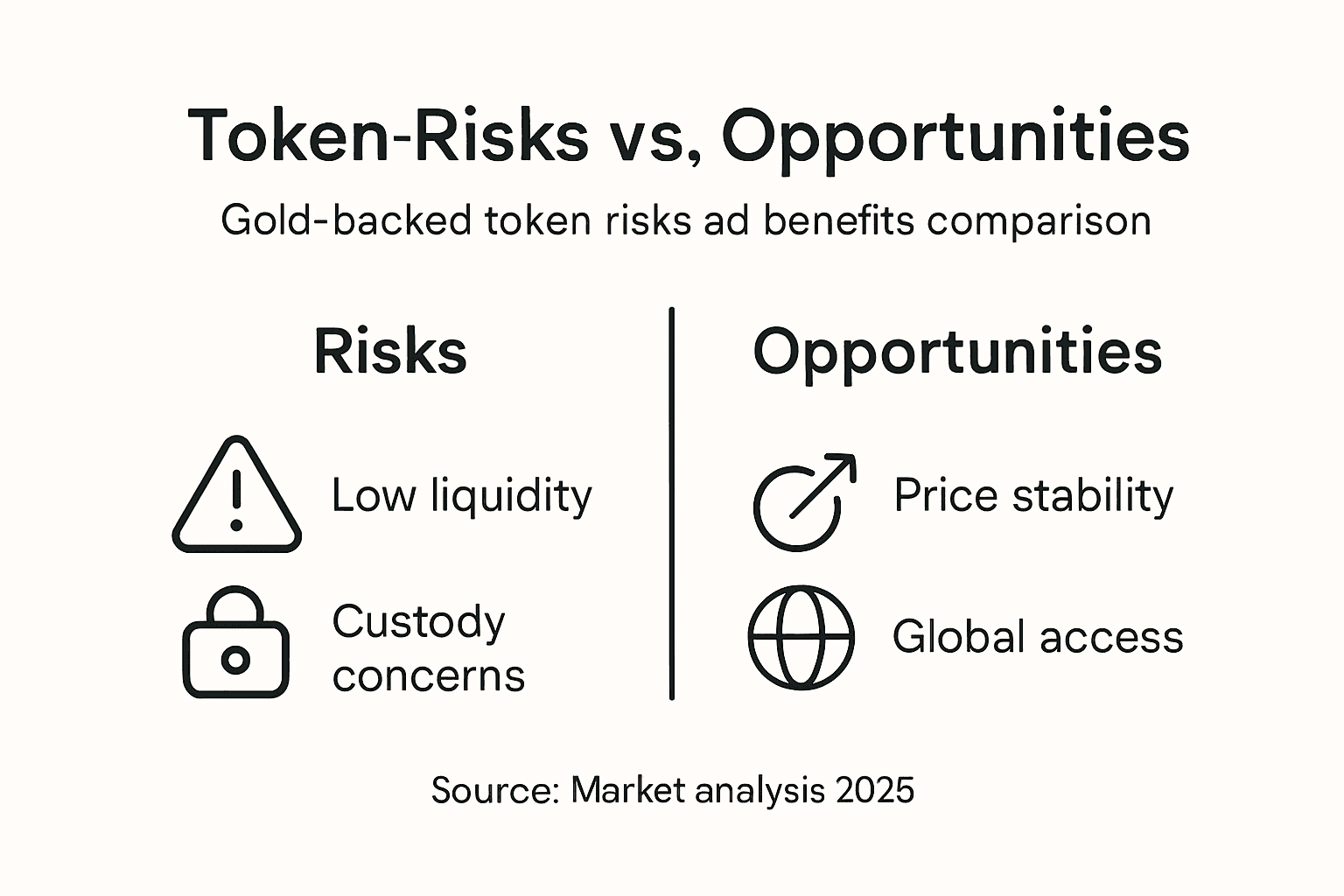
Pro tip: Conduct comprehensive due diligence on a token’s liquidity profile, including trading volumes, exchange listings, and redemption mechanisms, before making investment commitments.
Comparing Alternatives: Stablecoins and ETFs
Investors exploring gold investment strategies encounter multiple options, with gold-backed cryptocurrencies offering unique advantages compared to traditional investment vehicles. These digital assets provide a sophisticated alternative to conventional gold investment methods, bridging traditional asset ownership with modern financial technologies.
Key comparative characteristics include:
- Accessibility: Gold-backed tokens enable 24/7 global trading
- Ownership Structure: Fractional investment options
- Transaction Costs: Varying fee models across investment types
- Regulatory Oversight: Different compliance frameworks
Investment alternatives present distinct advantages:
To assist in assessing different gold investment vehicles, see this feature comparison:
| Investment Type | Trading Hours | Ownership Structure | Typical Costs |
|---|---|---|---|
| Gold-Backed Tokens | 24/7 global | Programmable, fractional | Variable, may be lower |
| USD Stablecoins | 24/7 global | Fiat-aligned, digital | Generally low |
| Gold ETFs | Exchange hours | Share-based, fund-held | Management fees apply |
| Physical Gold | Limited, by dealer | Direct, full ownership | Storage and insurance |
- Gold-Backed Tokens: Digital, programmable, instant transactions
- USD Stablecoins: High liquidity, fiat currency alignment
- Traditional ETFs: Established market infrastructure
- Physical Gold: Direct asset ownership
Digital gold investments represent a technological evolution in asset management, offering unprecedented flexibility and global accessibility.
Institutional investors recognize that gold-backed cryptocurrencies differ significantly from traditional investment vehicles. Unlike ETFs with fixed trading hours, these tokens provide continuous market engagement, enabling more dynamic investment strategies and real-time portfolio management.
Pro tip: Evaluate your specific investment objectives and risk tolerance before selecting between gold-backed tokens, stablecoins, and traditional ETF structures.
Secure Your Future With Transparent Gold-Backed Tokens
Navigating the evolving world of gold-backed tokens can feel overwhelming with concerns about regulatory compliance, reserve verification, and liquidity challenges. This article highlights how institutional investors face the complexity of ensuring their digital assets represent real gold backed by trusted audits and operate within strict legal frameworks. If you are seeking a secure, transparent, and innovative investment that combines the stability of precious metals with the agility of blockchain, UK Financial Ltd offers precisely that.
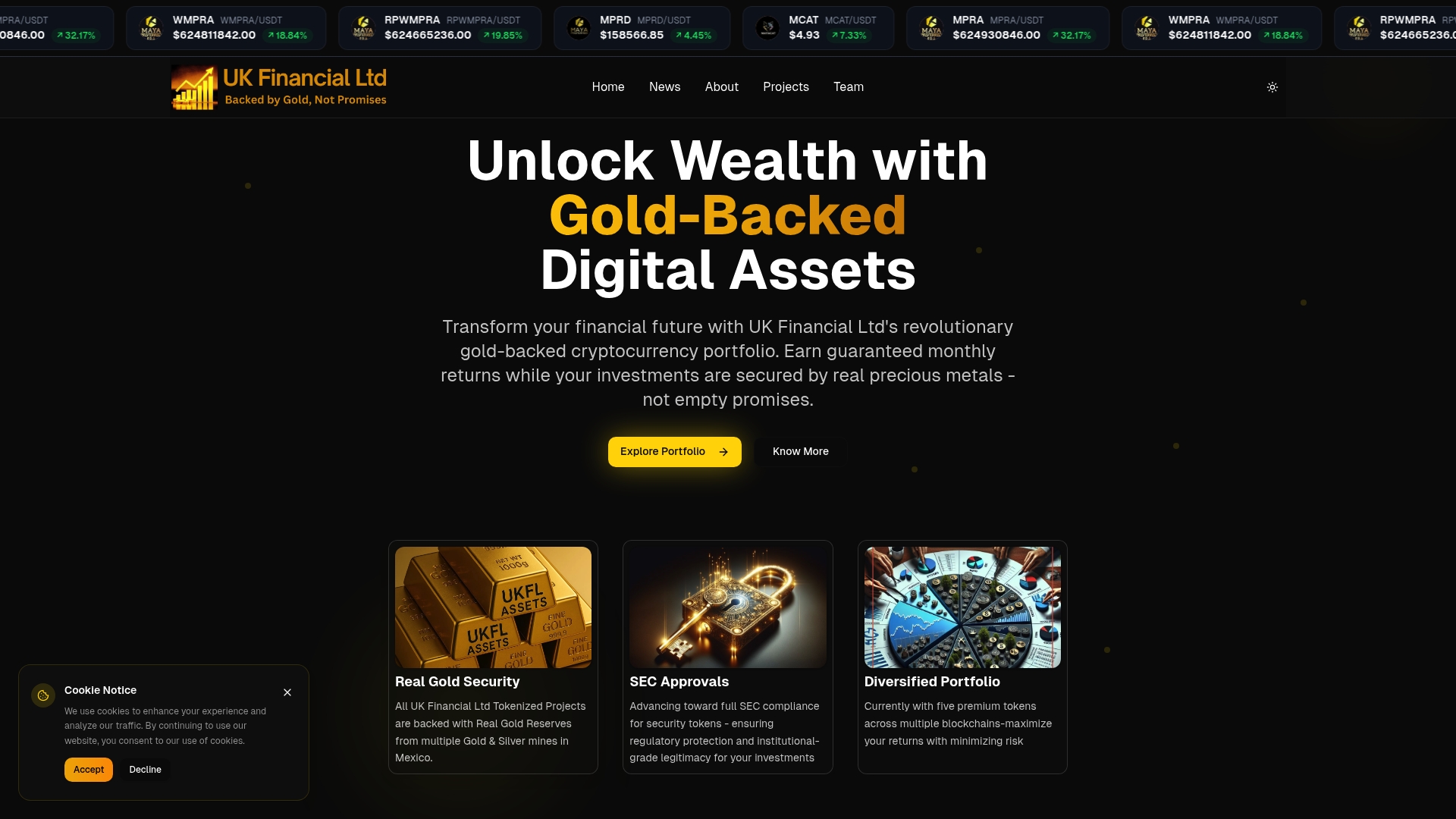
Discover our suite of gold-backed cryptocurrency tokens including the flagship Maya Preferred PRA and explore detailed insights on our commitment to real-time blockchain tracking, proof of reserves, and regulatory alignment. Take control of your portfolio today and embrace a future-proof investment vehicle designed for both retail and institutional investors. Learn more about our ecosystem and start safeguarding your wealth by visiting UK Financial Ltd. Stay ahead in the digital asset space with trusted gold-secured tokens at your fingertips.
Frequently Asked Questions
What are gold-backed tokens and how do they work?
Gold-backed tokens are cryptocurrencies pegged to physical gold, representing a specific quantity of gold stored in secure vaults. Each token’s value is tied directly to the amount of gold it represents, offering a blend of stability and digital asset flexibility.
What are the advantages of investing in gold-backed tokens compared to traditional gold investments?
Gold-backed tokens provide advantages such as lower volatility, enhanced liquidity through 24/7 trading, fractional ownership options, and simplified international transactions, making them a compelling alternative to traditional gold investments like ETFs or physical gold.
How are gold-backed tokens regulated and what compliance measures are in place?
Gold-backed tokens are subject to regulatory compliance, including asset disclosure, AML protocols, and independent audits. Regulatory bodies enforce standards that ensure investor protection and market integrity.
What operational risks should investors be aware of when investing in gold-backed tokens?
Investors should be aware of risks such as custody security, valuation accuracy, regulatory compliance challenges, and potential liquidity issues that can impact the trading and overall performance of gold-backed tokens.
Recommended
- UK Financial Ltd – Gold-Backed Cryptocurrency Portfolio
- UK Financial Ltd Establishes United States Operations in Delaware, Announces Texas Expansion
- UK Financial Ltd Sets Official 30-Day Conversion Deadline for Three Exchange-Listed Tokens Ahead of Regulated Upgrade
- Official News | UK Financial Ltd
- Top 5 Investiciono-zlato.com Alternativa 2026 za Individualne Investitore i Kolekcionare Zlata