
Digital Assets vs Physical Gold: Secure Wealth Preservation

Institutional investors face a pivotal choice as gold evolves from physical bars to digital gold assets backed by physical reserves. The distinct advantages of digital ownership, including fractional access and instant transfer, have shifted portfolio strategies for wealth preservation. Both asset types offer unique risk profiles and compliance demands that require careful evaluation. This overview defines physical and digital gold, offering insight for global fund managers seeking effective integration of regulated gold-backed options.
Table of Contents
- Defining Digital Assets And Physical Gold
- Key Differences In Asset Structure And Ownership
- Regulatory Landscape For Tokenized Gold
- Valuation, Liquidity, And Security Risk Factors
- Portfolio Integration And Diversification Strategies
Key Takeaways
| Point | Details |
|---|---|
| Digital Gold vs. Physical Gold | Digital gold provides greater liquidity and lower transaction costs, while physical gold offers tangible ownership and stability against inflation. |
| Regulatory Considerations | Investors should be aware of varying regulations across jurisdictions that may affect the classification and compliance of tokenized gold assets. |
| Risk Profiles | Security risks differ significantly; physical gold faces traditional risks, whereas digital gold is susceptible to cyber threats and technological vulnerabilities. |
| Portfolio Strategies | A balanced portfolio that includes both asset types can leverage their unique strengths to maximize returns and manage risks effectively. |
Defining Digital Assets and Physical Gold
In the rapidly evolving world of investment, digital assets and physical gold represent two distinct yet interconnected approaches to wealth preservation. Academic research on digital gold highlights the fundamental differences between these investment vehicles, revealing nuanced characteristics that institutional investors must carefully evaluate.
Physical gold represents the traditional store of value – a tangible asset with centuries of cultural and economic significance. Investors can hold this precious metal in forms such as bullion bars, coins, or jewelry, providing a direct, physical connection to their investment. Unlike digital representations, physical gold offers immediate tactile ownership and has historically served as a hedge against economic uncertainty. Scholarly analysis emphasizes its long-standing role as a reliable inflation protection mechanism.
Digital gold, by contrast, emerges as a technological innovation in asset ownership. This modern investment vehicle allows investors to own fractional gold quantities through electronic platforms, eliminating traditional barriers like storage, transportation, and security concerns. Digital gold tokens are typically backed by physical gold reserves, providing a transparent and verifiable ownership structure. Key advantages include:
- Instant global transferability
- Lower transaction costs
- Fractional ownership possibilities
- Enhanced liquidity compared to physical gold
- Simplified portfolio management
The primary distinction lies not just in format, but in accessibility and transaction efficiency. While physical gold requires secure storage and potential insurance, digital gold exists as a flexible, blockchain-enabled asset that can be traded rapidly across international markets.
Pro tip: For institutional investors, consider maintaining a balanced portfolio that includes both physical and digital gold to leverage the unique strengths of each investment approach.
Here’s how physical gold and digital gold compare across critical investment criteria:
| Investment Criteria | Physical Gold | Digital Gold |
|---|---|---|
| Ownership | Direct, tangible possession | Cryptographic token, platform-based |
| Accessibility | Requires physical handling | Instant online access |
| Liquidity | Slow, involves physical transfer | High, global real-time trading |
| Transaction Costs | Storage, insurance fees | Lower fees, minimal overhead |
| Risk Profile | Theft, loss, damage | Cybersecurity, technology risk |
| Portfolio Fit | Stability, inflation hedge | Flexibility, diversification |
Key Differences in Asset Structure and Ownership
The landscape of asset ownership has fundamentally transformed with the emergence of digital technologies, creating profound structural distinctions between traditional physical assets and their digital counterparts. Digital asset ownership models reveal critical differences in control, verification, and legal enforcement that institutional investors must carefully navigate.
Physical gold represents direct, tangible ownership where the investor physically possesses the asset. This traditional model provides complete control, allowing immediate physical access, visual verification, and potential use beyond financial investment. Investors can physically store, transport, and directly manage their gold holdings, with ownership rights established through physical possession and legal documentation.
Digital assets, by contrast, introduce a more complex ownership paradigm. These assets exist as cryptographic representations, typically recorded on blockchain ledgers or electronic platforms. Key structural differences include:
- Ownership verified through digital cryptographic signatures
- Fractional ownership possibilities
- Reliance on technological infrastructure
- Dependence on third-party verification systems
- Programmable transfer mechanisms
- Enhanced global accessibility
The ownership mechanism fundamentally shifts from physical control to cryptographic verification. Digital gold tokens represent legal claims to physical gold reserves, mediated through sophisticated blockchain technologies that provide transparency and traceability. Unlike physical assets, digital ownership requires understanding complex technological ecosystems, digital security protocols, and regulatory frameworks governing electronic asset transfers.
Pro tip: Conduct thorough due diligence on the underlying blockchain infrastructure and reserve verification mechanisms before investing in digital asset representations.
Regulatory Landscape for Tokenized Gold
The global regulatory environment for tokenized gold represents a complex and rapidly evolving landscape that challenges traditional financial frameworks. Digital asset legal definitions have become increasingly critical as governments worldwide grapple with classifying these innovative financial instruments that blur the lines between traditional commodities and digital representations.
Regulatory approaches vary significantly across jurisdictions, creating a challenging ecosystem for institutional investors. Some countries treat tokenized gold as a financial security, while others classify it as a commodity or digital asset. This fragmentation creates substantial compliance challenges, requiring investors to navigate multiple regulatory frameworks. Regulatory compliance challenges highlight the critical need for comprehensive understanding of local and international legal requirements.
Key regulatory considerations for tokenized gold include:
- Compliance with securities laws
- Anti-money laundering (AML) requirements
- Know Your Customer (KYC) protocols
- Cross-border transaction regulations
- Digital asset classification standards
- Investor protection mechanisms
- Reporting and transparency obligations
The intangible nature of digital gold tokens introduces unique legal challenges. Traditional property rights frameworks struggle to accommodate these cryptographically secured assets, necessitating innovative legal interpretations. Institutional investors must carefully assess the regulatory environment, understanding how different jurisdictions define ownership, transfer, and consumer protections for these emerging financial instruments.
Pro tip: Develop a comprehensive regulatory compliance checklist specific to each jurisdiction where you intend to trade or hold tokenized gold assets.
This summary highlights how regulatory approaches impact tokenized gold investment decisions:
| Jurisdiction Approach | Compliance Challenges | Investor Considerations |
|---|---|---|
| Security Classification | Extensive disclosures required | May face strict reporting duties |
| Commodity Treatment | Limited protections | Tax implications vary widely |
| Digital Asset Status | Unclear legal frameworks | Regulatory risk is heightened |
| Cross-Border Trading | Multiple agencies involved | Must monitor changes frequently |
Valuation, Liquidity, and Security Risk Factors
Institutional investors must carefully evaluate the nuanced landscape of valuation, liquidity, and security risks associated with digital and physical gold assets. Financial valuation dynamics reveal critical differences that fundamentally impact investment strategies and risk management approaches.

Physical gold maintains a relatively stable valuation mechanism rooted in tangible asset ownership, with intrinsic value derived from historical market performance, global demand, and physical scarcity. Digital gold tokens, by contrast, introduce more complex valuation models that incorporate technological infrastructure, platform reliability, and cryptographic security mechanisms. The liquidity profile differs significantly between these asset types, with digital gold offering unprecedented transaction speed and fractional ownership possibilities.
Key comparative risk factors include:
- Valuation volatility potential
- Transaction speed and accessibility
- Counterparty risk exposure
- Technological infrastructure reliability
- Storage and custody complexity
- Cybersecurity vulnerability
- Regulatory compliance requirements
Security risks represent a critical distinguishing factor between physical and digital gold assets. Physical gold confronts traditional risks like theft, physical damage, and transportation challenges. Digital gold tokens face sophisticated cybersecurity threats, including potential blockchain vulnerabilities, platform hacking risks, and complex authentication mechanisms. Institutional investors must develop comprehensive risk mitigation strategies that account for these multifaceted security considerations.
Pro tip: Implement a multi-layered risk assessment framework that evaluates technological, financial, and regulatory risks specific to digital gold token investments.
Portfolio Integration and Diversification Strategies
Institutional investors seeking robust wealth preservation strategies must develop sophisticated approaches to integrating digital and physical gold assets. Portfolio diversification techniques provide nuanced frameworks for balancing risk and maximizing potential returns across multiple asset classes.
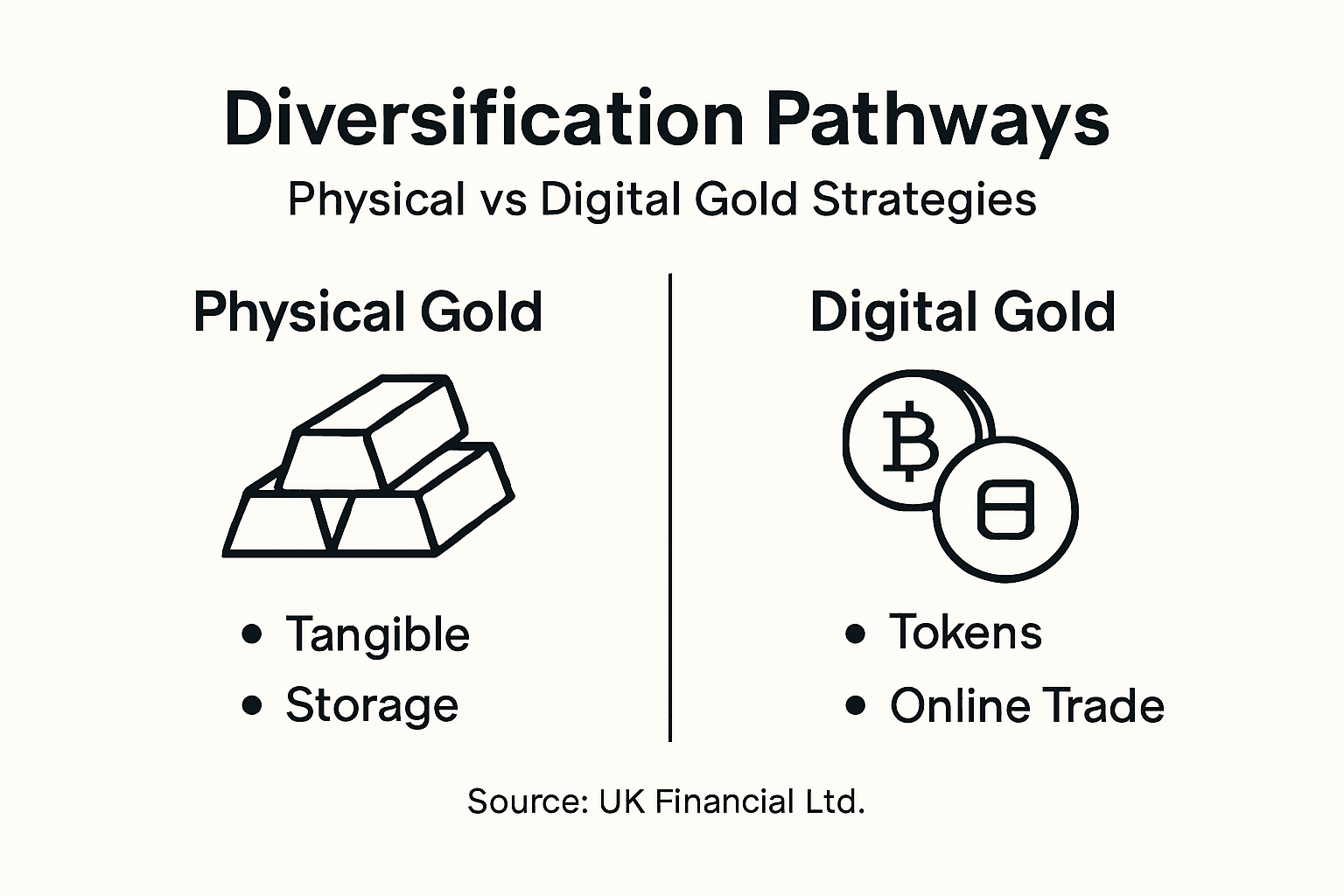
A strategic approach requires understanding the complementary characteristics of physical and digital gold investments. Physical gold offers tangible stability and historical value preservation, while digital gold tokens introduce unprecedented liquidity and fractional ownership capabilities. The optimal portfolio allocation depends on individual risk tolerance, investment horizons, and specific institutional investment mandates.
Key diversification strategies include:
- Balanced allocation percentages
- Hybrid asset ownership models
- Dynamic rebalancing mechanisms
- Risk-weighted asset distribution
- Cross-jurisdictional investment approaches
- Technological infrastructure considerations
- Regulatory compliance frameworks
Successful portfolio integration demands a holistic approach that transcends traditional investment paradigms. Institutional investors must develop sophisticated risk management frameworks that leverage the unique attributes of both physical and digital gold assets. This requires continuous monitoring, advanced analytics, and adaptive strategies that can respond to rapidly changing market dynamics and technological innovations.
Pro tip: Implement a quarterly review process that systematically evaluates your digital and physical gold asset allocation, adjusting percentages based on performance metrics and emerging market trends.
Secure Your Wealth With the Best of Both Worlds
Navigating the complex divide between digital assets and physical gold can feel overwhelming. This article highlights key challenges like ensuring transparency, managing regulatory compliance, and balancing liquidity with tangible ownership. If you seek a solution that combines the security of gold-backed assets with the flexibility of blockchain technology, it is time to explore what UK Financial Ltd offers.
Our platform specializes in asset-backed cryptographic tokens verified by real gold and silver reserves. With features such as real-time blockchain asset tracking, proof of reserve reports, and a strong emphasis on regulatory compliance, we help investors overcome risks associated with cybersecurity and uncertain valuations. Whether you aim for portfolio diversification or seamless global access, discover how our flagship tokens like Maya Preferred PRA provide a sophisticated, secure investment pathway.
Experience the future of wealth preservation today

Take control of your wealth strategy now by visiting UK Financial Ltd. Learn more about our robust token portfolio and how you can confidently integrate both digital and physical gold into your investment horizon. Secure your investments with transparency and innovation at your side.
Frequently Asked Questions
What are the main differences between digital gold and physical gold?
Digital gold is a technological innovation that allows ownership of fractional gold quantities through online platforms, offering enhanced liquidity and lower transaction costs. In contrast, physical gold is a tangible asset requiring direct possession, storage, and associated costs like insurance.
How does liquidity differ between physical gold and digital gold?
Digital gold offers high liquidity due to the ability to trade tokens quickly on global platforms, whereas physical gold can involve slower transactions due to the need for physical transfer and secure storage.
What are the risks associated with investing in digital gold compared to physical gold?
Physical gold risks include theft, damage, and storage complications. Digital gold, however, faces cybersecurity threats, platform reliability issues, and technological risks that require careful consideration and risk management strategies.
How can institutional investors balance a portfolio that includes both digital and physical gold?
Investors should consider a balanced allocation of both asset types, utilizing hybrid ownership models and dynamic rebalancing mechanisms. Regular reviews of asset performance and market trends are essential for effective portfolio integration.
Recommended
- UK Financial Ltd – Gold-Backed Cryptocurrency Portfolio
- UK Financial Ltd Establishes United States Operations in Delaware, Announces Texas Expansion
- UK Financial Ltd Executes Compliance Tasks Ahead Of First-Ever ERC-3643 Exchange-Traded Token, SMCAT & Sets Date For Online Investor Governance Vote
- UK Financial Ltd Sets Official 30-Day Conversion Deadline for Three Exchange-Listed Tokens Ahead of Regulated Upgrade
- Complete Guide to Wealth Preservation Strategies – Finblog