
Digital Asset Security: Safeguarding Gold-Backed Tokens

Most American institutional investors face rising uncertainty as digital asset risks increase worldwide. Security is no longer just a technical detail—it is fundamental to preserving portfolio value and meeting evolving regulatory expectations. With over 80 percent of global financial institutions citing digital asset protection as their top concern, understanding secure and compliant gold-backed strategies is essential. This article helps investors assess how advanced security frameworks and regulatory principles underpin trusted digital asset investments.
Table of Contents
- Defining Digital Asset Security For Investors
- Types Of Digital Asset Security And Their Differences
- How Asset-Backed Tokens Ensure Security
- Custody Solutions And Key Risk Factors
- Regulatory Compliance In Global Digital Asset Markets
Key Takeaways
| Point | Details |
|---|---|
| Understanding Digital Asset Security | Investors must recognize that digital asset security includes technological, regulatory, and operational aspects beyond traditional finance. |
| Tailored Security Strategies | Different types of digital assets require customized security approaches to address specific risks and compliance needs. |
| Proactive Risk Management | Continuous education and proactive risk management are essential to navigate the evolving landscape of digital asset investments. |
| Importance of Regulatory Compliance | A robust compliance strategy enhances credibility and investor confidence, requiring ongoing adaptation to regulatory changes. |
Defining Digital Asset Security for Investors
In the evolving landscape of digital finance, digital asset security represents a sophisticated framework of technological and procedural safeguards designed to protect investor holdings and mitigate potential risks. Institutional investors must understand that security in this context extends far beyond traditional financial protection mechanisms, encompassing complex technological, regulatory, and operational considerations.
According to the comprehensive global digital asset regulation report, digital asset security involves multiple critical dimensions:
- Technological infrastructure integrity
- Cryptographic protection mechanisms
- Regulatory compliance frameworks
- Risk management protocols
- Transparent governance structures
Financial institutions are increasingly recognizing that robust digital asset security requires a multifaceted approach. The essential policy guidelines from industry experts emphasize developing comprehensive strategies that address technological vulnerabilities, regulatory requirements, and potential systemic risks. This means implementing advanced encryption technologies, establishing clear governance models, and creating dynamic risk assessment frameworks that can adapt to the rapidly changing digital asset ecosystem.
For institutional investors, understanding digital asset security is not merely a technical exercise but a strategic imperative. It demands continuous education, proactive risk management, and a nuanced approach to technological innovation and regulatory compliance. Successful navigation of this complex landscape requires deep technical knowledge, strategic foresight, and an unwavering commitment to protecting investor interests.
Pro tip: Conduct quarterly comprehensive security audits of your digital asset infrastructure, focusing on identifying potential vulnerabilities and updating protective mechanisms to match emerging technological threats.
Types of Digital Asset Security and Their Differences
The digital asset security landscape encompasses diverse protection mechanisms tailored to specific investment vehicles and technological infrastructures. Digital asset security types represent sophisticated approaches designed to mitigate risks across various digital financial instruments, each with unique characteristics and protective strategies.
According to the comprehensive risk and control framework, digital asset security can be categorized into several critical types:
- Tokenized Securities: Regulated digital representations of traditional financial instruments
- Cryptocurrencies: Decentralized digital assets with cryptographic protection
- Derivative Tokens: Complex financial instruments with specific security requirements
- Asset-Backed Digital Tokens: Securities directly linked to physical or financial assets
The Digital Asset Securities Control Principles highlight significant variations in security approaches. Tokenized securities, for instance, require stringent regulatory compliance and legal frameworks, while cryptocurrencies prioritize blockchain-based cryptographic protection. Each asset type demands a nuanced security strategy that addresses its unique technological and operational vulnerabilities.
Institutional investors must recognize that security is not a one-size-fits-all concept. Different digital assets require specialized security protocols, ranging from advanced encryption techniques for cryptocurrencies to comprehensive legal safeguards for tokenized securities. This complexity necessitates a deep understanding of each asset’s specific risk profile, technological infrastructure, and regulatory environment.
The table below compares key security considerations for various digital asset types, helping investors evaluate protection approaches.
| Asset Type | Main Security Focus | Regulatory Demands | Typical Investor Benefit |
|---|---|---|---|
| Tokenized Securities | Legal compliance, custody | Stringent legal frameworks | Enhanced investor protections |
| Cryptocurrencies | Blockchain encryption | Evolving regulations | Greater decentralization |
| Derivative Tokens | Smart contract robustness | Complex classification | Access to advanced strategies |
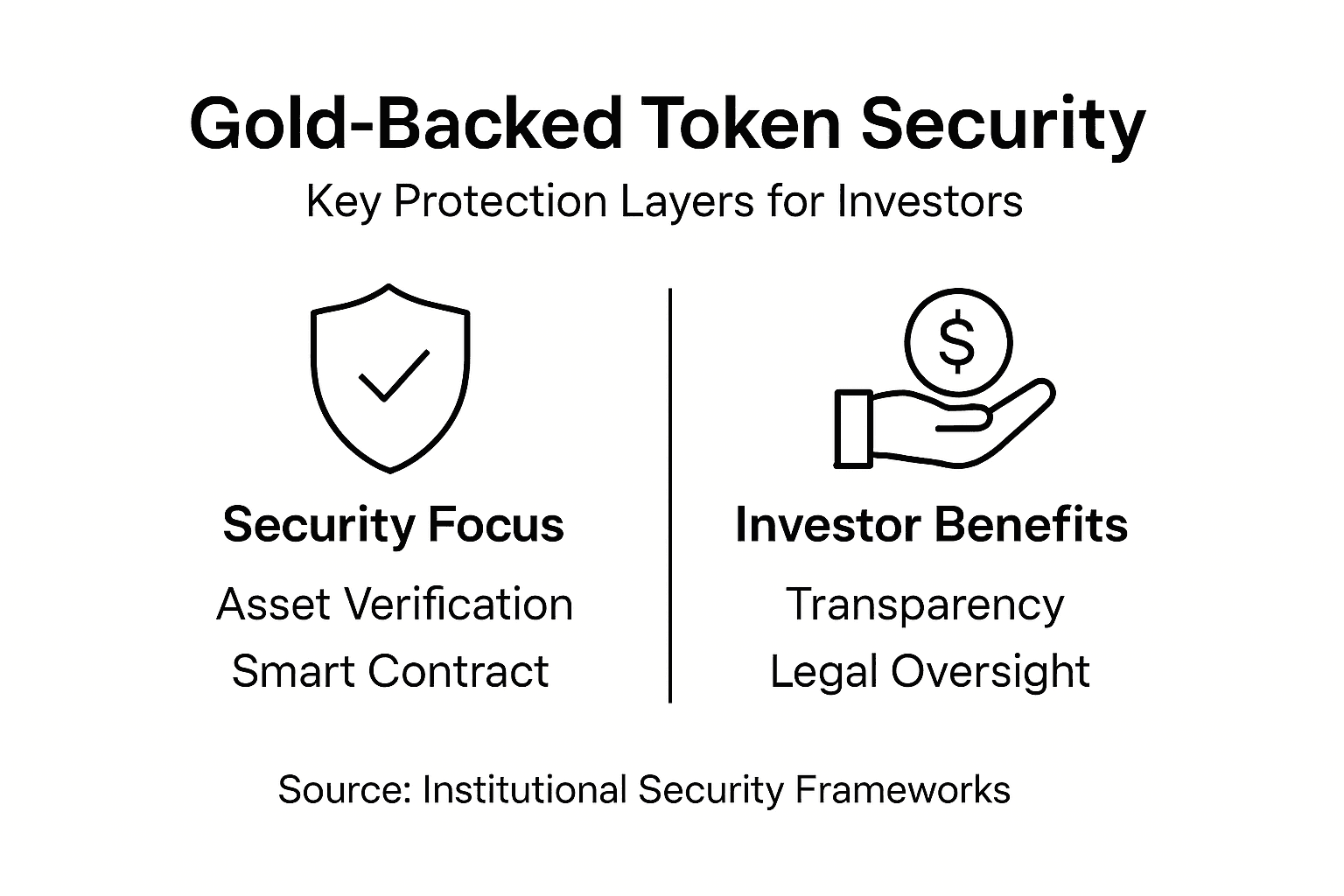
| Asset-Backed Digital Tokens | Underlying asset verification | Rigorous verification rules | Direct exposure to asset value |
Pro tip: Develop a dynamic, asset-specific security assessment matrix that evaluates protection mechanisms, regulatory compliance, and technological resilience for each digital asset type in your investment portfolio.
How Asset-Backed Tokens Ensure Security
Asset-backed tokens represent a sophisticated approach to digital asset security, combining traditional financial safeguards with cutting-edge blockchain technology. These innovative financial instruments provide institutional investors with a robust mechanism for protecting investment value while leveraging the transparency and efficiency of distributed ledger technologies.
According to the digital asset securities control principles, asset-backed tokens ensure security through multiple sophisticated layers:
- Comprehensive legal documentation
- Smart contract governance mechanisms
- Transparent asset custody protocols
- Regulatory compliance frameworks
- Cryptographic transaction verification
The risk and control framework highlights that asset-backed tokens derive their security strength from three critical dimensions. First, they maintain direct linkage to underlying physical assets, providing intrinsic value protection. Second, they utilize blockchain’s immutable transaction recording, preventing unauthorized modifications. Third, they incorporate multi-layered verification processes that validate both the token’s technological integrity and its underlying asset’s authenticity.

Institutional investors benefit from asset-backed tokens’ unique security architecture. Unlike traditional cryptocurrencies, these tokens offer a direct connection to tangible assets, creating a more stable and predictable investment vehicle. The integration of legal frameworks, technological infrastructure, and asset verification processes provides a comprehensive security approach that addresses the complex risk landscape of digital financial investments.
Pro tip: Conduct thorough due diligence on the specific asset backing, governance structure, and regulatory compliance of each asset-backed token before making investment decisions.
Custody Solutions and Key Risk Factors
Digital asset custody represents a critical infrastructure layer that determines the security, accessibility, and operational integrity of institutional investment strategies. The complexity of protecting digital assets goes far beyond traditional financial safekeeping, requiring sophisticated technological and procedural approaches that address emerging cyber threats and regulatory challenges.
According to the digital asset custody innovations research, institutional investors must navigate multiple critical custody solutions:
- Multi-signature wallet configurations
- Cold storage technologies
- Hardware security modules
- Multi-party computation protocols
- Encrypted key management systems
The comprehensive security framework highlights key risk factors that demand rigorous mitigation strategies. Cybersecurity threats represent the most significant challenge, with potential vulnerabilities emerging from technological infrastructure, human error, and sophisticated external attack vectors. Institutional investors must implement multi-layered security protocols that combine advanced encryption, continuous monitoring, and robust operational governance to protect digital asset portfolios.
Effective custody solutions require a holistic approach that balances technological sophistication with comprehensive risk management. This means developing adaptive security frameworks that can respond to evolving technological threats while maintaining regulatory compliance and operational transparency. The most successful strategies integrate cutting-edge cryptographic technologies with traditional financial risk management principles, creating a robust protective ecosystem for digital asset investments.
The following table summarizes common digital asset custody solutions and the primary risk each targets.
| Custody Solution | Core Security Feature | Main Risk Addressed |
|---|---|---|
| Multi-signature Wallets | Shared approval for actions | Unauthorized single-party access |
| Cold Storage | Offline key storage | Online/hacking threats |
| Hardware Security Modules | Physical device control | Key extraction and tampering |
| Multi-party Computation | Secret sharing protocols | Insider and external manipulation |
| Encrypted Key Management | Encrypted secret storage | Key theft and data exposure |
Pro tip: Implement a quarterly comprehensive security audit that stress tests your digital asset custody infrastructure, identifying potential vulnerabilities and updating protective mechanisms proactively.
Regulatory Compliance in Global Digital Asset Markets
Regulatory compliance in digital asset markets represents a complex, dynamic landscape that demands sophisticated understanding and strategic navigation for institutional investors. The global regulatory environment continues to evolve rapidly, creating both challenges and opportunities for digital asset management and investment strategies.
The global digital assets regulation overview highlights critical compliance considerations across international jurisdictions:
- Anti-money laundering protocols
- Know-your-customer verification requirements
- Cross-border transaction transparency
- Digital asset classification standards
- Investor protection frameworks
The UK government’s regulatory framework demonstrates the increasing sophistication of national approaches to digital asset regulation. Institutional investors must recognize that compliance is no longer a binary checkbox but a comprehensive, dynamic process requiring continuous adaptation to changing legal landscapes. This involves maintaining robust documentation, implementing advanced verification technologies, and developing agile governance structures that can respond quickly to regulatory shifts.
Successful navigation of global digital asset markets demands a proactive, multijurisdictional compliance strategy. This means developing comprehensive risk management frameworks that anticipate regulatory trends, integrate advanced technological solutions, and maintain transparency across all operational dimensions. Investors must view regulatory compliance not as a constraint but as a strategic advantage that enhances institutional credibility and investor confidence.
Pro tip: Develop a comprehensive regulatory compliance dashboard that tracks legal requirements across multiple jurisdictions, enabling real-time monitoring and adaptive risk management strategies.
Secure Your Investment with Gold-Backed Digital Assets from UK Financial Ltd
The article highlights the critical importance of safeguarding gold-backed tokens through comprehensive legal documentation, smart contract governance, and transparent asset custody protocols. For investors concerned about complex risks like regulatory compliance, technological vulnerabilities, and asset verification, UK Financial Ltd offers a trusted solution tailored to these core challenges. Our platform delivers asset-backed cryptographic tokens secured by verified gold and silver reserves, combining blockchain transparency with rigorous proof of reserve reporting and live token performance data.
Gain peace of mind knowing your digital assets are protected with:
- Real-time blockchain asset tracking to verify authenticity
- Strong governance structures aligned with regulatory standards
- Direct backing by tangible precious metals for intrinsic security
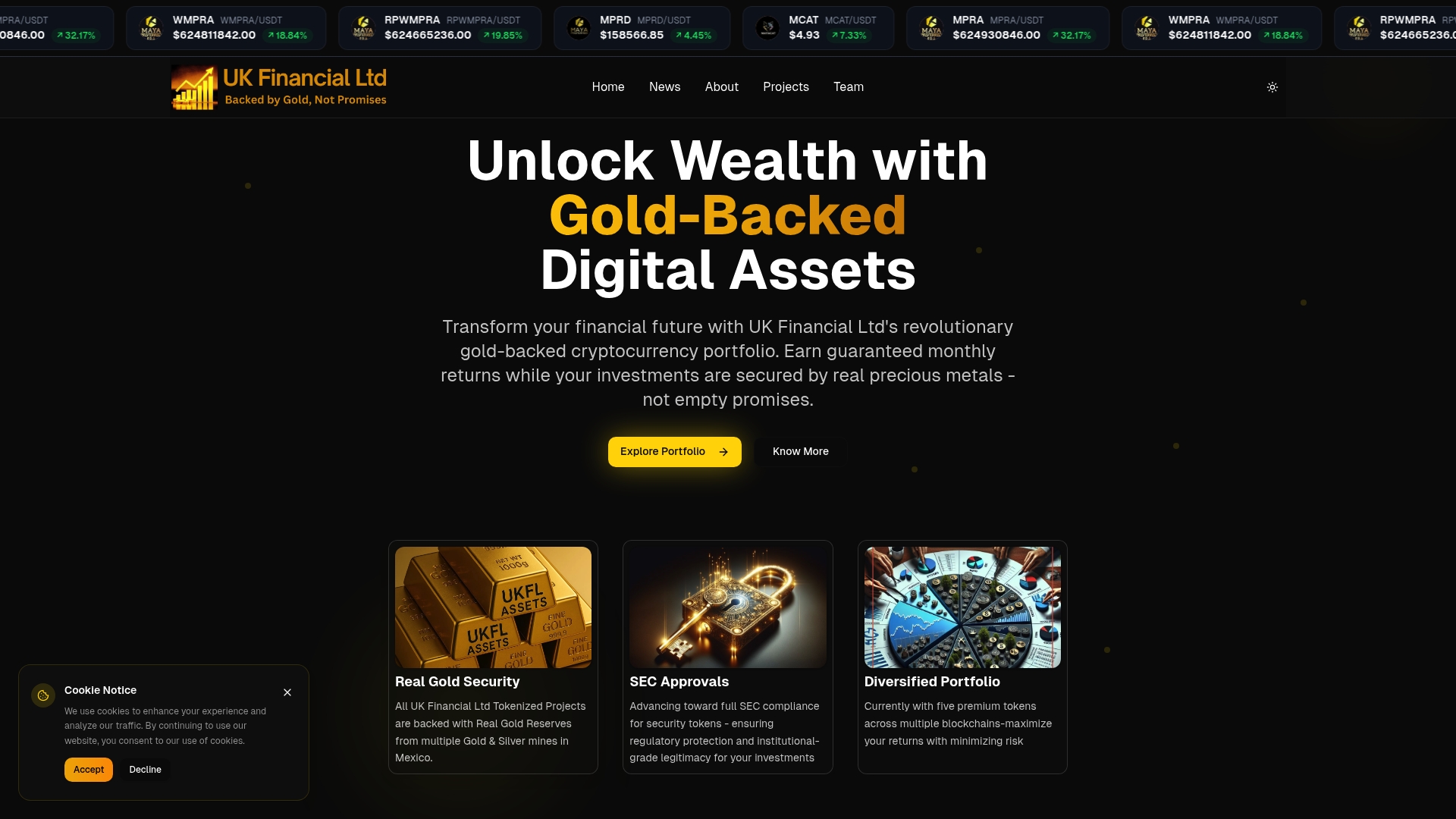
Explore how UK Financial Ltd bridges the gap between innovative digital asset security and tangible wealth preservation. Visit our platform to discover flagship tokens like Maya Preferred PRA and learn how our commitment to transparency and compliance sets a new standard. Protect your investment today with secure, asset-backed digital tokens designed for the demands outlined in the article. Take the next step towards confident digital asset ownership at UK Financial Ltd.
Frequently Asked Questions
What are gold-backed tokens?
Gold-backed tokens are digital assets that are directly linked to physical gold, providing a secure and transparent investment option that combines the value of gold with the efficiency of blockchain technology.
How do asset-backed tokens ensure security for investors?
Asset-backed tokens provide security through comprehensive legal documentation, smart contract governance, transparent asset custody protocols, regulatory compliance frameworks, and cryptographic transaction verification, ensuring the protection of both the token and the underlying asset.
What are the main benefits of investing in gold-backed tokens?
Investing in gold-backed tokens offers benefits such as intrinsic value protection linked to tangible physical assets, increased liquidity, and the potential for easier transaction and transfer compared to traditional gold investment methods.
How do regulatory compliance frameworks affect gold-backed tokens?
Regulatory compliance frameworks ensure that gold-backed tokens adhere to legal standards, such as anti-money laundering and investor protection protocols, which not only enhance the credibility of the asset but also provide a safer investment environment for investors.
Recommended
- UK Financial Ltd – Gold-Backed Cryptocurrency Portfolio
- UK Financial Ltd Establishes United States Operations in Delaware, Announces Texas Expansion
- UK Financial Ltd Sets Official 30-Day Conversion Deadline for Three Exchange-Listed Tokens Ahead of Regulated Upgrade
- News | UK Financial Ltd
- Gold and Silver Soar as Bitcoin Falls Behind in 2025