
Crypto Portfolio Allocation Guide for Asset-Backed Investing

More than 60 percent of British institutional investors now consider regulated asset-backed crypto solutions part of their diversification strategies, drawing insights from American market trends. Navigating portfolio exposure in this emerging field means balancing opportunity with regulatory demands. This guide explains how wealth managers in the United Kingdom can confidently structure crypto allocations to optimize returns, minimize risk, and maintain strict compliance across every step.
Table of Contents
- Step 1: Assess Risk Tolerance And Investment Objectives
- Step 2: Select Asset-Backed Crypto Tokens And Platforms
- Step 3: Diversify Holdings Across Token Types And Reserves
- Step 4: Allocate Capital Based On Security And Compliance
- Step 5: Verify Portfolio Performance And Reserve Transparency
Quick Overview
| Key Insight | Explanation |
|---|---|
| 1. Assess Your Risk Tolerance | Understand your financial literacy and evaluate your comfort with market volatility to define your investment strategy. |
| 2. Choose Asset-Backed Tokens Wisely | Prioritize stability and transparency by researching tokens with strong regulatory compliance and verified asset reserves. |
| 3. Diversify Across Token Types | Mitigate risk by allocating investments across different asset classes and ensuring no single token exceeds 30% of your holdings. |
| 4. Focus on Security and Compliance | Allocate capital to platforms with robust security measures and adhere to regulations to safeguard your investments. |
| 5. Regularly Verify Portfolio Performance | Implement a structured approach for ongoing audits and transparency checks to maintain confidence in your crypto holdings. |
Step 1: Assess risk tolerance and investment objectives
Successfully navigating cryptocurrency portfolio allocation starts with understanding your personal risk appetite and precise investment goals. This critical first step helps you align your digital asset strategy with your financial capabilities and risk comfort level.
Begin by conducting a comprehensive self assessment that examines your financial literacy and risk tolerance impact on potential cryptocurrency ownership. Consider your current financial situation, investment horizon, and emotional capacity to handle market volatility. Professional investors typically categorize risk tolerance into three primary bands: conservative (low risk), moderate (balanced risk), and aggressive (high risk). Your placement within these categories will dramatically influence how you structure your crypto portfolio.
To determine your specific risk profile, evaluate several key factors. First, assess your overall investment capital and how much you can afford to potentially lose without disrupting your financial stability. Young professionals with stable incomes and fewer financial dependencies might tolerate higher risk, while those closer to retirement typically require more conservative allocations. Next, analyze your investment objectives – whether you seek short term gains, long term wealth preservation, or a balanced approach. Comparing conventional and asset-backed cryptocurrencies can provide strategic insights into managing portfolio risk and help you make more informed allocation decisions.
Pro tip: Create a detailed spreadsheet tracking your risk tolerance, investment goals, and current financial metrics to provide a clear roadmap for your cryptocurrency investment strategy.
Here’s a quick overview of common crypto investor risk profiles:
| Risk Profile | Typical Investment Objective | Recommended Allocation Approach |
|---|---|---|
| Conservative | Preserve capital, steady growth | Focus on stable, regulated tokens |
| Moderate | Balanced growth and stability | Diversified mix across assets |
| Aggressive | Maximize returns, high tolerance | Higher exposure to volatile assets |
Step 2: Select asset-backed crypto tokens and platforms
Selecting the right asset-backed crypto tokens and platforms requires strategic research and a comprehensive understanding of tokenization mechanisms. This section will guide you through evaluating potential investment options that provide genuine value and security.

Start by examining stablecoins backed by real-world assets, which function as means of payment, units of account, and stores of value. Focus on platforms offering gold-backed or other commodity-supported tokens that provide transparent and verifiable asset reserves. When assessing potential investments, prioritize tokens with clear regulatory compliance, demonstrated liquidity, and robust proof-of-reserve mechanisms. Understanding the technical fundamentals and regulatory frameworks of asset-backed cryptocurrencies will help you distinguish between high-quality tokens and speculative instruments.
Your selection process should involve multiple evaluation criteria. Investigate the platform’s track record, examine the specific assets backing the tokens, review independent audit reports, and assess the management team’s expertise. Pay special attention to tokens that offer direct ownership verification, transparent reserve reporting, and regulatory alignment. Look for platforms providing real-time tracking of underlying assets, comprehensive disclosure of reserve compositions, and clear redemption policies.
Pro tip: Create a standardized evaluation scorecard for potential asset-backed crypto investments to ensure consistent and objective assessment across different platforms and tokens.
Below is a summary of essential criteria when evaluating asset-backed crypto platforms:
| Evaluation Criteria | Why It Matters | Example Consideration |
|---|---|---|
| Reserve Transparency | Confirms asset backing | Public audit reports |
| Regulatory Compliance | Reduces legal risk | AML/KYC policies enforced |
| Liquidity | Ensures easy trading | High daily transaction volume |
| Management Expertise | Supports long-term success | Experienced leadership team |
Step 3: Diversify holdings across token types and reserves
Diversifying your crypto portfolio across multiple asset-backed token types and reserves is a strategic approach to minimizing risk and maximizing potential returns. This step will help you create a robust investment strategy that spreads your exposure across different asset classes and tokenization models.
Begin by creating a balanced allocation strategy that includes various types of asset-backed tokens. This might include a mix of gold-backed tokens, fiat-pegged stablecoins, and commodity-supported cryptocurrencies. Aim to distribute your investments across different reserve types and platforms to reduce concentration risk. Consider allocating your portfolio across three to five distinct asset classes, ensuring that no single token type represents more than 30% of your total crypto holdings.
When diversifying, pay close attention to the underlying asset quality and the platform’s credibility. Look for tokens with transparent reserve mechanisms, regular independent audits, and clear redemption policies. Research each platform’s historical performance, regulatory compliance, and liquidity. Consider factors such as the diversity of underlying assets, the platform’s track record, and the management team’s expertise. Your goal is to create a resilient portfolio that can withstand market fluctuations by spreading risk across multiple high-quality asset-backed tokens.
Pro tip: Implement a quarterly rebalancing strategy to maintain your desired asset allocation and adjust your holdings based on performance and market conditions.
Step 4: Allocate capital based on security and compliance
Successfully navigating the complex landscape of asset-backed crypto investments requires a strategic approach that prioritizes security and regulatory compliance. This step will help you allocate your capital with precision and confidence, minimizing potential risks while maximizing investment potential.
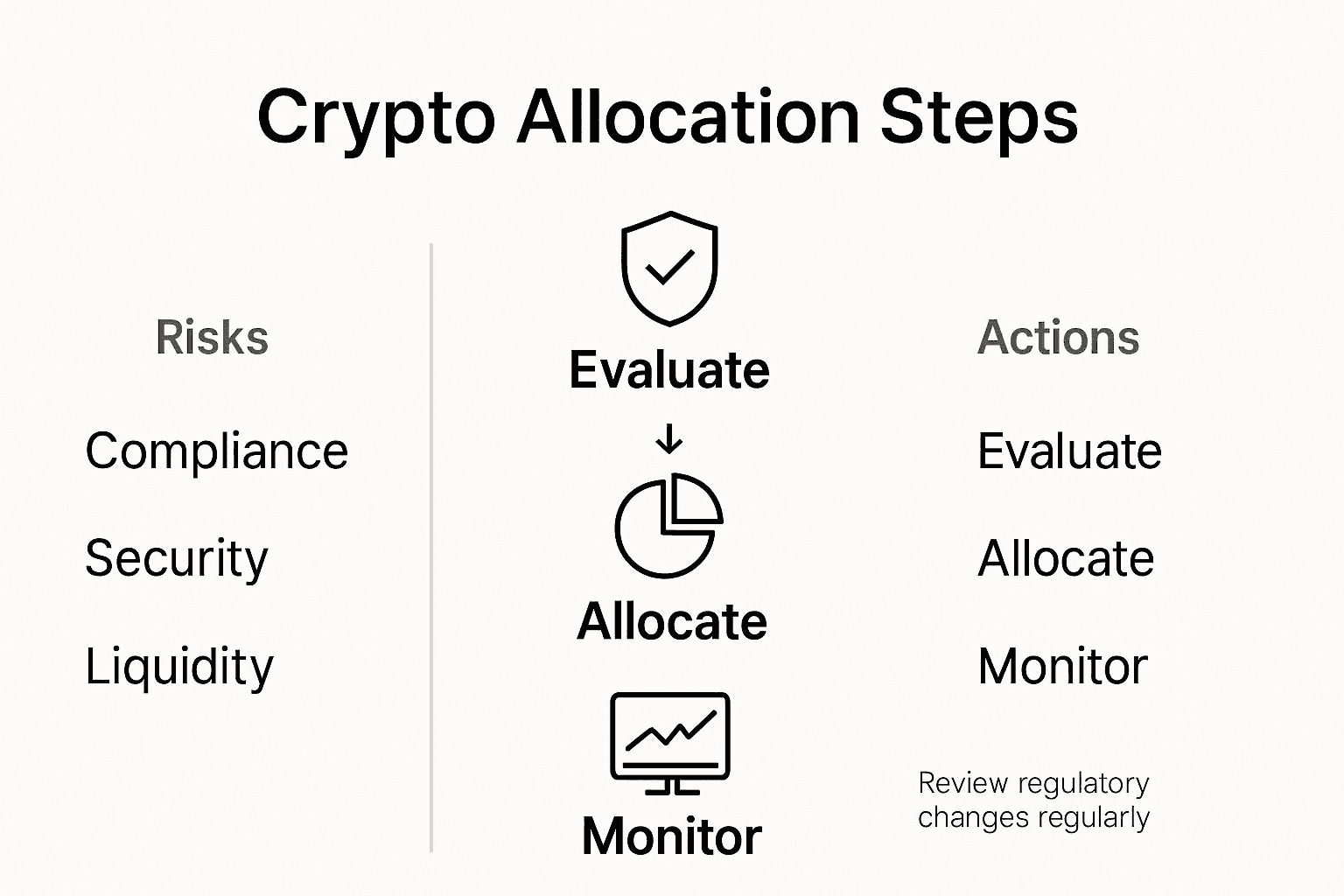
Evaluate crypto asset exposures through comprehensive regulatory frameworks that ensure prudential treatment and capital requirements. Begin by conducting a thorough assessment of each platform’s regulatory standing, focusing on Anti-Money Laundering (AML) standards, Know Your Customer (KYC) protocols, and adherence to international financial regulations. Analyze policy responses and security concerns related to crypto assets to develop a robust capital allocation strategy that protects your investment while maintaining flexibility.
When allocating capital, implement a tiered approach that balances security with potential returns. Prioritize platforms with verifiable regulatory compliance, transparent reporting mechanisms, and proven track records of security. Allocate a larger percentage of your capital to tokens and platforms with the strongest regulatory credentials, typically those with explicit approval from financial authorities or those demonstrating comprehensive risk management protocols. Consider diversifying your allocation across different compliance levels, with the majority of your investment concentrated in the most secure and well-regulated asset-backed crypto products.
Pro tip: Create a dynamic compliance scorecard that continuously tracks and ranks your crypto investments based on regulatory adherence, updating your allocation strategy quarterly to reflect the most current security landscape.
Step 5: Verify portfolio performance and reserve transparency
Ensuring the ongoing reliability of your asset-backed crypto investments requires a systematic approach to performance verification and reserve transparency. This critical step will help you maintain confidence in your portfolio by implementing robust monitoring and verification techniques.
Track how both conventional and asset-backed cryptocurrencies impact portfolio performance using advanced risk models. Develop a comprehensive performance verification strategy that includes regular independent audits, real-time reserve tracking, and detailed liquidity analysis. Examine how reserve adjustments and transparency disclosures affect portfolio volatility, paying close attention to the quality and verifiability of underlying asset reserves.
Implement a multi-layered verification process that goes beyond surface level reporting. Request and review comprehensive proof of reserve documentation, including detailed asset composition reports, independent third-party audits, and real-time asset valuation mechanisms. Create a standardized evaluation framework that scores each asset-backed token on key transparency metrics such as reserve quality, audit frequency, reporting clarity, and liquidity. Focus on platforms that provide granular, verifiable data about their asset backing, including precise details about the type, value, and location of reserve assets.
Pro tip: Establish a quarterly performance review process that includes a comprehensive checklist for assessing reserve transparency, allowing you to quickly identify and address any potential discrepancies in your crypto portfolio.
Secure Your Asset-Backed Crypto Portfolio with Trusted Gold-Backed Tokens
The challenge of building a resilient cryptocurrency portfolio that balances risk tolerance and regulatory compliance is more important than ever. This guide highlights your need for transparency, verification of reserves, and diversification across asset-backed tokens. At UK Financial Ltd, we understand these critical goals and offer you a comprehensive platform centered on gold-backed digital assets designed to preserve capital while providing innovative exposure to secure crypto investments.
Our flagship Maya Preferred PRA token, along with other precious metal-backed cryptocurrencies, ensures your holdings are anchored to real, verified reserves with regulatory oversight and proof of reserves readily available. We make it simple to align your investments with your risk profile through transparent audit reports and live performance tracking. This approach empowers you to confidently allocate capital knowing your portfolio is supported by tangible assets.
Experience the power of true asset-backed crypto investing.

Explore our secure token portfolio today at UK Financial Ltd. Take advantage of real-time blockchain asset tracking and transparent regulatory compliance to build a diversified, stress-free crypto strategy that matches your personal risk and investment objectives. Start securing your financial future now.
Frequently Asked Questions
How do I assess my risk tolerance for cryptocurrency investments?
Start by evaluating your financial situation, investment goals, and emotional capacity to handle market fluctuations. Consider creating a detailed spreadsheet to track your risk tolerance and investment objectives to guide your allocation strategy.
What factors should I consider when selecting asset-backed crypto tokens?
Examine the tokens’ reserve transparency, regulatory compliance, liquidity, and the management team’s expertise. Develop a standardized evaluation scorecard to ensure a consistent and objective assessment across different platforms and tokens.
How can I diversify my asset-backed crypto portfolio effectively?
Create a balanced allocation strategy that includes a mix of different asset-backed tokens, such as gold-backed tokens and fiat-pegged stablecoins. Ensure that no single token type represents more than 30% of your total crypto holdings to reduce concentration risk.
What steps should I take to verify the performance of my cryptocurrency portfolio?
Implement a systematic performance verification strategy that includes regular independent audits and real-time reserve tracking. Establish a quarterly performance review process to assess reserve transparency and identify any discrepancies in your portfolio.
How important is regulatory compliance in my crypto investment strategy?
Regulatory compliance is crucial for minimizing legal risks and ensuring the security of your investments. Prioritize platforms with strong regulatory credentials and transparent reporting mechanisms to enhance your overall capital allocation strategy.
Recommended
- UK Financial Ltd – Gold-Backed Cryptocurrency Portfolio
- UK Financial Ltd Sets Official 30-Day Conversion Deadline for Three Exchange-Listed Tokens Ahead of Regulated Upgrade
- Official News | UK Financial Ltd
- UK Financial Ltd Confirms Official Corporate Structure of the Maya Preferred Project and Its Dual-Class Token System
- Gold im Barbell-Portfolio: Edelmetalle zur Absicherung – GoldSilberMarkt
- Pourquoi Investir Dans Les Cartes TCG : Guide Complet – JM Cards
- How to Safeguard Rental Investment: A Step-by-Step Guide – Rental Income Insurance