
Blockchain for Precious Metals: Transforming Asset Security

Market volatility in cryptocurrencies has pushed many British fund managers and institutional investors to seek stable options that offer reliable protection for client assets. As digital innovation evolves, asset-backed tokens linked to physical gold or silver present a solution combining modern technology with centuries-old financial stability. This article highlights the advantages of using blockchain for precious metals and provides actionable guidance for those pursuing secure, compliant tokenized investments. The focus is on transparent ownership records, regulatory clarity, and practical steps to manage risks.
Table of Contents
- Blockchain And Precious Metals Defined
- Types Of Gold-Backed Asset Tokens
- How Blockchain Enables Secure Ownership
- Transparency And Real-Time Proof Of Reserve
- Regulatory Compliance And Sec Readiness
- Risks, Costs, And Common Pitfalls
Key Takeaways
| Point | Details |
|---|---|
| Secure Digital Ownership | Blockchain technology offers immutable records for verifying and transferring ownership of precious metals, enhancing transparency and reducing fraud. |
| Gold-Backed Tokens Innovation | Gold-backed cryptocurrencies provide flexibility in trading and investing by representing fractional ownership in gold on blockchain platforms. |
| Transparency Mechanisms | Real-time proof of reserve through third-party audits and on-chain analytics ensures the reliability of tokenized gold assets. |
| Regulatory Compliance Importance | Adhering to regulatory standards like KYC and AML is crucial for protecting investor interests and ensuring market integrity in tokenized precious metals. |
Blockchain and Precious Metals Defined
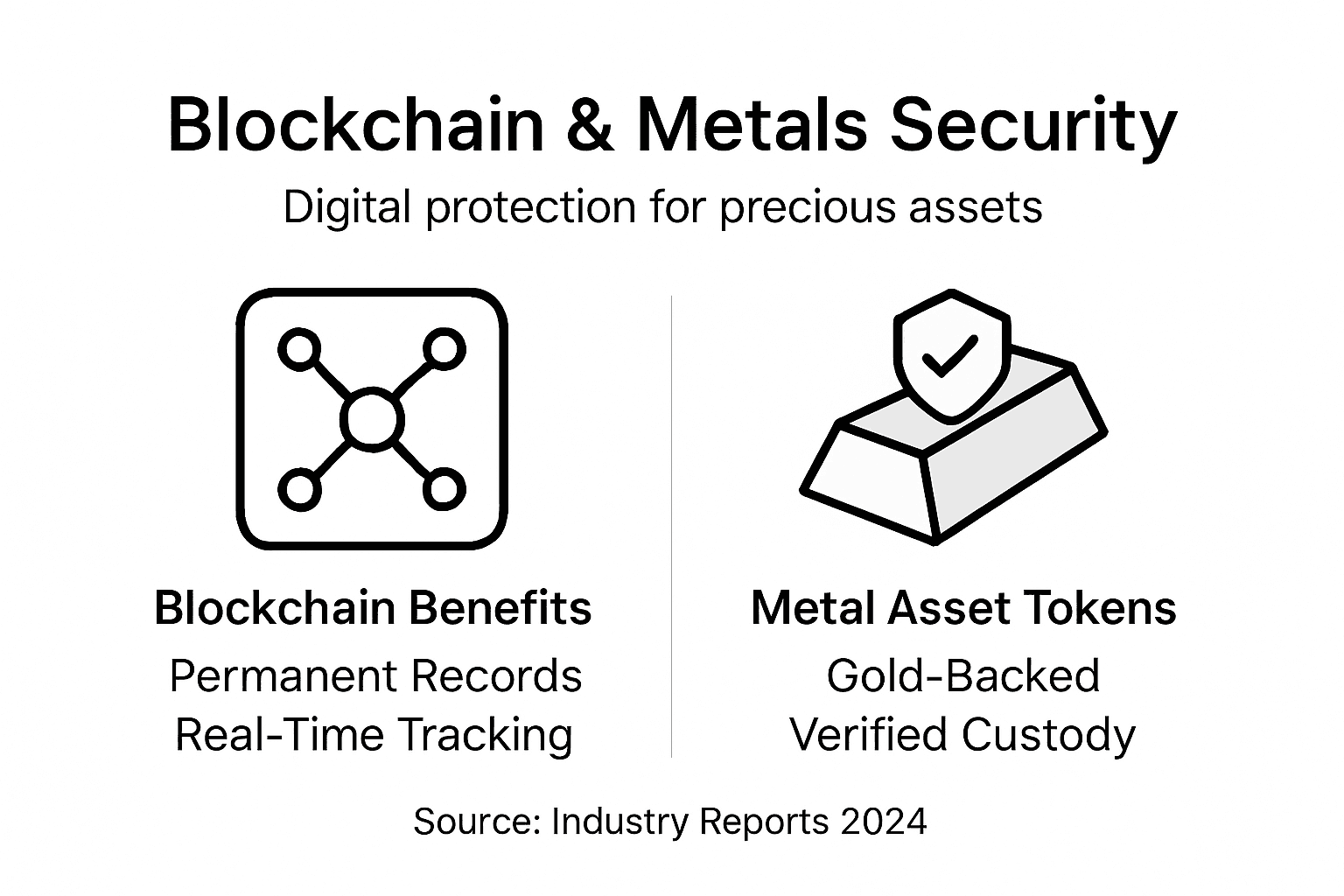
Blockchain is a transformative digital technology that provides secure, transparent record-keeping across decentralized networks. At its core, blockchain functions as an immutable digital ledger that tracks transactions and asset ownership with unprecedented precision and trust.
In the context of precious metals, blockchain enables revolutionary capabilities for tracking, trading, and verifying ownership. Decentralized ledger technologies create an end-to-end traceability system that enhances operational efficiency and reduces potential fraud in precious metals markets.
Key characteristics of blockchain in precious metals trading include:
- Transparent ownership records that cannot be altered
- Immutable transaction histories for gold and silver assets
- Ability to fractionally tokenize physical metal holdings
- Reduced custody risks through digital verification
- Enhanced liquidity for traditionally illiquid assets
Tokenizing precious metals represents a significant advancement in asset management. By converting physical gold or silver into digital tokens, investors gain unprecedented flexibility in trading and managing their metal investments.
Pro tip: Always verify the blockchain platform’s compliance and security protocols before investing in tokenized precious metal assets.
Types of Gold-Backed Asset Tokens
Gold-backed cryptocurrencies represent a sophisticated financial innovation that bridges traditional precious metal investments with digital asset technologies. These digital tokens provide investors with a unique mechanism to own and trade gold through blockchain-powered platforms, offering unprecedented flexibility and accessibility.
Gold-backed cryptocurrencies can be categorized into several distinct types based on their structural characteristics and underlying mechanisms:
- Fiat-Collateralized Tokens: Directly backed by physical gold reserves
- Decentralized Asset Tokens: Representing fractional gold ownership
- Hybrid Model Tokens: Combining multiple backing mechanisms
- ERC-20 Standard Tokens: Leveraging Ethereum blockchain infrastructure
- Custodian-Managed Tokens: Managed by regulated financial institutions
These tokens differ significantly in their redemption policies, custody arrangements, and liquidity features. Gold tokenization assets enable investors to access precious metal markets with reduced transaction costs and increased transparency.
Here’s a concise comparison of major gold-backed token types and their typical structures:
| Token Type | Backing Mechanism | Issuer | Typical Liquidity |
|---|---|---|---|
| Fiat-Collateralized | Physical gold reserves | Financial institutions | High (exchange-based) |
| Decentralized Asset | Blockchain fractional gold | Community-driven projects | Variable (peer-to-peer) |
| Hybrid Model | Combination (gold, fiat) | Consortiums or partnerships | Moderate (custom models) |
| ERC-20 Standard | Ethereum blockchain tokens | Crypto platforms | High (DeFi-enabled) |
| Custodian-Managed | Regulated custody gold | Regulated custodians | High (regulated venues) |
Key considerations for evaluating gold-backed tokens include verifying the token’s gold reserve ratio, understanding redemption mechanisms, and assessing the credibility of the issuing platform. Sophisticated investors carefully examine these factors to mitigate potential risks associated with digital gold investments.
To help evaluate tokenized gold platforms, here is a summary of core investor due diligence steps:
| Step | Purpose | Typical Outcome |
|---|---|---|
| Reserve Verification | Ensure token backed by gold | Increased investor trust |
| Platform Audit | Validate security and protocols | Risk reduction |
| Regulatory Review | Confirm legal compliance | Avoid regulatory penalties |
| Redemption Test | Assess token-to-gold conversion | Confidence in liquidity |
Pro tip: Always conduct thorough due diligence on the token’s underlying gold reserves and the platform’s regulatory compliance before making any investment decisions.
How Blockchain Enables Secure Ownership
Blockchain technology represents a revolutionary approach to securing asset ownership, particularly for precious metals. By creating an immutable and transparent digital record, blockchain fundamentally transforms how investors can track, verify, and transfer ownership of valuable assets.
Blockchain-based ownership certification introduces several critical security mechanisms that protect investors and streamline asset management:
- Immutable Transaction Records: Preventing unauthorized changes
- Transparent Ownership Tracking: Real-time verification of asset ownership
- Fractional Ownership Capabilities: Enabling smaller investment increments
- Smart Contract Automation: Automating rights and transfer protocols
- Cryptographic Security: Protecting against fraudulent transactions
The distributed ledger technology ensures that every transaction is recorded permanently and cannot be altered retroactively. Tokenization of precious metals creates a secure digital representation of physical assets, reducing risks associated with traditional ownership models.

By leveraging blockchain’s inherent security features, investors can now enjoy unprecedented transparency and protection. The technology eliminates many traditional risks such as physical theft, fraudulent documentation, and complex ownership transfer processes.
Pro tip: Verify the blockchain platform’s security protocols and audit trail capabilities before investing in tokenized assets.
Transparency and Real-Time Proof of Reserve
Proof of reserve represents a critical mechanism for ensuring the integrity and reliability of tokenized gold assets. This innovative approach provides investors with unprecedented visibility into the actual backing of digital tokens, transforming traditional asset management practices.
Tokenized gold platforms enhance transparency through several sophisticated mechanisms:
- Third-Party Audits: Regular independent verification of gold reserves
- On-Chain Analytics: Continuous tracking of asset allocation
- Smart Contract Integration: Automated verification of token backing
- Real-Time Allocation Look-Ups: Instant access to reserve information
- Cryptographic Verification: Ensuring data authenticity and integrity
Blockchain-powered reserve systems leverage advanced oracle networks to provide stakeholders with immediate, verifiable proof of asset backing. These systems eliminate traditional opacity in asset management by publishing reserve data directly on public blockchains with cryptographic verification.
The implementation of real-time proof of reserve fundamentally transforms investor trust. By providing continuous, transparent documentation of gold holdings, these systems dramatically reduce the risk of misrepresentation and create a new standard of financial accountability.
Pro tip: Request and review the platform’s most recent third-party audit report before making any investment in tokenized gold assets.
Regulatory Compliance and SEC Readiness
Regulatory compliance represents a critical cornerstone for blockchain-based precious metal investments. Institutional investors must navigate a complex landscape of evolving legal requirements designed to protect market integrity and investor interests.
Global regulatory frameworks focus on several key compliance dimensions:
- Know Your Customer (KYC) Protocols: Verifying investor identities
- Anti-Money Laundering (AML) Standards: Preventing financial crimes
- Securities Law Adherence: Meeting SEC registration requirements
- Transparent Financial Reporting: Maintaining comprehensive documentation
- Asset Origin Verification: Tracking precious metal provenance
Compliance mechanisms for tokenized metals demand rigorous identity verification and transparent recordkeeping. Companies must implement comprehensive compliance programs that address regulatory expectations across multiple jurisdictions.
Successful SEC readiness requires a proactive approach to regulatory alignment. This involves developing robust internal controls, maintaining meticulous documentation, and demonstrating a commitment to investor protection through advanced technological and procedural safeguards.
Pro tip: Engage specialized legal counsel with blockchain and securities expertise to ensure comprehensive regulatory compliance strategy.
Risks, Costs, and Common Pitfalls
Tokenized precious metals represent an innovative investment approach with complex risk profiles that demand careful investor scrutiny. Understanding the potential challenges is crucial for maintaining a secure and profitable investment strategy in this emerging digital asset landscape.
Tokenization challenges encompass several critical risk dimensions:
- Custody Complexity: Third-party storage and management risks
- Smart Contract Vulnerabilities: Technical infrastructure weaknesses
- Regulatory Uncertainty: Evolving compliance requirements
- Market Liquidity Constraints: Limited trading opportunities
- Verification Challenges: Potential gaps in asset authentication
Emerging market risks include significant operational and technological hurdles. Investors must navigate potential fraud risks, insufficient AML controls, and the absence of real-time verification mechanisms that could compromise asset integrity.
The financial landscape for tokenized precious metals requires sophisticated risk management strategies. Institutional investors must implement robust due diligence processes, maintain comprehensive audit trails, and develop advanced technological safeguards to mitigate potential vulnerabilities.
Pro tip: Conduct thorough independent technical and legal audits before committing capital to any tokenized precious metal investment platform.
Secure Your Investment with Blockchain-Backed Precious Metals
The article highlights critical challenges investors face such as verifying gold reserves, ensuring regulatory compliance, and maintaining transparent ownership through blockchain technology. If you are seeking true asset security with real-time proof of reserve and immutable ownership tracking, UK Financial Ltd offers innovative solutions that directly address these pain points. Their platform specializes in gold-backed digital tokens that combine robust blockchain security with verified precious metal backing to bring peace of mind and transparent investment management.
Discover how UK Financial Ltd’s portfolio, including the flagship Maya Preferred PRA token, rigorously adheres to compliance standards while offering fractional ownership and secure custody solutions. Their dynamic ecosystem gives investors access to live token performance data alongside comprehensive audit and reserve reports. This seamless integration of transparency and regulatory readiness provides a trustworthy foundation for both retail and institutional asset-backed investing.
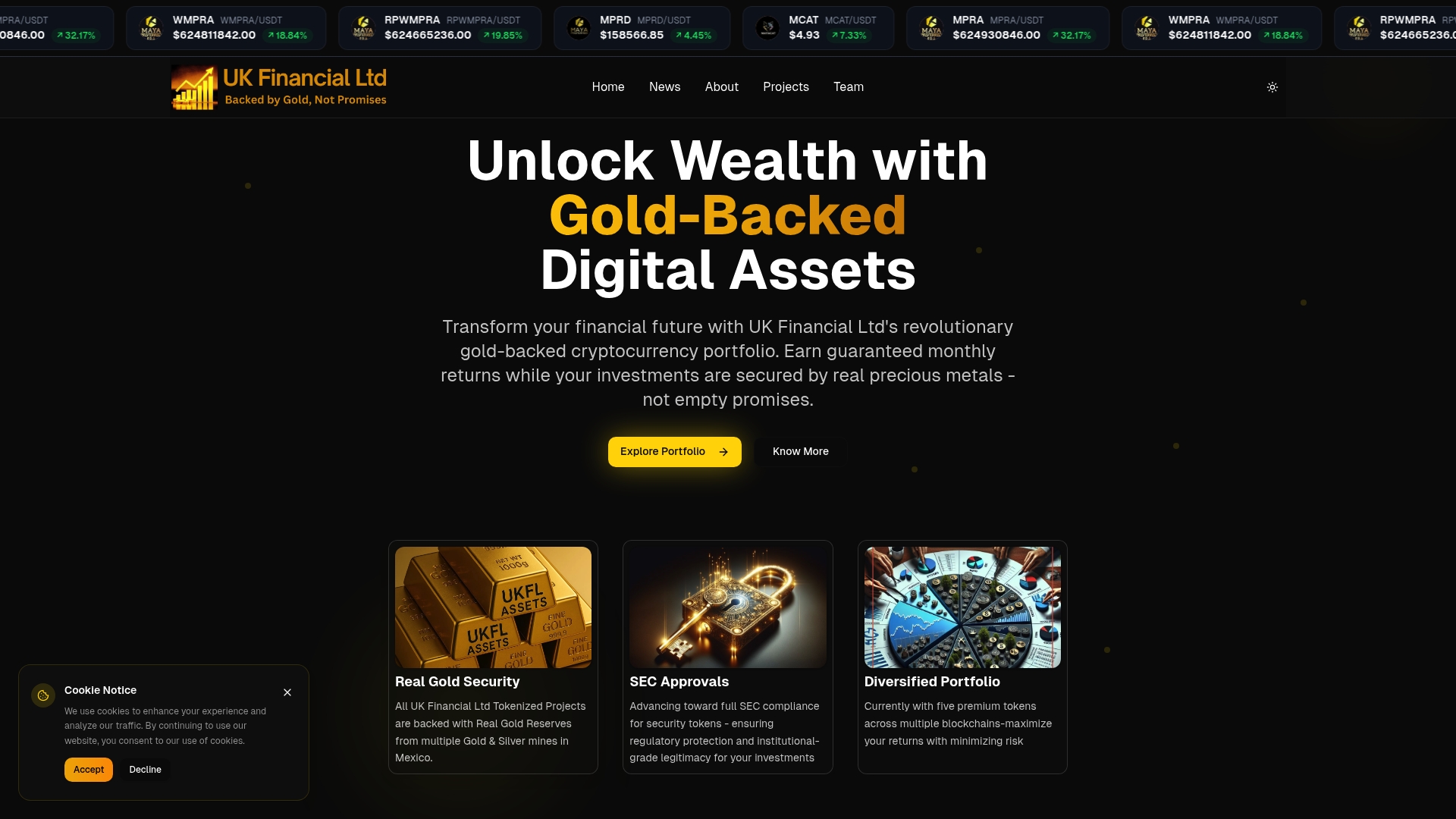
Explore how you can gain confidence from detailed real-time blockchain asset tracking and regulatory transparency today. Visit UK Financial Ltd and unlock access to uniquely secured gold-backed tokens engineered for modern investors. Don’t wait to protect and diversify your wealth with a platform designed for security, compliance, and innovation. Start your journey now at UK Financial Ltd and elevate your investment security.
Frequently Asked Questions
What is blockchain technology used for in precious metals trading?
Blockchain technology is used to create secure, transparent, and immutable records of transactions and asset ownership, enhancing traceability and reducing fraud risks in precious metals markets.
How do gold-backed cryptocurrencies differ from traditional gold investments?
Gold-backed cryptocurrencies are digital tokens that represent ownership of physical gold, allowing for greater liquidity, fractional ownership, and the benefits of blockchain technology compared to traditional gold investments, which are typically less flexible.
What are the key security features of blockchain for managing precious metals?
The key security features include immutable transaction records, real-time ownership verification, fractional ownership capabilities, smart contract automation, and cryptographic security to protect against fraud.
What steps should investors take to evaluate tokenized gold platforms?
Investors should conduct due diligence, including verifying gold reserves, auditing the platform’s security protocols, reviewing regulatory compliance, and testing the redemption mechanisms for converting tokens to gold.
Recommended
- UK Financial Ltd – Gold-Backed Cryptocurrency Portfolio
- UK Financial Ltd Receives Recognition In Platinum Crypto Academy’s Cryptonaire Weekly
- UK Financial Ltd Establishes United States Operations in Delaware, Announces Texas Expansion
- UK Financial Ltd Announces CoinMarketCap Supply Verification And Market Positioning Review For Regulated Security Tokens SMPRA And SMCAT
- Data Security in Financial Document Processing: What You Need to Know – BankStatementFlow Blog