
Blockchain’s Role in Asset Security: Ensuring Trust

Growing regulatory scrutiny is reshaping how institutional investors manage digital assets, with many american and European funds increasingly shifting toward asset-backed cryptocurrencies. Nearly 60 percent of global institutional capital now prioritizes transparency and security in blockchain investments. This shift matters because wealth preservation strategies must meet evolving compliance standards while defending against cyber threats. Discover how blockchain security protocols and advanced verification systems are transforming digital asset management and enabling confident participation in the next era of compliant finance.
Table of Contents
- Blockchain And Asset Security Defined
- Types Of Blockchain Security Protocols
- How Blockchain Verifies Asset Backing
- Regulatory Compliance And Transparency Standards
- Risks, Limitations, And Investor Obligations
Key Takeaways
| Point | Details |
|---|---|
| Blockchain Security Framework | Blockchain provides unparalleled protection for digital assets through decentralized validation and transparency, significantly reducing traditional vulnerabilities. |
| Understanding Security Protocols | Recognizing the key security protocols, including consensus mechanisms and cryptographic systems, is crucial for institutional investors to enhance their asset safety. |
| Importance of Regulatory Compliance | Comprehensive regulatory frameworks are essential for maintaining trust and integrity in digital asset investments; investors should proactively adapt to evolving regulations. |
| Managing Investment Risks | A thorough understanding of the unique technical, regulatory, and market risks associated with blockchain investments is critical for developing effective investment strategies. |
Blockchain and Asset Security Defined
Blockchain security represents a sophisticated technological framework designed to protect digital assets with unprecedented precision. Blockchain technologies fundamentally transform how institutional investors manage and secure complex financial instruments by creating an immutable, transparent record-keeping system that eliminates traditional vulnerabilities.
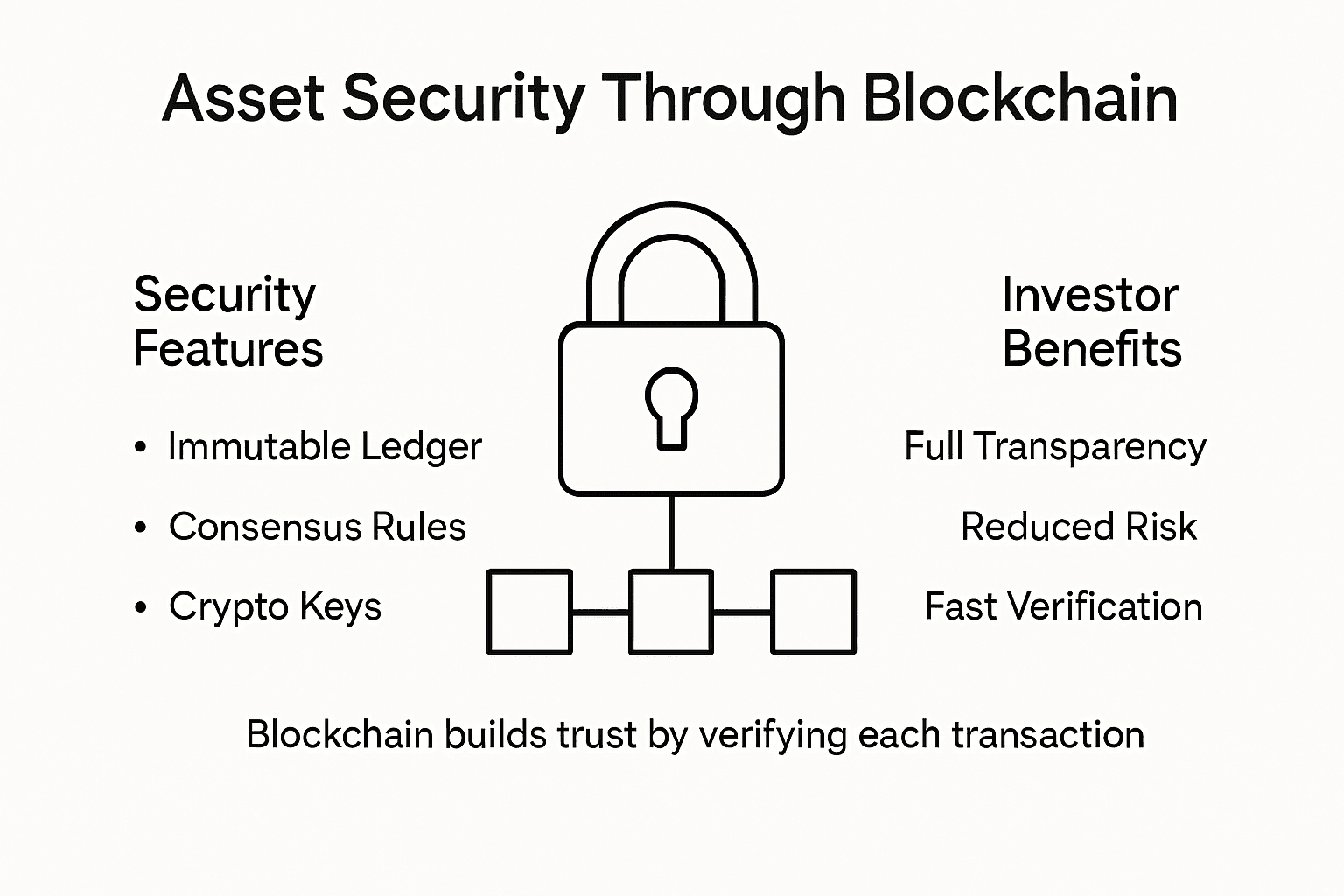
At its core, blockchain security operates through a decentralized network of computers that collectively validate and record transactions. Unlike centralized systems vulnerable to single-point failures, blockchain distributes transaction verification across multiple independent nodes, ensuring that no single entity can manipulate or compromise the system’s integrity. This distributed architecture provides multiple layers of protection:
- Cryptographic encryption protecting each transaction
- Consensus mechanisms requiring network-wide validation
- Immutable transaction records preventing retroactive alterations
- Transparent audit trails enabling real-time tracking
The technological sophistication of blockchain security extends far beyond traditional database protection. By implementing complex mathematical algorithms and distributed consensus protocols, blockchain creates a secure environment where digital assets can be tracked, transferred, and verified with absolute confidence. Institutional investors benefit from reduced counterparty risk, enhanced transparency, and a robust framework that fundamentally redesigns asset management infrastructure.
Pro tip: Always verify the blockchain platform’s specific security protocols and consensus mechanisms before committing institutional capital to any digital asset investment strategy.
Types of Blockchain Security Protocols
Blockchain security protocols represent a sophisticated array of technological strategies designed to protect digital assets and ensure network integrity across decentralized systems. The Blockchain Security Standards Council (BSSC) establishes comprehensive frameworks that define multiple critical security approaches institutional investors must understand when evaluating blockchain infrastructure.
These security protocols can be categorized into several fundamental types that work synergistically to create robust protection mechanisms:
- Consensus Protocols
- Proof of Work (PoW)
- Proof of Stake (PoS)
- Delegated Proof of Stake (DPoS)
- Cryptographic Security Mechanisms
- Public Key Infrastructure (PKI)
- Advanced Encryption Standard (AES)
- Elliptic Curve Cryptography (ECC)
- Network Protection Strategies
- Distributed Firewall Systems
- Node Validation Protocols
- Traffic Monitoring and Anomaly Detection
Each security protocol serves a unique function in safeguarding blockchain networks. Consensus protocols prevent unauthorized transaction validation, cryptographic mechanisms encrypt sensitive data, and network protection strategies monitor and neutralize potential intrusion attempts. Institutional investors must comprehensively assess these layers to understand the comprehensive security architecture of any blockchain platform.

Advanced blockchain security goes beyond traditional technological defenses by implementing dynamic, adaptive protection frameworks. These systems continuously evolve, learning from potential vulnerability patterns and implementing real-time protective measures that anticipate and neutralize emerging cybersecurity threats before they can compromise digital asset integrity.
Here’s a comparison of key blockchain security protocol types and their primary institutional benefits:
| Security Protocol Type | Main Purpose | Institutional Investor Benefit |
|---|---|---|
| Consensus Protocols | Validates network transactions | Reduces risk of fraudulent entries |
| Cryptographic Mechanisms | Secures digital asset data | Ensures data privacy and authenticity |
| Network Protection Strategies | Monitors network activity | Rapid detection of threats |
Pro tip: Conduct thorough due diligence on a blockchain platform’s specific security protocols, including independent third-party security audits and comprehensive vulnerability assessments, before making significant institutional investments.
How Blockchain Verifies Asset Backing
Asset backing represents a critical mechanism for establishing trust and transparency in digital financial ecosystems. Blockchain technologies enable comprehensive verification of asset ownership through sophisticated tokenization processes, creating an unprecedented level of transparency that institutional investors can rely upon for complex financial instruments.
The verification mechanism operates through multiple interconnected layers of cryptographic authentication. Each transaction is time-stamped and validated by a distributed network of independent nodes, ensuring that every asset token maintains an immutable record of its entire transactional history. This process involves several key verification steps:
- Token Creation
- Precise asset valuation
- Digital representation of physical assets
- Cryptographic signature generation
- Transaction Validation
- Consensus mechanism verification
- Multi-node cross-referencing
- Cryptographic proof requirements
- Provenance Tracking
- Complete ownership transfer history
- Permanent, unalterable record maintenance
- Real-time audit capabilities
Blockchain’s verification process goes beyond traditional authentication methods by creating a transparent, tamper-resistant ecosystem where every transaction can be traced with absolute certainty. Institutional investors benefit from a system that eliminates intermediaries, reduces fraud potential, and provides real-time visibility into asset movements and ownership transfers.
The technological sophistication of blockchain asset verification represents a fundamental shift in how financial institutions manage and track valuable resources. By implementing cryptographic protocols and distributed consensus mechanisms, blockchain creates an environment of unprecedented transparency and security, transforming traditional asset management paradigms.
Pro tip: Request comprehensive proof-of-reserve documentation and independent blockchain verification reports before committing significant capital to any asset-backed digital investment.
Regulatory Compliance and Transparency Standards
Institutional investors navigating the complex landscape of digital assets must understand the critical role of comprehensive regulatory frameworks. The Financial Stability Board establishes global regulatory standards that ensure consistent oversight and maintain the integrity of blockchain-based financial ecosystems.
The regulatory compliance landscape for blockchain assets encompasses multiple critical dimensions:
- Regulatory Reporting
- Comprehensive transaction disclosure
- Real-time financial monitoring
- Standardized reporting templates
- Risk Management
- Systematic risk assessment protocols
- Capital adequacy requirements
- Mandatory stress testing procedures
- Transparency Requirements
- Proof of reserve documentation
- Independent third-party audits
- Full ownership and transaction traceability
Blockchain technologies are fundamentally reshaping regulatory compliance by providing unprecedented transparency and automated verification mechanisms. Unlike traditional financial systems, blockchain platforms enable regulators to access immutable, real-time transaction records, dramatically reducing the potential for fraudulent activities and enhancing overall market integrity.
The evolution of regulatory standards represents a sophisticated approach to managing digital assets, balancing innovation with robust protective measures. Institutional investors must recognize that compliance is not merely about meeting minimum requirements but about establishing a framework of trust, accountability, and responsible financial management.
Pro tip: Develop a comprehensive compliance strategy that anticipates regulatory changes and integrates advanced blockchain transparency tools to maintain a proactive stance in meeting emerging financial oversight requirements.
Risks, Limitations, and Investor Obligations
Blockchain asset investments represent a sophisticated yet complex financial ecosystem that demands rigorous risk management and comprehensive understanding from institutional investors. While blockchain technologies offer unprecedented transparency and security, they simultaneously introduce unique challenges that require meticulous strategic assessment.
The primary risk categories for blockchain asset investments encompass multiple critical domains:
- Technical Risks
- Smart contract vulnerabilities
- Potential blockchain network disruptions
- Cryptographic system compromises
- Regulatory Risks
- Evolving legal frameworks
- Potential unexpected compliance requirements
- International regulatory divergence
- Market Risks
- High volatility potential
- Liquidity constraints
- Limited historical performance data
Institutional investors must recognize that blockchain asset management extends far beyond traditional investment strategies. The decentralized nature of these assets creates a complex risk landscape where technological sophistication must be balanced with comprehensive due diligence and proactive risk mitigation strategies.
Navigating the blockchain investment ecosystem requires a holistic approach that integrates advanced technological understanding with robust financial risk management principles. Successful investors will develop adaptive frameworks that can rapidly respond to technological innovations, regulatory shifts, and emerging market dynamics while maintaining a disciplined, data-driven investment philosophy.
The table below summarizes major blockchain asset risks with example scenarios and investor actions:
| Risk Area | Example Scenario | Key Investor Action |
|---|---|---|
| Technical | Smart contract coding error | Commission security audits |
| Regulatory | New international compliance rule | Update compliance frameworks |
| Market | Sudden asset value decline | Diversify investment portfolio |
Pro tip: Implement a dynamic risk assessment protocol that continuously monitors technological, regulatory, and market changes, and maintains flexible investment strategies capable of rapid recalibration in response to emerging blockchain ecosystem developments.
Strengthen Your Asset Security with Gold-Backed Blockchain Investments
The article highlights the critical challenges of ensuring transparency, immutable verification, and regulatory compliance in blockchain asset security. Addressing concerns such as consensus protocol integrity, proof of reserve validation, and real-time auditability is essential for institutional investors seeking trustworthy digital asset exposure. At UK Financial Ltd, we understand these pain points and offer a comprehensive solution focused on gold-backed digital assets that marry the power of blockchain with the reliability of physical precious metals.
Discover how our platform provides:
- Verified asset-backed cryptographic tokens secured by tangible gold and silver reserves
- Real-time blockchain asset tracking and transparent proof-of-reserve reports
- Commitment to evolving regulatory compliance and SEC-aligned governance
Our suite of tokens, including the flagship Maya Preferred PRA and MayaCat meme coin, delivers an unprecedented level of security and transparency aligned with the sophisticated protocols discussed in the article. Experience peace of mind by investing in a platform designed to eliminate fraud risk and provide full ownership traceability.
Take control of your digital asset portfolio today by exploring UK Financial Ltd

Elevate your investment strategy with secure blockchain-backed assets anchored in precious metals. Visit our site now to access detailed token performance data and start benefiting from trusted, asset-backed digital investments. Learn more about our gold-secured tokens and transparent ecosystem at UK Financial Ltd and transform the way you secure your wealth.
Frequently Asked Questions
What is blockchain security?
Blockchain security refers to a technological framework designed to protect digital assets by creating an immutable and transparent record-keeping system that mitigates vulnerabilities found in traditional financial systems.
How does blockchain verify asset ownership?
Blockchain verifies asset ownership through tokenization, where each transaction is cryptographically validated and recorded on a decentralized network, ensuring that the entire history of the asset remains transparent and secure.
What are the main types of blockchain security protocols?
The main types of blockchain security protocols include consensus protocols (like Proof of Work and Proof of Stake), cryptographic security mechanisms, and network protection strategies aimed at safeguarding digital assets and ensuring integrity.
What are the risks associated with blockchain asset investments?
The primary risks include technical risks (like smart contract vulnerabilities), regulatory risks due to evolving legal frameworks, and market risks such as high volatility and liquidity constraints.
Recommended
- UK Financial Ltd – Gold-Backed Cryptocurrency Portfolio
- UK Financial Ltd Confirms Official Corporate Structure of the Maya Preferred Project and Its Dual-Class Token System
- UK Financial Ltd Sets Official 30-Day Conversion Deadline for Three Exchange-Listed Tokens Ahead of Regulated Upgrade
- News | UK Financial Ltd