
7 Advantages of Blockchain Investment for Secure Portfolios

Over seventy percent of wealth managers now demand enhanced transparency and security before considering digital assets in their portfolios. American institutional investors face mounting pressure to safeguard funds and prove regulatory compliance amid global uncertainties. This article spotlights how distributed ledger technology, real-time asset tracking, regulatory clarity, and gold-backed crypto diversification deliver powerful solutions for secure investment strategies and sustained portfolio growth.
Table of Contents
- 1. Enhanced Security Through Distributed Ledgers
- 2. Real-Time Asset Tracking and Proof of Reserves
- 3. Regulatory Compliance and Transparent Reporting
- 4. Exposure to Asset-Backed Tokens for Value Stability
- 5. Portfolio Diversification With Gold-Backed Crypto
- 6. Efficient Cross-Border Transactions and Settlements
- 7. Improved Corporate Governance and Accountability
Quick Summary
| Takeaway | Explanation |
|---|---|
| 1. Blockchain Enhances Security | Distributed ledgers eliminate central vulnerabilities, significantly lowering cybersecurity risks for institutional investors. |
| 2. Real-Time Asset Verification | Blockchain provides instant, verifiable tracking of assets, enhancing confidence and risk management for investors. |
| 3. Automated Regulatory Compliance | Blockchain ensures continuous, tamper-proof documentation, drastically reducing compliance risks across multiple jurisdictions. |
| 4. Stable Value Through Asset-Backed Tokens | Asset-backed tokens mitigate volatility by anchoring value to tangible assets, providing greater stability in investments. |
| 5. Efficient Cross-Border Transactions | Blockchain enables fast, low-cost international transactions without intermediaries, enhancing operational efficiency for investors. |
1. Enhanced Security Through Distributed Ledgers
Blockchain technology fundamentally transforms security infrastructure for digital investments through its revolutionary distributed ledger approach. By eliminating centralized vulnerability points, distributed ledgers create an unprecedented level of protection for institutional investors seeking robust financial solutions.
At its core, distributed ledger technology (DLT) operates like a decentralized digital fortress, spreading transaction records across multiple network nodes instead of relying on a single vulnerable storage point. This architecture makes blockchain transactions exponentially more challenging to compromise compared to traditional financial systems. Research demonstrates that DLT significantly reduces cybersecurity risks by creating a transparent, immutable record that cannot be altered without network consensus.
The key security advantages emerge from blockchain’s unique structural design. Each transaction gets cryptographically sealed and linked to previous records, forming an unbreakable chain of verified information. This means potential attackers would need to simultaneously breach multiple independent network nodes – an astronomically difficult computational challenge.
For institutional investors, this translates into tangible risk mitigation. Blockchain’s distributed architecture protects against common attack vectors like Sybil attacks and selfish mining strategies that traditional databases remain vulnerable to. The technology essentially creates a self-auditing ecosystem where every transaction is simultaneously recorded, verified, and made permanently transparent.
Pro Tip: Always validate a blockchain platform’s node distribution and consensus mechanism before investment, as these factors directly impact the network’s overall security resilience.
2. Real-Time Asset Tracking and Proof of Reserves
Blockchain technology introduces an unprecedented level of transparency and accountability through its ability to provide instantaneous, verifiable asset tracking. This groundbreaking approach allows investors to monitor their holdings with a precision that was previously impossible in traditional financial systems.
The core innovation lies in blockchain’s capacity to generate continuous, automated proof of reserves, which eliminates the opacity and uncertainty that plague conventional investment platforms. By leveraging smart contracts and decentralized oracle networks, investors can now access real-time verification of their asset’s underlying value and collateralization.
Technological Mechanisms enable this remarkable transparency. Each blockchain transaction creates an immutable, publicly accessible record that tracks asset movements, valuations, and ownership transfers with cryptographic precision. This means every token can be traced back to its original issuance, with complete documentation of its entire transactional history.
For institutional investors, this represents a quantum leap in risk management. Empirical research demonstrates that asset-backed tokens with robust tracking mechanisms can significantly mitigate downside risk during market fluctuations. The ability to instantly verify asset backing provides unprecedented confidence in investment instruments.
The practical benefits extend beyond mere tracking. Investors gain the ability to conduct immediate due diligence, validate asset authenticity, and understand the complete lifecycle of their investments without relying on intermediary reports or potentially manipulated documentation.
Pro Tip: Develop a systematic approach to reviewing real-time asset tracking reports, establishing a routine to cross-reference blockchain records with your investment strategy at regular intervals.
3. Regulatory Compliance and Transparent Reporting
Blockchain technology represents a transformative approach to regulatory compliance, offering unprecedented transparency and accountability in financial reporting. By creating an immutable, auditable record of every transaction, blockchain fundamentally reshapes how institutions manage regulatory requirements.
Automated Compliance Mechanisms enable organizations to streamline complex reporting processes. Comprehensive research demonstrates that distributed ledgers can automate transaction authentication and provide continuous monitoring, dramatically reducing the risk of human error and intentional manipulation.
The key advantage lies in the technology’s ability to generate real-time, tamper-proof documentation. Traditional reporting methods rely on periodic audits and manual reconciliation, which create significant gaps in oversight. Blockchain eliminates these vulnerabilities by generating an instantaneous, verifiable record that can be accessed by regulators and stakeholders simultaneously.
For institutional investors, this means dramatically reduced compliance risks. Every transaction is cryptographically sealed, creating a permanent trail that meets the most stringent regulatory standards across multiple jurisdictions. The technology effectively transforms compliance from a reactive process to a proactive, transparent system of continuous verification.
Moreover, blockchain reporting transcends geographical boundaries. The standardized, decentralized nature of these records helps address the critical challenge of harmonizing cross-border regulatory frameworks. Investors can now maintain consistent compliance standards regardless of the complex international regulatory landscape.
Pro Tip: Develop a comprehensive blockchain compliance strategy that integrates automated reporting tools and establishes clear protocols for regulatory documentation and verification.
4. Exposure to Asset-Backed Tokens for Value Stability
Asset-backed tokens represent a sophisticated investment strategy designed to mitigate the inherent volatility of traditional cryptocurrency markets. These innovative financial instruments provide investors with a unique method to preserve capital while participating in digital asset ecosystems.
Comprehensive research into asset-backed token mechanisms reveals multiple strategies for maintaining value stability. Unlike traditional cryptocurrencies that fluctuate dramatically, these tokens are anchored to tangible assets such as gold, fiat currencies, or other stable financial instruments.
Backing Mechanisms play a critical role in establishing token reliability. Investors can choose from several stabilization approaches including physical asset backing, fiat currency reserves, and sophisticated algorithmic stabilization techniques. Each method offers distinct advantages in managing price fluctuations and maintaining consistent market value.
Physical asset backing represents one of the most straightforward and transparent approaches. By directly linking token value to a physical commodity like gold, investors gain exposure to digital markets while maintaining a connection to a historically stable asset class. This approach provides a critical hedge against market unpredictability and offers a more conservative entry point into cryptocurrency investments.
Algorithmic stabilization methods represent a more complex but potentially more dynamic approach. These advanced mechanisms use smart contract technologies to automatically adjust token supply and maintain price consistency through complex mathematical protocols.
Pro Tip: Diversify your asset-backed token portfolio across multiple backing mechanisms to optimize stability and minimize individual asset risk.
5. Portfolio Diversification With Gold-Backed Crypto
Gold-backed cryptocurrencies represent a groundbreaking approach to investment diversification, offering investors a sophisticated method to simultaneously access digital markets and traditional safe-haven assets. These innovative financial instruments bridge the gap between emerging digital technologies and established wealth preservation strategies.
Advanced quantitative research demonstrates that gold-backed crypto tokens provide exceptional portfolio protection, particularly during extreme market volatility. Unlike traditional cryptocurrencies, these assets are anchored to physical gold reserves, creating a unique investment vehicle that combines digital flexibility with tangible asset stability.
Strategic Diversification Mechanics allow investors to simultaneously mitigate risk and maintain exposure to multiple asset classes. By integrating gold-backed crypto into a portfolio, investors can effectively create a multilayered defense against market unpredictability. The underlying gold reserves act as a stabilizing force, reducing overall portfolio vulnerability to sudden market shifts.
The most compelling advantage emerges during financial uncertainty. Academic analysis reveals that these tokens perform exceptionally well as dynamic hedging instruments, offering significant downside protection across decentralized finance and emerging digital asset markets. This means your investment remains resilient even when traditional markets experience turbulence.
Moreover, gold-backed cryptocurrencies democratize access to precious metal investments. Investors can now acquire fractional gold-equivalent assets with unprecedented liquidity, removing historical barriers to entry associated with physical gold ownership.
Pro Tip: Allocate between 5% to 10% of your portfolio to gold-backed crypto tokens to optimize risk management while maintaining healthy exposure to digital asset markets.
6. Efficient Cross-Border Transactions and Settlements
Blockchain technology revolutionizes international financial transactions by eliminating the complex, time-consuming processes traditionally associated with global fund transfers. By leveraging decentralized networks, investors can now execute seamless cross-border settlements with unprecedented speed and transparency.
Comprehensive research comparing blockchain remittance systems reveals dramatic improvements over conventional international payment networks. Traditional methods like SWIFT often require multiple intermediary banks, resulting in slow processing times and substantial transaction fees. Blockchain circumvents these limitations by creating a direct, cryptographically secured transfer mechanism.
Transaction Efficiency Mechanics operate through smart contract technologies that automate verification, compliance, and settlement processes. This means transactions that previously required days can now be completed within minutes, dramatically reducing operational costs and eliminating unnecessary bureaucratic friction.
For institutional investors, blockchain enables real-time global fund movement with significantly reduced counterparty risks. The decentralized architecture ensures that every transaction is simultaneously recorded, verified, and made permanently transparent across multiple independent network nodes. This approach provides an immutable audit trail that traditional banking systems cannot match.
Moreover, blockchain cross-border transactions transcend geographical restrictions. Investors can execute complex international transfers without navigating the intricate web of regional banking regulations, currency exchange complications, or prolonged settlement windows. The technology effectively creates a borderless financial ecosystem.
Pro Tip: Always verify the blockchain platform’s international transaction capabilities and confirm their compliance with global financial regulations before executing cross-border investments.
7. Improved Corporate Governance and Accountability
Blockchain technology represents a transformative approach to corporate governance, offering unprecedented transparency and real-time accountability mechanisms that fundamentally reshape organizational oversight. By creating an immutable, verifiable record of every transaction and decision, blockchain introduces a new paradigm of corporate management.
Systematic research analyzing governance frameworks reveals blockchain’s remarkable capacity to enhance organizational integrity. The technology’s core features of immutability, traceability, and automated compliance enable corporations to establish robust, transparent reporting systems that were previously impossible.
Accountability Mechanisms operate through cryptographically sealed records that cannot be retroactively altered. This means every corporate action generates a permanent, verifiable trail that stakeholders can independently audit. Unlike traditional governance models that rely on periodic reporting, blockchain creates continuous, real-time visibility into organizational activities.
Peer-reviewed investigations demonstrate how blockchain strengthens stakeholder trust by eliminating information asymmetry. Investors, board members, and regulatory bodies can access instantaneous, tamper-proof documentation of corporate decisions, financial movements, and strategic implementations.
The technology transcends traditional reporting limitations by automating compliance protocols. Smart contracts can be programmed to enforce governance rules, ensure regulatory adherence, and trigger immediate notifications when predefined organizational parameters are challenged or violated.
Pro Tip: Develop a comprehensive blockchain governance strategy that integrates transparent reporting protocols and establishes clear parameters for real-time organizational monitoring.
Below is a comprehensive table summarizing the key points discussed throughout the article on the transformative capabilities and applications of blockchain technology in various industries.
| Aspect | Details | Key Takeaways |
|---|---|---|
| Enhanced Security | Blockchain operates using distributed ledger technology (DLT), creating an immutable chain of transactions verified across a decentralized network. | Minimizes security risks through enhanced transparency and resistance to cyberattacks. |
| Real-Time Asset Tracking | Integrates proof of reserves via smart contracts and decentralized oracle networks to track assets automatically and continuously. | Enables instant verification of asset value and offers a high level of risk management. |
| Regulatory Compliance | Provides auditable, immutable transaction documentation and real-time reporting through automated compliance mechanisms. | Reduces compliance risks and harmonizes international regulatory standards. |
| Asset-Backed Tokens | Tokens stabilize values and mitigate cryptocurrency market volatility by anchoring to tangible or finite assets such as gold or fiat currencies. | Bridges between traditional and digital asset markets, promoting greater investment security. |
| Portfolio Diversification | Gold-backed cryptocurrencies combine the stability of physical assets with the agility of digital assets. | Enhances investment robustness and ensures protection against market fluctuations. |
| Efficient Cross-Border Transactions | Streamlines global transactions by eliminating intermediaries, utilizing secure decentralized technology. | Enables rapid, low-cost international settlements while automating compliance and reducing risks. |
| Improved Corporate Governance | Enhances transparency and ensures accountability through cryptographic records and smart contracts for automatic compliance. | Strengthens stakeholder trust and supports robust organizational governance practices. |
This table offers a structured view of the discussed innovations and benefits associated with blockchain technology and institutional investments.
Secure Your Portfolio with Gold-Backed Blockchain Investments
The article highlights critical challenges such as mitigating cybersecurity risks, ensuring transparent asset tracking, and achieving regulatory compliance within digital investments. Institutional and retail investors alike face the pain of navigating volatile markets, opaque verification methods, and inefficient cross-border settlements. Concepts like distributed ledgers, proof of reserves, and asset-backed tokens provide the foundation for safer investment strategies that tackle these issues head-on.
At UK Financial Ltd, we provide a trusted platform dedicated to delivering secure, gold-backed cryptocurrency tokens that prioritize transparency, regulatory adherence, and security. Our portfolio, including the flagship Maya Preferred PRA and other carefully vetted tokens, empowers investors to benefit from real-time blockchain asset tracking and immutable proof of reserves. This ensures you maintain confidence in your holdings while diversifying with value-stable digital assets.
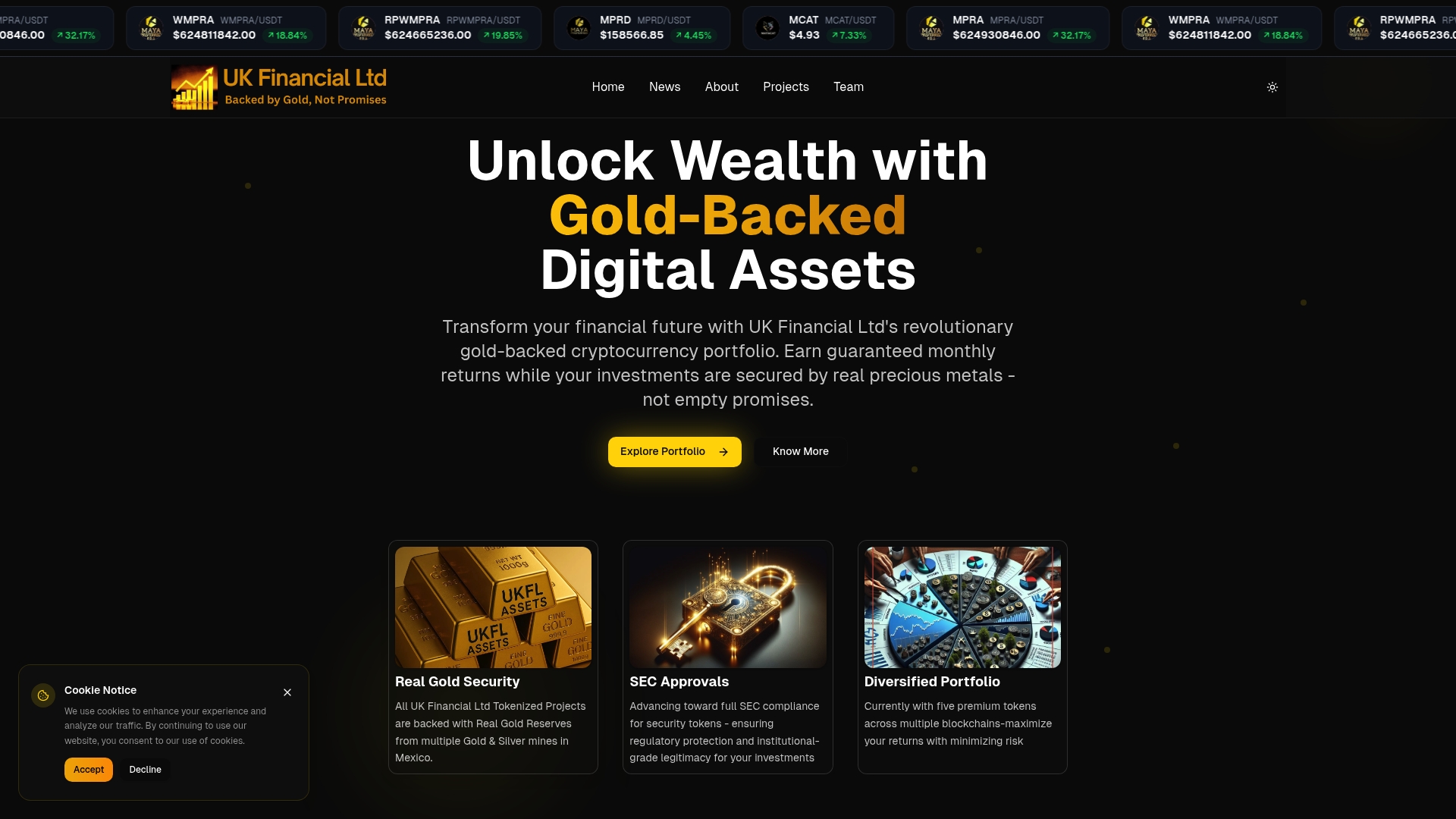
Explore how you can protect and grow your wealth by integrating gold-secured digital tokens into your investment strategy today. Visit UK Financial Ltd to access detailed token information, proof of reserve reports, and live performance data tailored for secure portfolio management. Take control of your financial future by choosing asset-backed blockchain solutions designed with institutional-grade governance and transparency.
Frequently Asked Questions
What are the main security benefits of blockchain investments?
Blockchain investments enhance security by using a distributed ledger system, making it difficult for potential attackers to compromise transaction records. Verify that a blockchain platform employs a strong consensus mechanism and robust node distribution to maximize your investment security.
How does blockchain technology allow for real-time asset tracking?
Blockchain provides real-time asset tracking by creating a transparent, immutable record of transactions that can be accessed instantly. Set up a systematic approach to review asset tracking reports regularly to ensure you stay informed on the status of your investments.
How can blockchain improve regulatory compliance for institutional investors?
Blockchain enhances regulatory compliance by generating tamper-proof documentation that can be continuously monitored. Develop a comprehensive compliance strategy that integrates automated reporting tools to streamline your regulatory processes.
In what ways do asset-backed tokens contribute to portfolio stability?
Asset-backed tokens mitigate volatility by linking their value to physical assets or stable reserves, providing a more reliable investment option. Diversify by including various asset-backed tokens in your portfolio to optimize stability and minimize risk.
How can gold-backed cryptocurrencies protect against market volatility?
Gold-backed cryptocurrencies offer a combination of digital flexibility and tangible asset stability, acting as a hedge against market downturns. Consider allocating a percentage of your portfolio, such as 5% to 10%, to gold-backed crypto tokens to enhance overall risk management.
What advantages do blockchain transactions offer for cross-border investments?
Blockchain transactions eliminate the need for intermediaries, resulting in faster and more cost-effective cross-border settlements. Before executing any international trades, verify the blockchain platform’s compliance with global financial regulations to ensure seamless transactions.
Recommended
- UK Financial Ltd – Gold-Backed Cryptocurrency Portfolio
- UK Financial Ltd Confirms Official Corporate Structure of the Maya Preferred Project and Its Dual-Class Token System
- UK Financial Ltd Sets Official 30-Day Conversion Deadline for Three Exchange-Listed Tokens Ahead of Regulated Upgrade
- Official News | UK Financial Ltd
- Bitcoin and Blockchain: A Beginner’s Guide | ING MINING™
- Blockchain in Shipping: Complete Guide for Logistics – Worldwide Express, Inc.